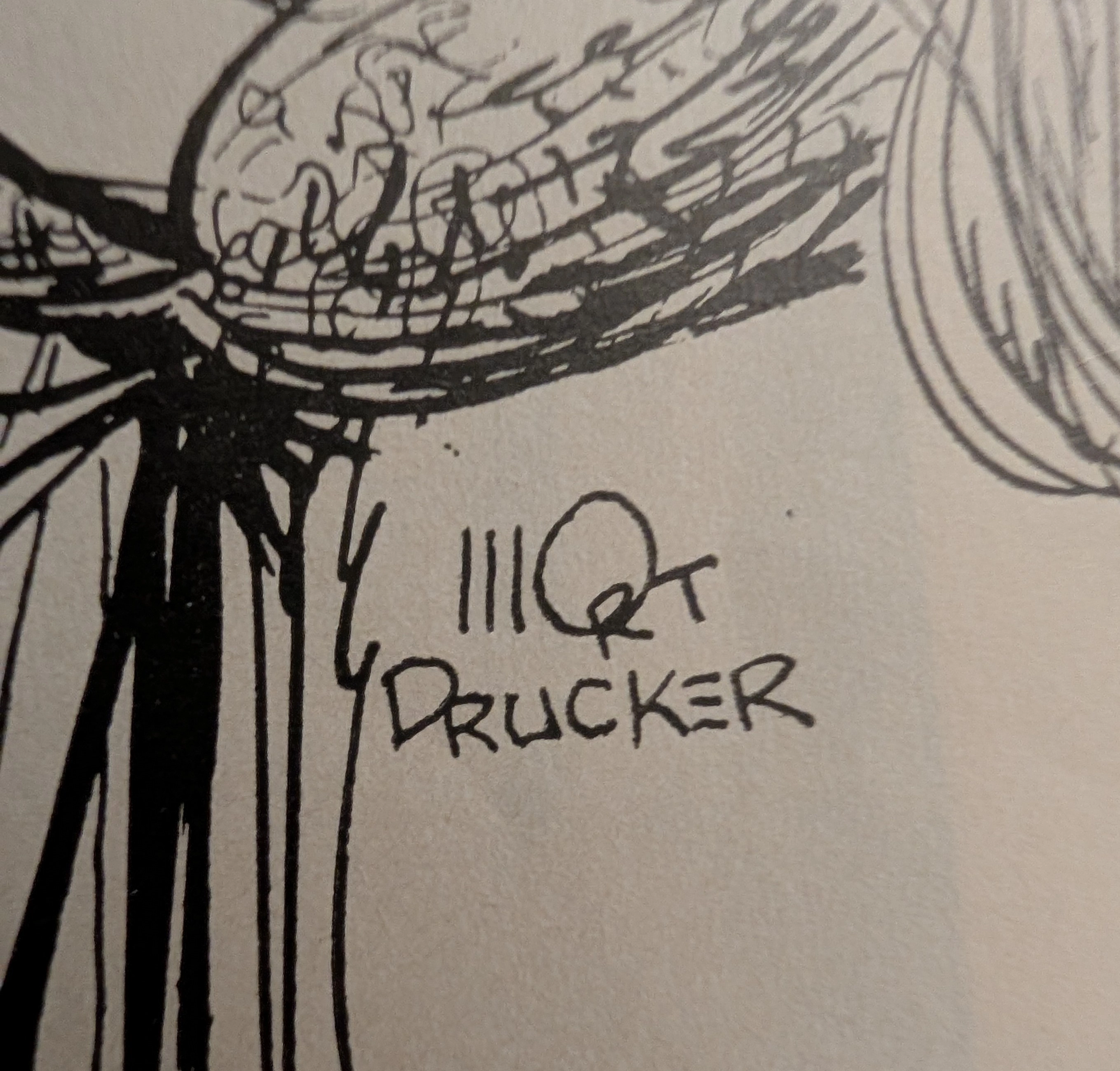

The Time Traveller's Dossier: The Sub-Zero Socialite – The Whirlpool Automatic Icemaker Exhibition by Mort Drucker
The History
To fully appreciate the immense historical gravity and cultural magnitude of this artifact, one must meticulously contextualize the shifting paradigm of the American suburban lifestyle during the 1960s and 1970s. In the post-World War II economic boom, the American home underwent a radical transformation. Driven by unprecedented economic prosperity, the rise of the middle class, and the rapid expansion of suburban developments, the house was no longer merely a place of shelter and sustenance; it became a carefully curated stage for social performance. The culture of domestic entertaining—neighborly gatherings, sophisticated cocktail hours, and elaborate dinner parties—became the defining characteristic of suburban success. Within this newly established culture, the host's ability to provide endless comfort and refreshment became paramount. The continuous, uninterrupted supply of ice, therefore, became a critical, almost anxiety-inducing metric by which a host’s capability and sophistication were judged by their peers.
Before the invention and widespread adoption of the automatic icemaker, preparing for a party meant dealing with the tedious, messy, and often ill-timed process of manually filling aluminum or plastic ice trays, waiting hours for them to freeze, and struggling to crack them open without scattering ice across the kitchen floor. The introduction of the Whirlpool Automatic Icemaker was not merely a mechanical upgrade; it was an engineering triumph that fundamentally solved a universal domestic pain point. By automating this process, Whirlpool offered the ultimate luxury: peace of mind and the ability for the host to focus entirely on the social dynamics of the party, rather than the logistics of the kitchen.
The Whirlpool Corporation itself has a deep, storied history in the American appliance industry. Founded in 1911 in Benton Harbor, Michigan, originally producing motor-driven wringer washers, the company continuously expanded its technological reach. By the 1950s and 60s, Whirlpool had positioned itself at the absolute forefront of domestic convenience, aligning perfectly with the mid-century modern philosophy that technology should seamlessly elevate the quality of everyday life. This specific advertisement captures that corporate philosophy perfectly, blending advanced refrigeration technology with the vibrant, energetic lifestyle of its target demographic.
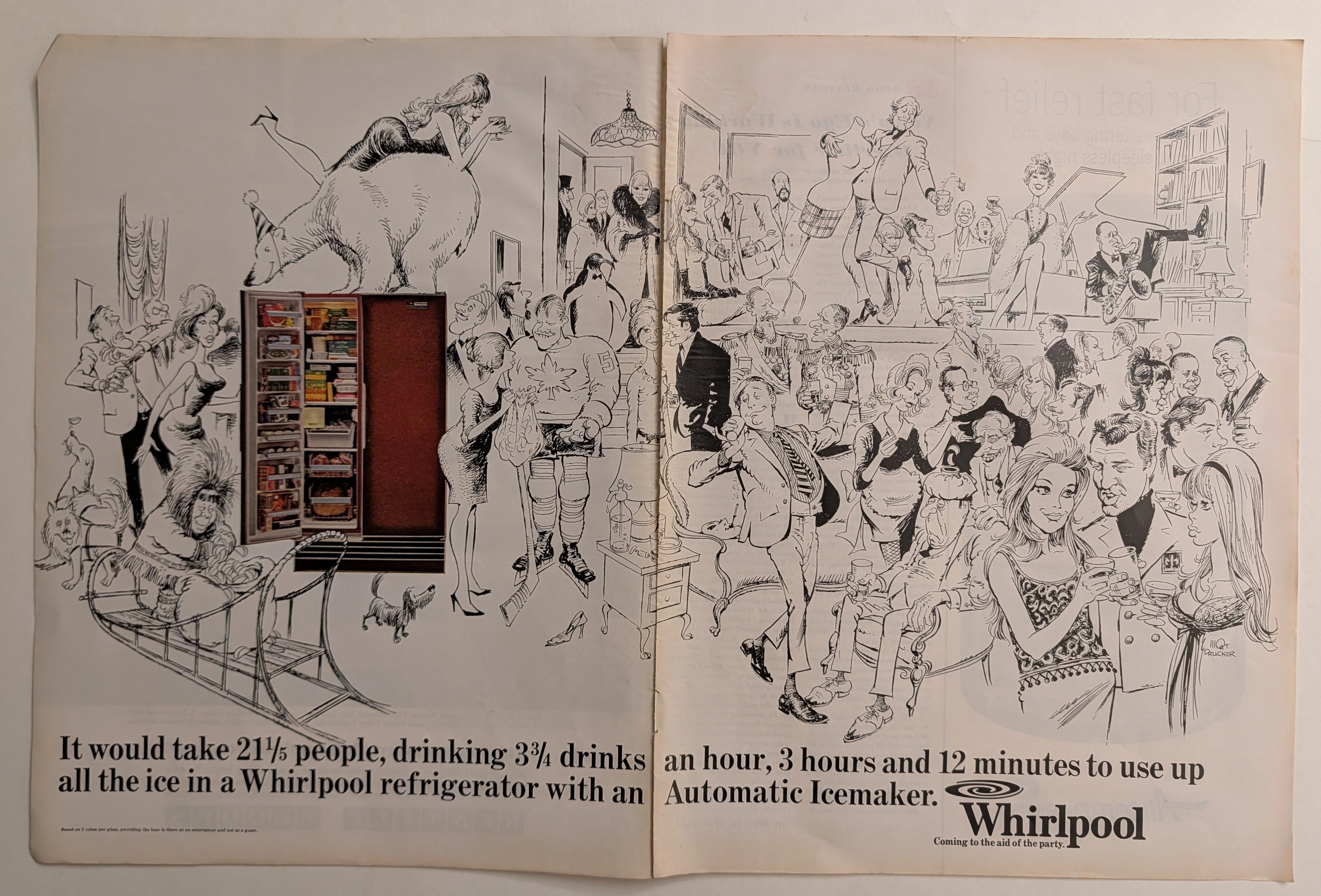
This advertisement captures the cultural zeitgeist of the era with unparalleled humor and razor-sharp copywriting. The primary headline declares with absolute, deadpan authority: "It would take 21 1/5 people, drinking 3 3/4 drinks an hour, 3 hours and 12 minutes to use up all the ice in a Whirlpool refrigerator with an Automatic Icemaker." This highly specific, mathematically absurd calculation is a remarkably sophisticated marketing technique. It utilizes hyperbole and pseudo-science to imprint the product's overwhelming production capacity onto the consumer's consciousness. It assures the buyer that their capacity to entertain will never be limited by their appliance.
Even more fascinating is the microscopic fine print hidden strategically in the lower-left quadrant of the layout: "Based on 2 cubes per glass, providing the bear is there as an entertainer and not as a guest". This witty, almost subversive detail is a perfect historical testament to a confident era of advertising. It reflects a time when major corporations felt secure enough to engage the public with playful, self-aware humor, breaking the fourth wall of traditional commercial promotion to reward the observant reader.
The Paper
As a physical entity, this printed artifact functions as a living, breathing record of mid-twentieth-century graphic reproduction and substrate chemistry. Under exceptional macro-lens examination, this document reveals a fascinating collision of two distinct printing technologies, harmonizing upon the same canvas. The chaotic, sprawling background of the party is rendered in sharp, fluid, and unbroken lines of monochromatic black ink. It is a world of pure, unadulterated illustration, relying entirely on the artist's varying line weight to convey depth, motion, and texture.
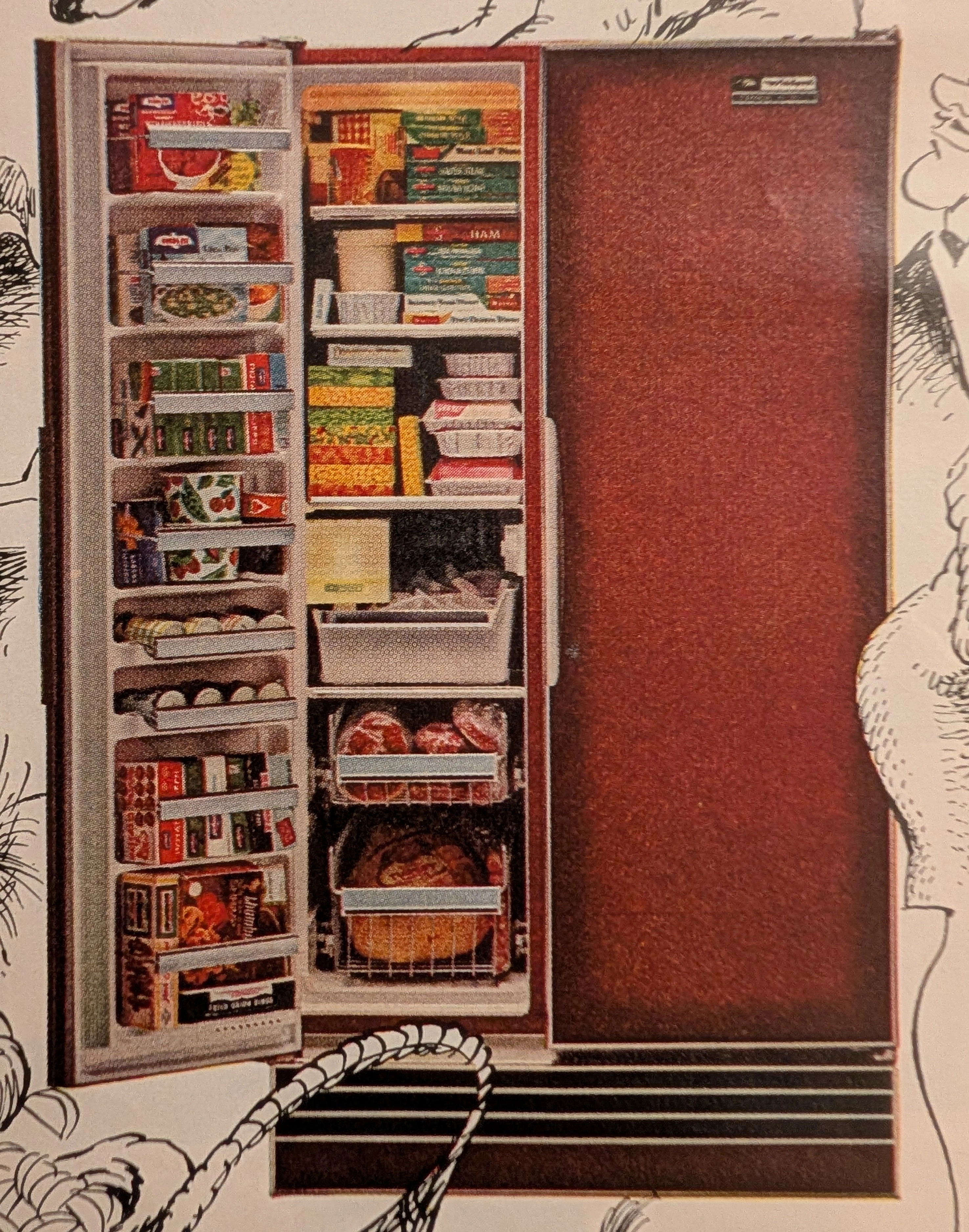
However, squarely anchoring the center of the composition is the open Whirlpool refrigerator, bursting with perfectly organized groceries. When examined closely, this specific section is revealed to be constructed from a precise, mathematically rigorous galaxy of halftone rosettes. This constitutes the mechanical fingerprint of the pre-digital analog offset printing press. Microscopic, varying sizes of Cyan, Magenta, Yellow, and Key (Black) ink dots are elegantly and systematically layered. In the context of the advertisement, this full-color, photorealistic halftone rendering acts as the only element of tangible "reality" within the cartoon universe. The refrigerator becomes a literal portal of abundance, orchestrating the human eye's perception of dimensional depth, shadow, and vibrant color amidst the black-and-white party.
Yet, the most profound factor elevating the immense value of this artifact in the contemporary collector's market is the natural, organic process of Material Degradation. The expansive margins and the overall paper substrate exhibit a genuine, unavoidable, and entirely unforgeable "Toning." This gradual, graceful transition from the original bright manufactured paper to a warm, antique ivory hue is caused by the chemical oxidation of Lignin—the complex organic polymer that binds cellulose fibers together within the raw wood pulp of the paper. As the substrate is exposed to ambient oxygen and ultraviolet light over a span of decades, the molecular structure of the lignin gracefully breaks down. This accumulation of time, this naturally evolving patina, represents the absolute core of the wabi-sabi aesthetic. The profound appreciation for the beauty found in natural aging, impermanence, and the physical manifestation of history is an irreversible chemical reaction. It is precisely this authentic degradation that acts as the primary engine driving up its market value exponentially among elite collectors, as it provides the ultimate, irrefutable proof of the artifact's historical authenticity and its journey through time.
The Rarity
RARITY CLASS: A (Excellent Archival Preservation)
Evaluated under the most exacting and rigorous archival parameters, this artifact is definitively designated as Class A.
The remarkable paradox of mid-century print advertising is that these documents were produced by the millions as explicitly "disposable media." They were inherently destined to be briefly observed, casually folded, read over morning coffee, and ultimately discarded into the recycling bins of history. For a large-format advertisement—particularly one that spans a highly vulnerable two-page spread (centerfold)—to survive intact without catastrophic structural tearing at the central bind, destructive moisture staining, or fatal fading of the delicate halftone inks constitutes a highly significant statistical archival anomaly. The impeccable structural integrity of this paper, combined with the immense artistic pedigree of its illustrator, elevates the desirability of this document far beyond standard appliance collectors, making it a "Holy Grail" for historians of American illustration and pop culture. It is ardently sought after to ensure its historical permanence through museum-grade, acid-free conservation framing.
Visual Impact
The aesthetic brilliance of this artifact lies in its masterful execution of the "Visual Juxtaposition of Order and Chaos." The designer and illustrator have orchestrated a profound psychological landscape across the two pages. The background is a deliberate cacophony of visual noise—a frenetic, out-of-control party featuring dancing guests, a piano player, people sitting on the floor, an exhausted hockey player, and bizarre scenarios that overwhelm the senses with kinetic energy.
Yet, precisely in the center of this monochrome madness stands the dark wood-grained doors and the brightly lit, perfectly organized, full-color interior of the Whirlpool refrigerator. This acts as a profound visual anchor. Despite the absolute chaos surrounding it, the interior of the refrigerator remains pristine, cold, orderly, and abundant. This stark contrast delivers a highly potent subconscious message to the consumer: "No matter how wild, demanding, or chaotic your social life (or party) becomes, the Whirlpool refrigerator will stand unwavering, providing you with perfect, organized resources." It establishes a flawless hierarchy of visual information, drawing the eye instantly to the product before allowing it to wander through the brilliant, humorous details of the artwork.
The Archive Continues
Continue the Exploration
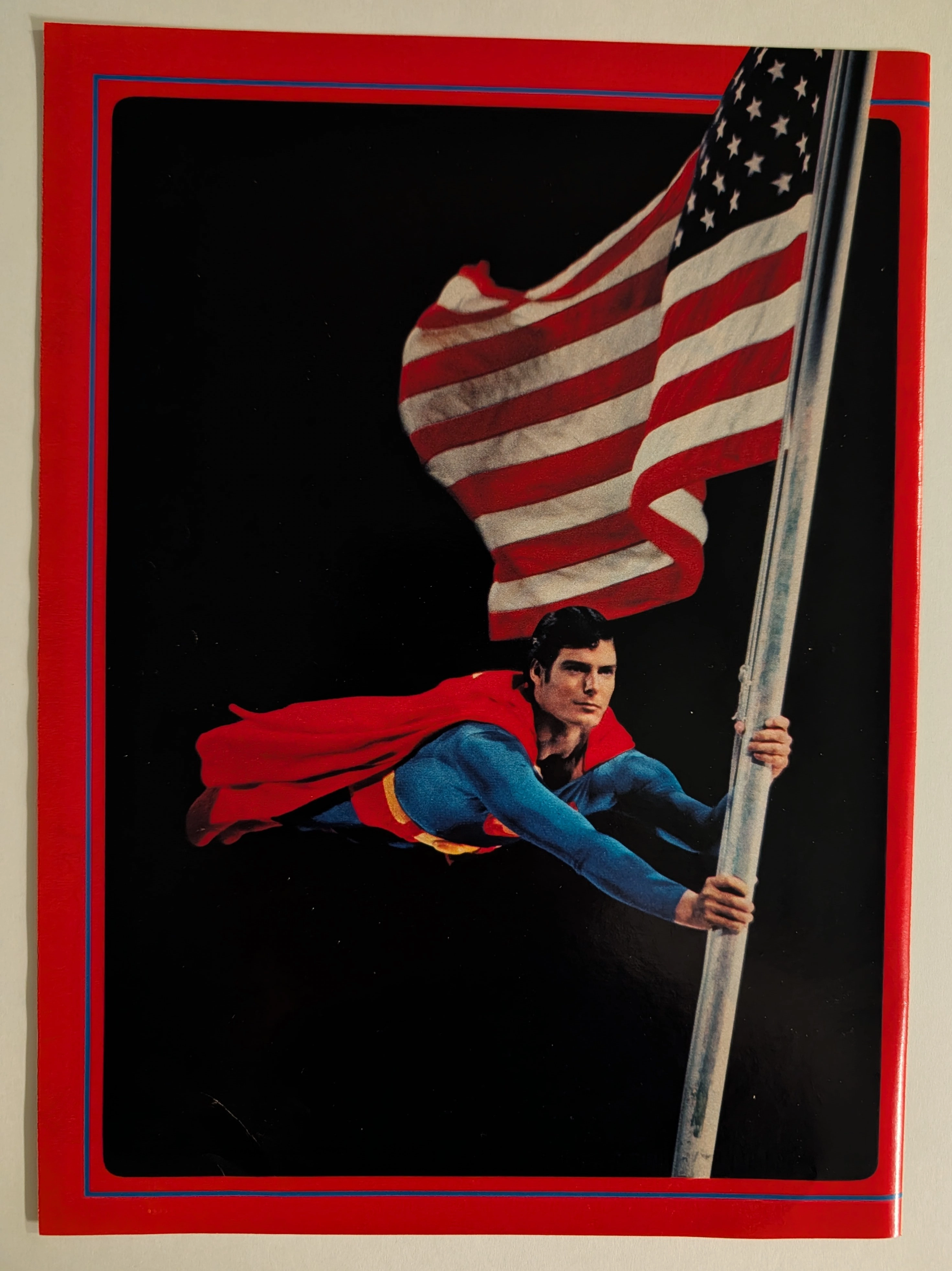
THE TIME TRAVELLER'DOISSIER : SUPERMAN — The Christopher Reeve Flagpole Postcard and the Birth of the Superhero Blockbuster
The item analyzed is an official Superman movie merchandise postcard or large-format photo card, featuring Christopher Reeve as Superman clinging dramatically to a metal flagpole while a large American flag billows behind him against a pure black background. The image is framed with a bold red outer border and a thin blue inner rule — a design consistent with the official Superman: The Movie (1978) merchandising aesthetic produced under license from Warner Bros. and DC Comics. Christopher Reeve (September 25, 1952 – October 10, 2004) portrayed Superman in four films (1978, 1980, 1983, 1987) and is universally regarded as the definitive cinematic Superman. This specific image — the flagpole scene lit dramatically against black — is one of the most iconic publicity photographs from the original film's promotional campaign. The physical item shows signs of age consistent with approximately 45–47 years, with slight surface wear and minor corner softening visible. The postcard format (estimated 4×6 or 5×7 inches) and the glossy coated stock are typical of high-quality movie merchandise of the late 1970s.
General Motors · Automotive
The Time Traveller's Dossier: The Zenith of General Motors
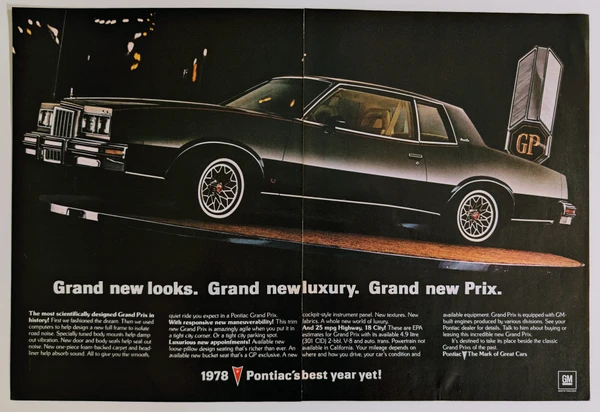
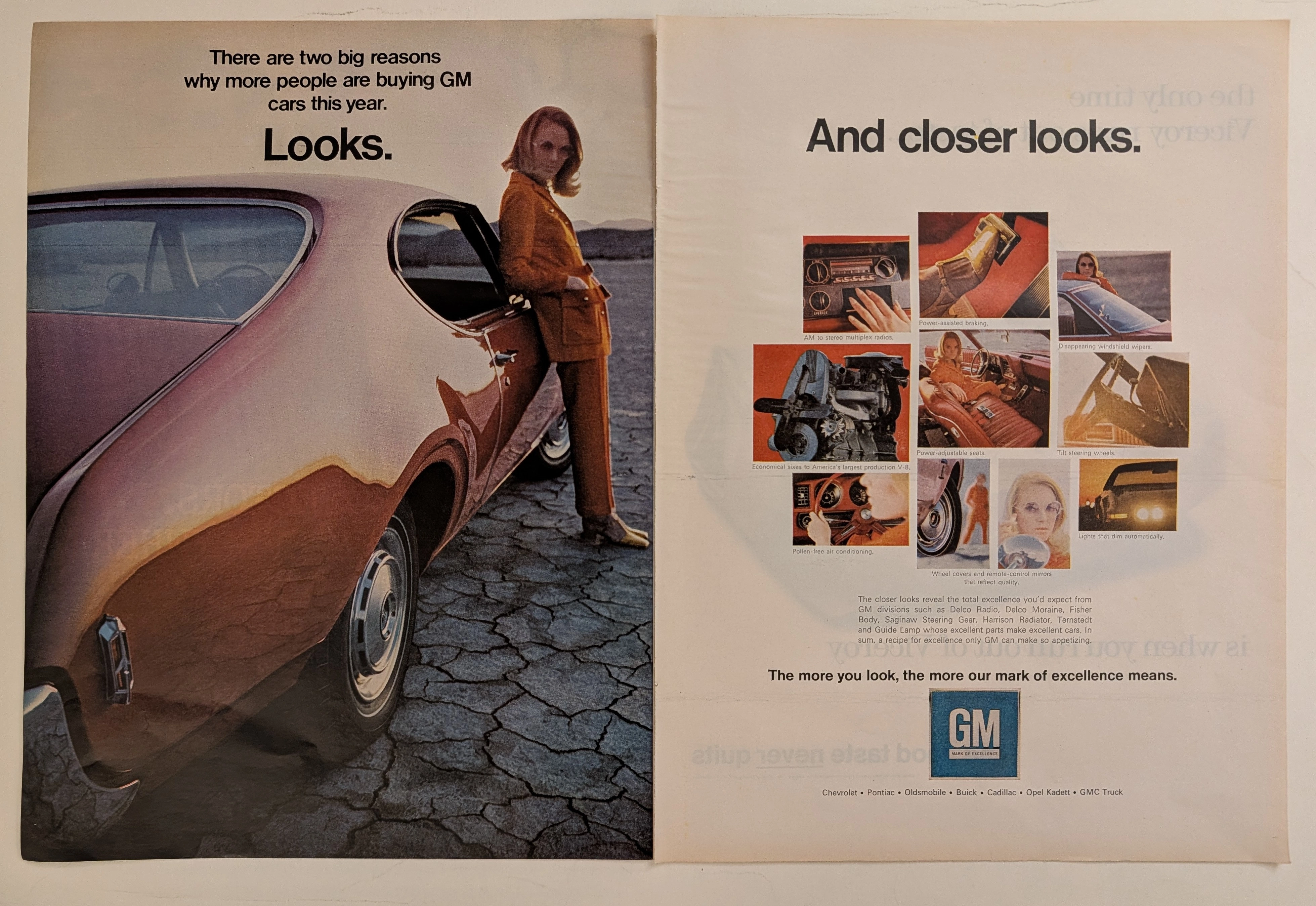
The automobile in mid-twentieth-century America was never merely a mode of transportation; it was a colossal canvas projecting industrial pride, technological advancement, and shifting consumer identities. The historical artifact elegantly and securely positioned upon the analytical table of The Record Institute today is a magnificent, large-format, two-page print advertisement for General Motors (GM), originating from the late 1960s to early 1970s. This document completely transcends the traditional boundaries of automotive catalogs. It operates as a highly sophisticated, dual-narrative cultural mirror: the left page captures the visceral, visual desire of "Looks" intertwined with a radical new era of feminine empowerment, while the right page dissects the mechanical and electronic mastery of "And closer looks," showcasing the vast ecosystem of GM's specialized manufacturing divisions. This world-class, comprehensive dossier conducts a meticulous, unyielding, and exceptionally deep examination of the artifact, operating under the absolute most rigorous parameters of historical, sociological, and material science evaluation. We will decode the immense industrial weight of the "Mark of Excellence" campaign, analyze the profound sociological implications of the female model's tailored pantsuit as a symbol of women's liberation, and dissect the anatomy of the nine revolutionary automotive technologies that defined modern driving. Furthermore, as we venture deeply into the chemical and physical foundations of this analog printed ephemera, we will reveal the precise mechanical fingerprints of the CMYK halftone rosettes and the graceful, natural oxidation of the paper substrate. This precise intersection of visual nostalgia, mid-century commercial artistry, and the immutable chemistry of time cultivates a serene wabi-sabi aesthetic—a natural, irreversible phenomenon that serves as the primary engine driving up its market value exponentially within the elite global spheres of Vintage Automotive Ephemera and Industrial Design collecting.
Rolex "Perpetually Yours"
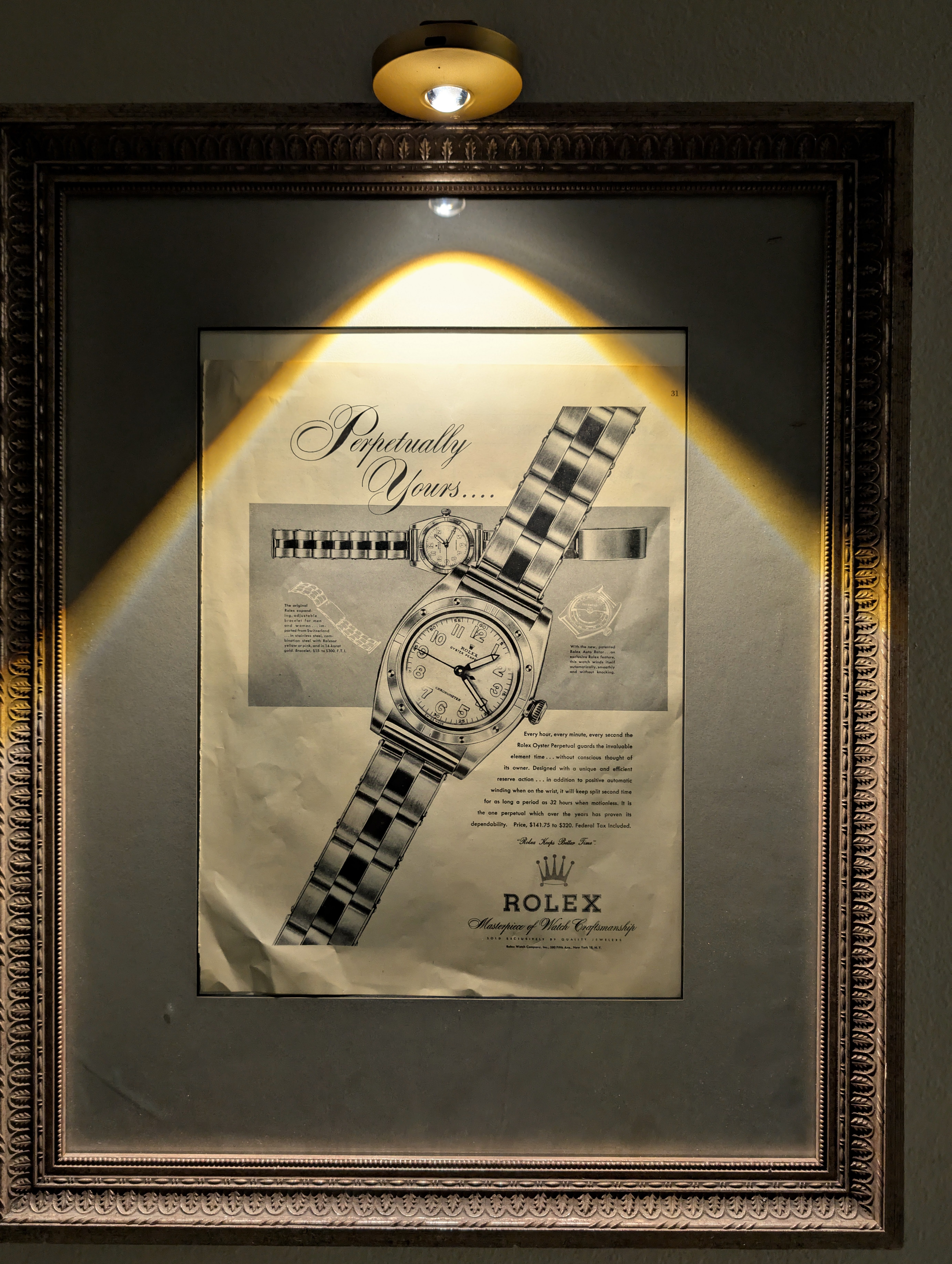
This rare mid-century Rolex "Perpetually Yours" advertisement captures the genesis of the modern Rolex empire. Featuring the legendary Oyster Perpetual, it celebrates the historic union of the world's first waterproof 'Oyster' case (1926) and the revolutionary self-winding 'Perpetual' rotor (1931). A true museum-grade horological archive, this piece represents the ultimate mechanical blueprint that defined Rolex's eternal supremacy.