
Featured
The Time Traveller's Dossier : Greyhound Scenicruiser - The Democratization of Luxury
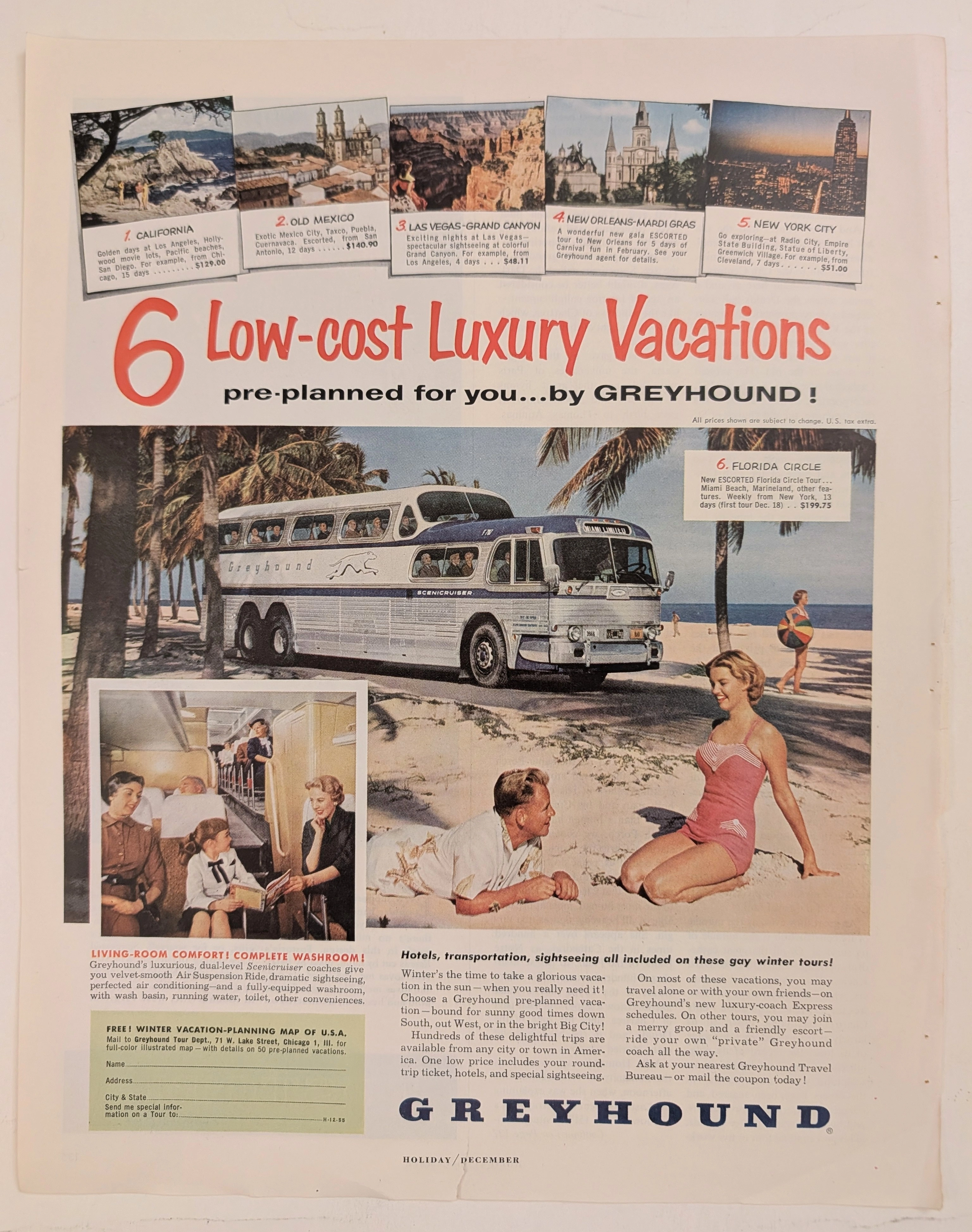
Geography was once a prison. For the vast majority of human history, the horizon was a hard limit. The wealthy could afford to escape it. The working class was forced to endure it. Travel, in its truest sense, was an aristocratic privilege, a luxury measured not just in currency, but in the ultimate currency: disposable time. Before the mid-twentieth century, if the American industrial worker travelled, it was out of desperate necessity—to find work, to flee dust bowls, to go to war. They did not travel for pleasure. Leisure was a localized phenomenon. Then, the post-war economic boom ignited. The factories that had built bombers pivoted to building consumer goods. Unions secured paid vacation time. The American middle class suddenly possessed unprecedented surplus capital and the time to spend it. But the infrastructure of luxury travel—the ocean liners and the first-class Pullman rail cars—was still psychologically and economically barred to them. The artifact presented here—a December 1955 advertisement for Greyhound from Holiday magazine—captures the exact moment the tourism industry solved this equation. This is the commercialization of Manifest Destiny. It is the moment the "Grand Tour" was stripped from the European aristocracy, repackaged into a 14-day domestic itinerary, and sold to the American everyman. The Greyhound Scenicruiser was not merely a bus. It was a terrestrial spaceship designed to conquer the sheer, terrifying scale of the North American continent. It democratized the horizon. It transformed the sprawling, intimidating geography of the United States into a pre-packaged, fixed-price commodity.