THE TIME TRAVELER'S DOSSIER: THE COMMODIFICATION OF STATUS AND THE ART OF THE ELEGANT ILLUSION
The History
(THE HISTORY: The Genesis of "Men of Distinction", SARRA's Lens, and the Psychology of the Capitalist Superman )
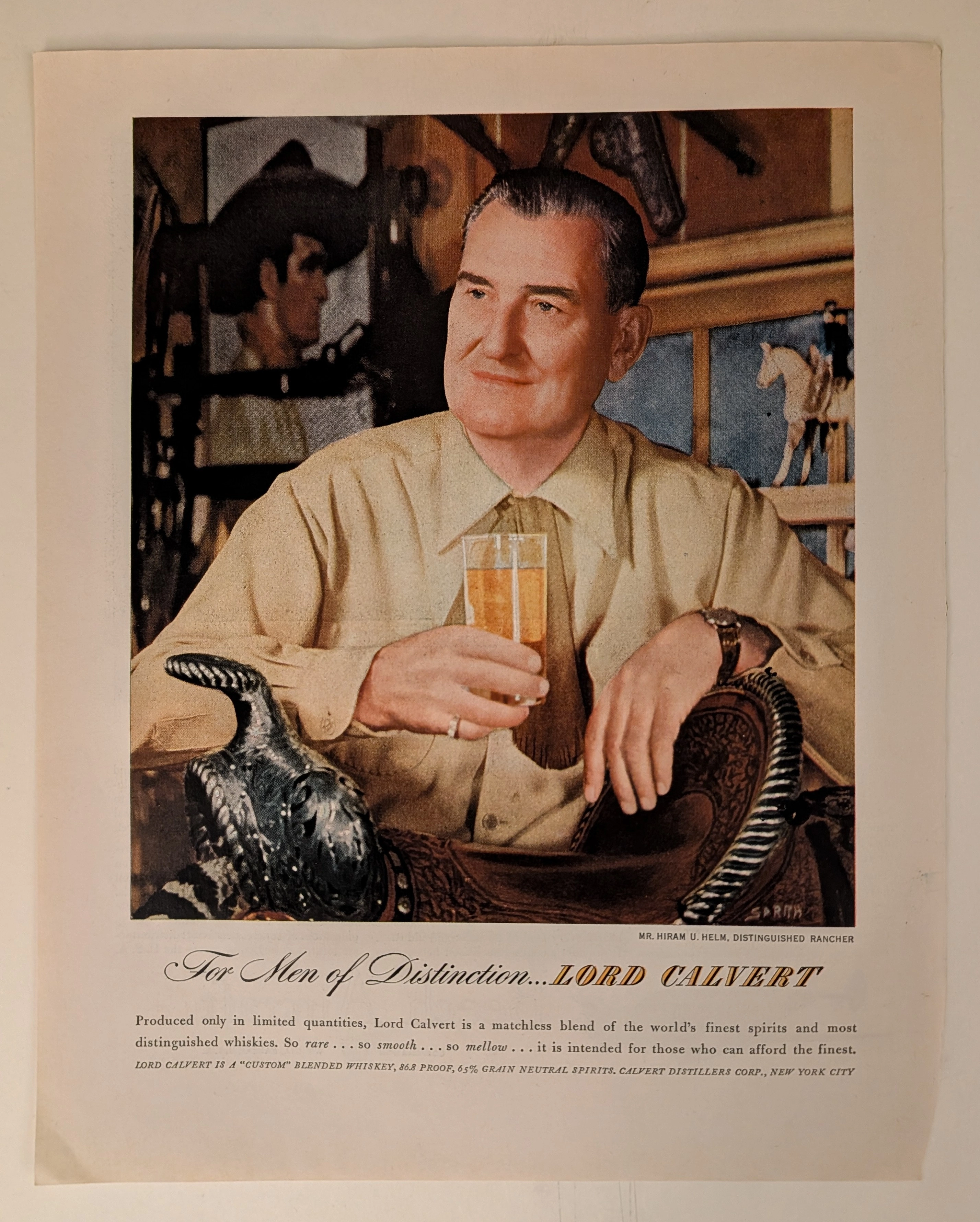
As the Chief Curator of The Record, the guardian of analog history, I welcome you to the absolute, pulsating epicenter of Madison Avenue's golden age. The impeccably preserved Historical Relic that lies before you is not a mere, soulless vintage liquor advertisement designed to push inventory. It is a forensic "Sociological Blueprint of Aspirational Wealth," meticulously engineered in the mid-century to explicitly define the parameters of male success in post-war America. This Primary Art Document serves as the formidable visual anchor for the legendary LORD CALVERT whiskey campaign.
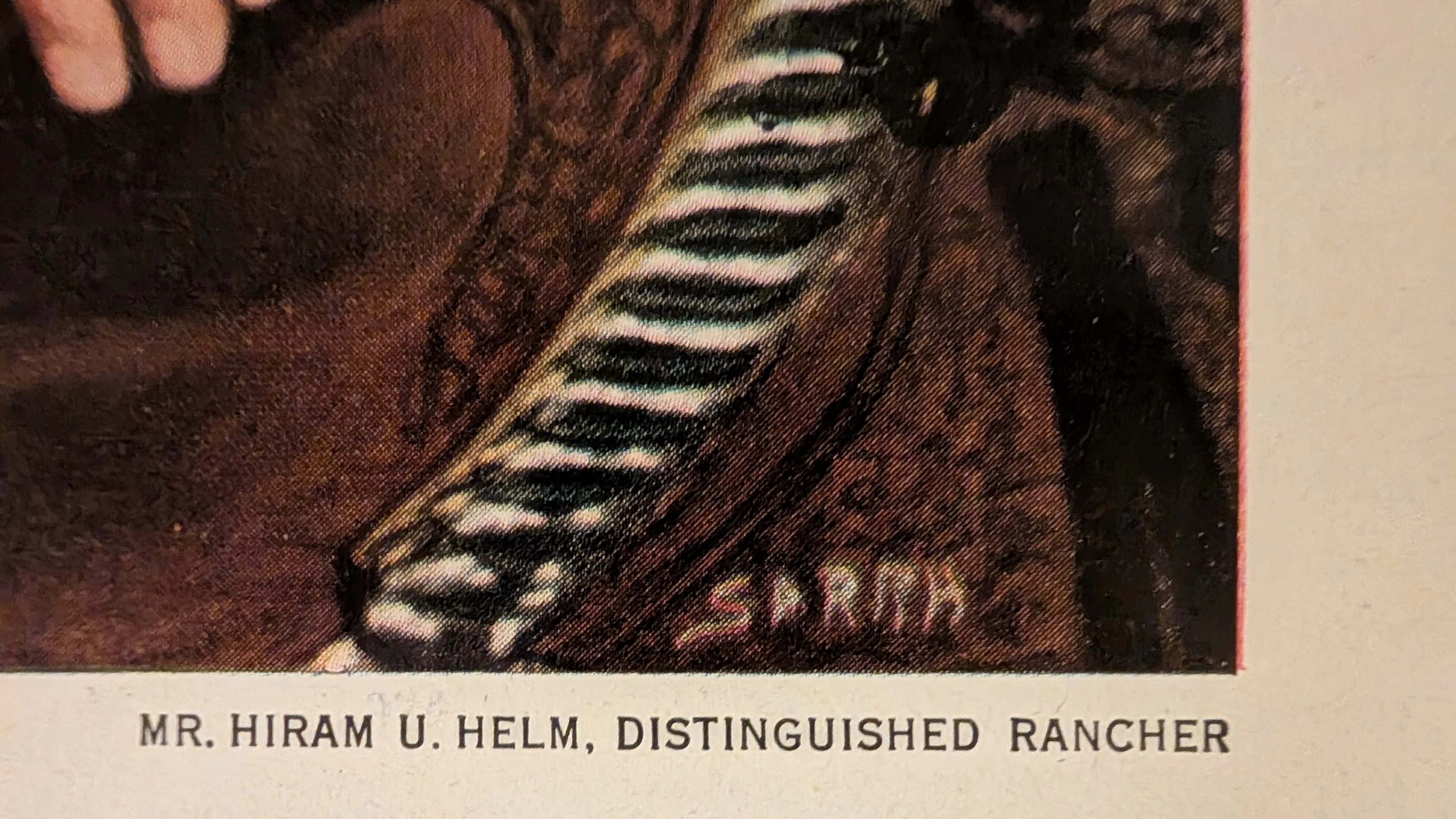
This artifact documents what is unarguably one of the greatest, most studied, and phenomenally successful advertising campaigns in corporate history: "For Men of Distinction." During this era, brilliant ad executives realized a profound truth: consumers do not buy products; they buy the idealized reflection of who they desperately want to be. The campaign revolutionized the industry by refusing to use standard male models. Instead, it exclusively featured highly successful, real-world alpha males from various professions. The imposing figure occupying this canvas is Mr. Hiram U. Helm, Distinguished Rancher.
Analyze the deliberate, culturally loaded Visual Architecture: Mr. Helm is not wearing a stifling Wall Street suit. He is dressed in a meticulously tailored western shirt, sleeves casually rolled up to display rugged, working-class masculinity, while holding a crystal glass of whiskey with effortless grace. The background is a masterclass in psychological staging: the exquisitely tooled leather saddle in the foreground, the equine statues, and the rifles mounted on the wood-paneled wall. This composition violently communicates a specific narrative: The man who has reached the absolute pinnacle of success no longer needs to prove himself in a boardroom; he retreats to his private, opulent empire to drink the finest spirits.
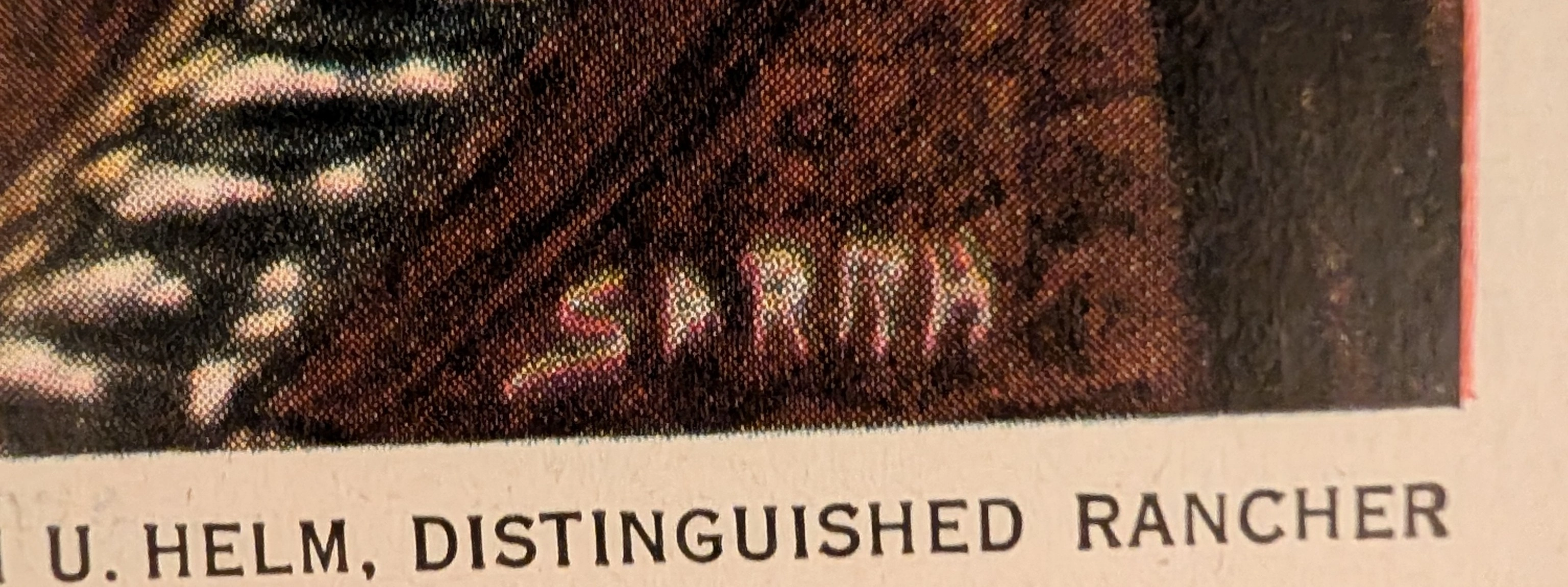
The monumental artistic gravity of this piece is forensically cemented by the signature SARRA in the lower right corner. Valentino Sarra was an absolute titan of mid-century commercial photography. He was renowned for his signature cinematic lighting and his pioneering "photo-illustration" techniques, which blended the realism of a photograph with the hyper-realistic, glowing textures of an oil painting.
The Psychological Masterstroke: The true, chilling brilliance of this advertisement lies in the microscopic text at the bottom. The copy haughtily claims that Lord Calvert is "Produced only in limited quantities" and is intended exclusively "for those who can afford the finest". Yet, the mandatory legal text reveals the industrial truth: "LORD CALVERT IS A 'CUSTOM' BLENDED WHISKEY, 86.8 PROOF, 65% GRAIN NEUTRAL SPIRITS." The sheer audacity to take a highly profitable blend containing 65% cheap neutral spirits, brand it as a "Custom" blend, and sell it at a premium price to middle-class men desperate to feel like "Men of Distinction" is the absolute zenith of Madison Avenue marketing spin. It is the masterful commodification of an illusion.
( THE PAPER: The Aesthetics of Decay (Wabi-Sabi) — The Chemical Scars of 1950s Acidic Pulp Burning Alive )
At The Record, our ultimate, uncompromising reverence is reserved for the inevitable, tragic, and spectacular beauty of analog destruction. This standalone Primary Art Document was surgically rescued, liberated, and meticulously preserved. Mass-market magazines in the mid-century were printed on highly acidic wood-pulp paper. They were explicitly designed by their publishers for mass, disposable consumption, harboring a fatal chemical death sentence within their very fibers from the millisecond they rolled off the roaring printing presses.
Direct your curatorial, analytical gaze to the surface of the paper. After more than seven decades, ambient oxygen and ultraviolet light have waged a relentless, unstoppable chemical war against the paper's inherent lignin. This irreversible oxidation process has birthed a magnificent, undeniable "patina," elegantly transforming the once-sterile white margins into a warm, creamy ivory and a deep, toasted amber. The authentic, microscopic analog halftone dots that make up Sarra's cinematic lighting on Mr. Helm's face and the intricate details of the leather saddle have settled permanently into the brittle, degrading, and fragile fibers. This is the profound Japanese aesthetic of wabi-sabi—the spiritual realization of finding absolute perfection in impermanence and decay. This paper is quietly, literally burning itself alive at a molecular level. Its slow, majestic, and irreversible death is precisely what transfigures it from a disposable magazine page into an immortal piece of Primary Art.
( THE RARITY: Class A — A Miraculous Survivor of the Brutal Consumer Purges )
To understand the immense valuation of this artifact, you must comprehend the brutal reality of ephemera survival. Millions of these advertisements were printed, but they were manufactured exclusively and purposefully to be thrown away. The statistical probability of a magazine page surviving 70 years in such crisp, visually immaculate condition—where the micro-details of SARRA's signature remain hyper-sharp and the paper bears no devastating, structure-ruining moisture rot—is staggeringly, miraculously low.
When you fuse this extreme physical scarcity with the monumental, legendary historical presence of the "Men of Distinction" campaign—a veritable holy grail for Americana, advertising history, and sociology scholars globally—this artifact unequivocally commands the highly prestigious Rarity Class A designation. It has evolved far, far beyond a disposable piece of vintage commercial advertising. It is a highly coveted Historical Relic, demanding to be framed and fiercely protected by an alpha curator who truly understands the heavy, beautiful, and irreplaceable weight of American capitalist history.
Exhibition Halls
The Archive Continues
Continue the Exploration
GE · Technology
The Time Traveller's Dossier: Capturing the Outlaw – The General Electric Flashcube and the Democratization of Amateur Photography
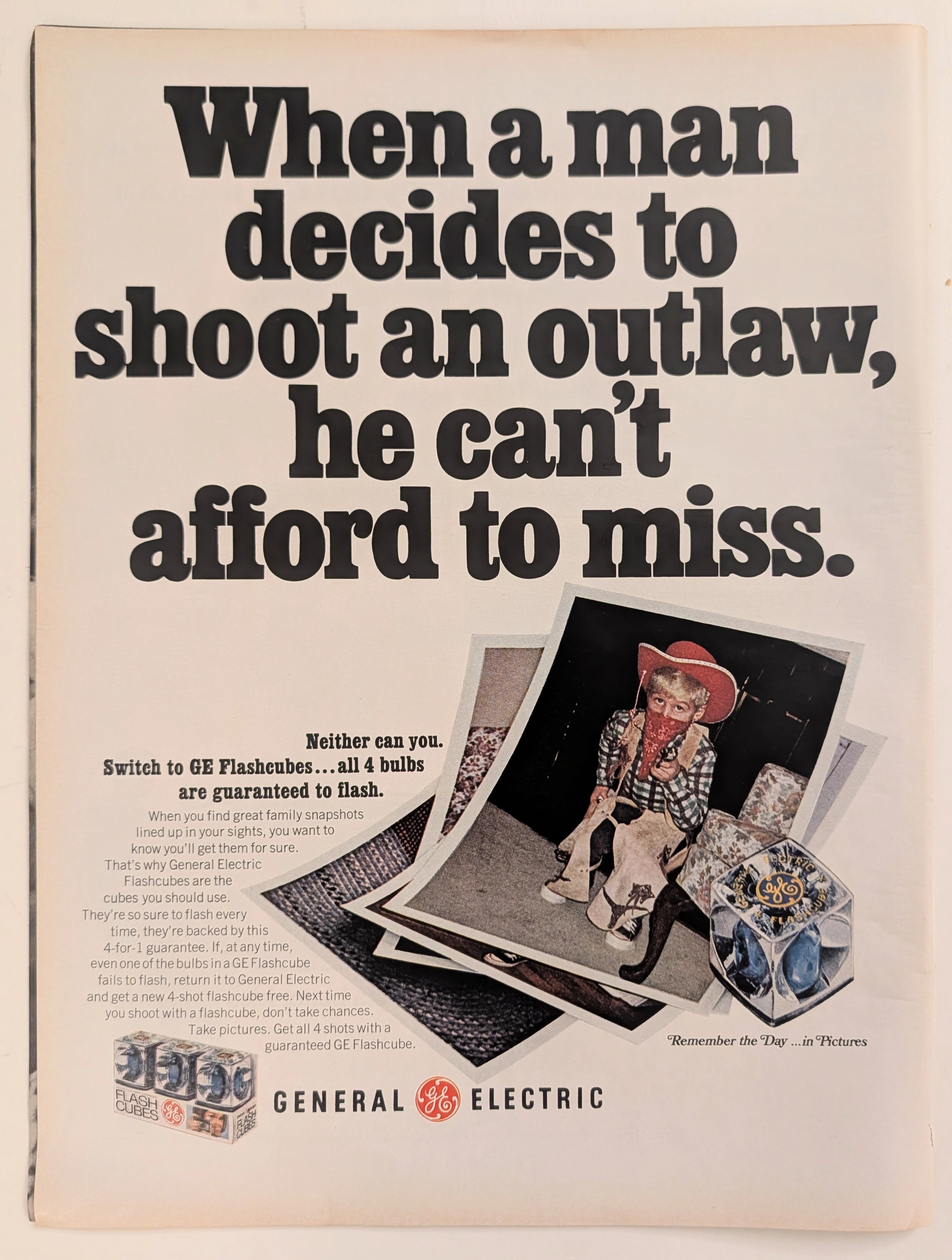
The evolution of twentieth-century domestic life and the archiving of the American family unit was fundamentally defined by the rapid, uncompromising advancement of accessible consumer photography. The historical artifact elegantly and securely positioned upon the analytical table of The Record Institute today is a striking, narrative-driven full-page print advertisement for General Electric (GE) Flashcubes. This document completely transcends the standard, utilitarian boundaries of photographic equipment marketing. It operates as a highly sophisticated, multi-layered cultural mirror, reflecting a precise era in consumer psychology where the anxiety of "missing the moment" was aggressively addressed by industrial innovation. By utilizing the playful, universally recognizable motif of childhood dress-up—a young boy costumed as an Old West "outlaw"—GE sought to reassure the mid-century parent that their technological consistency would never fail the spontaneous archiving of family history. This world-class, comprehensive dossier conducts a meticulous, unyielding, and exceptionally exhaustive examination of the artifact, operating under the absolute most rigorous parameters of historical, sociological, and material science evaluation. Dedicating the overwhelming majority of our analytical focus to its immense historical gravity, we will decode the brilliant marketing psychology embedded within the "shoot an outlaw" double entendre, analyze the profound sociopolitical impact of the Flashcube's invention on consumer behavior, and dissect the economic realities of the "4-for-1 guarantee." Furthermore, as we venture deeply into the chemical and physical foundations of this analog printed ephemera, we will reveal the precise mechanical fingerprints of the CMYK halftone rosettes captured in the stunning macro imagery of the GE logo. Finally, we will assess its archival rarity, exploring how the graceful, natural oxidation of the paper substrate cultivates a serene wabi-sabi aesthetic—a natural, irreversible phenomenon that serves as the primary engine driving up its market value exponentially within the elite global spheres of Vintage Commercial Ephemera and Technology Archives.
Magnavox Star System 1981 Leonard Nimoy TV Advertisement | 'The Picture of Reliability' | Deep Analysis Rarity Class A-SS
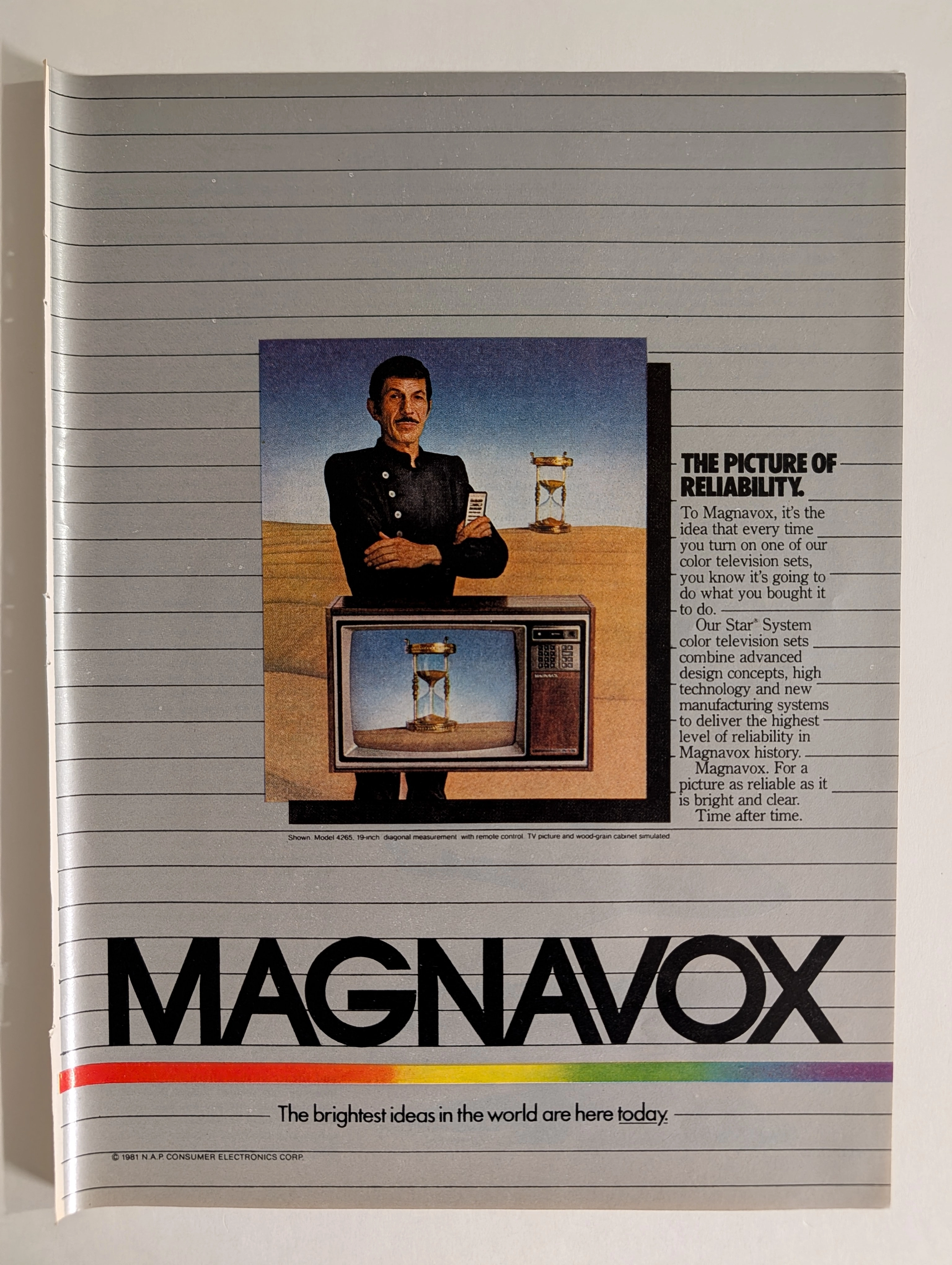
The advertisement analyzed here is a full-page full-color magazine promotion for Magnavox's Star® System color television sets, copyright © 1981 N.A.P. Consumer Electronics Corp. The ad features what is almost certainly Leonard Nimoy — iconic for his role as Mr. Spock in Star Trek — dressed in a black nehru-collar uniform against a surrealist desert landscape, standing above a Magnavox color TV set (Model 4265, 19-inch diagonal) that displays an hourglass on screen. A second hourglass appears behind him. The visual concept communicates timeless reliability. The headline 'The Picture of Reliability' and tagline 'The brightest ideas in the world are here today' frame Magnavox's Star System as the pinnacle of 1981 television technology. The rainbow spectrum stripe at the bottom is a distinctive brand element that ran across Magnavox advertising throughout the early 1980s. N.A.P. (North American Philips) Consumer Electronics Corp. was the American subsidiary of Philips that owned the Magnavox brand at this time, having acquired it in 1974.
THE TINY TEXT THAT AUTHENTICATES HISTORY Why Fine Print in Magazine Advertisements Matters More Than You Think
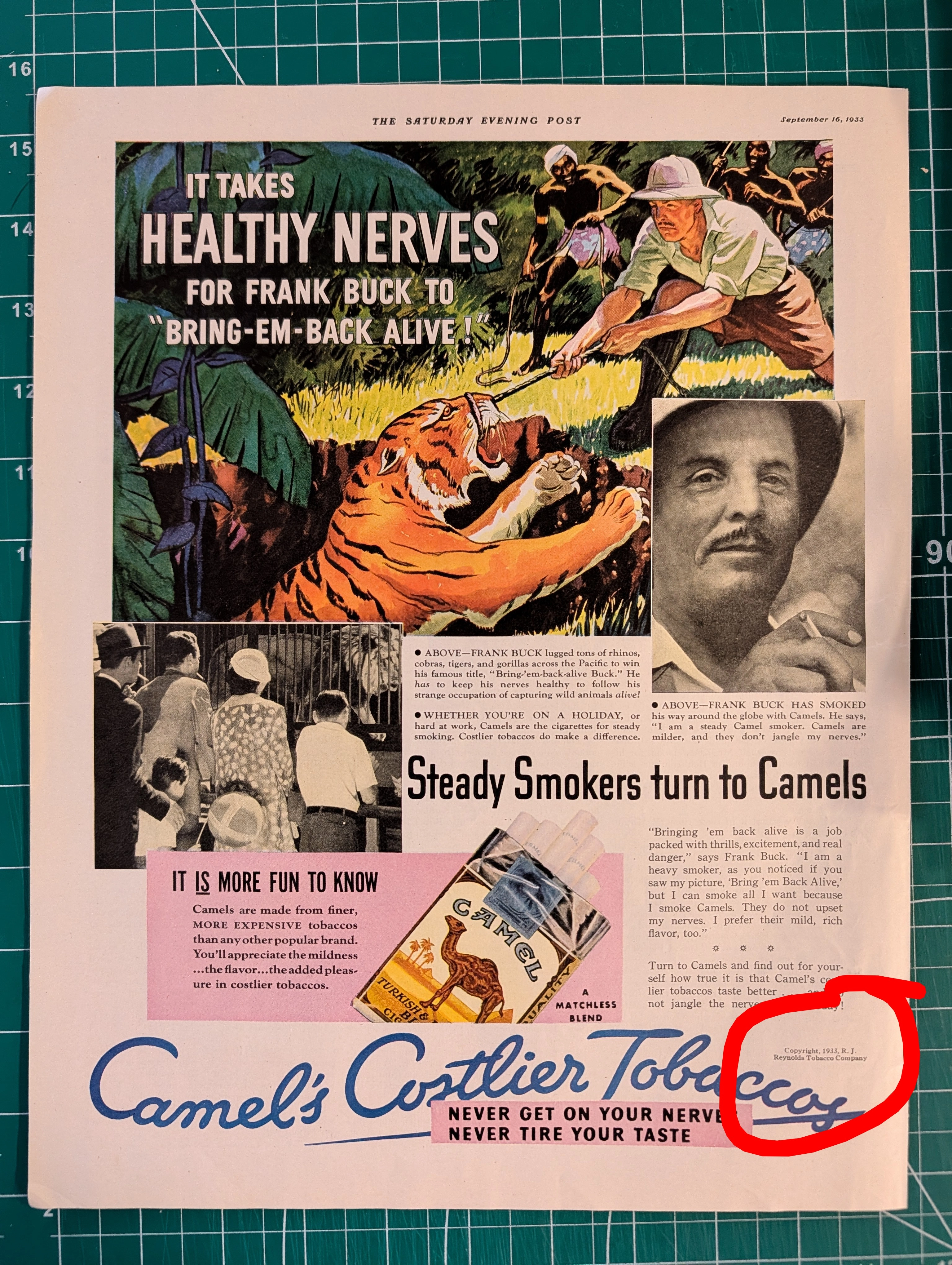
Tiny copyright notices in magazine ads originated from mandatory US copyright law (1909 Act) and sector-specific regulations (BATF for alcohol). They function as layered authentication evidence: typographic era-consistency, regulatory language accuracy, ink/paper forensics, and contextual integrity — paralleling vintage band tee authentication methods. Collaboration credits (Pierre Cardin × Tiffany & Co.) and creative credits (photography, calligraphy, fashion) document commercial relationships lost to no other record.