Magnavox Star System 1981 Leonard Nimoy TV Advertisement | 'The Picture of Reliability' | Deep Analysis Rarity Class A-SS
The History
Historical Context
1.1 Magnavox, Philips, and the American TV Market of 1981
Magnavox was founded in Napa, California in 1917 as a manufacturer of loudspeakers and radio equipment, growing into one of America's premier consumer electronics brands over the following six decades. The company's trajectory changed fundamentally in 1974 when Philips N.V. of Eindhoven, Netherlands — one of the largest electronics conglomerates in the world — acquired Magnavox and integrated it into its North American subsidiary, N.A.P. (North American Philips) Consumer Electronics Corp. This acquisition brought European engineering philosophy and Philips' considerable technological resources to bear on an established American brand with strong consumer recognition.
By 1981, Magnavox occupied a distinct market position: it was neither the cheapest (GE, RCA budget lines) nor the most technically innovative (Sony Trinitron's Aperture Grille CRT was widely considered the finest consumer picture tube of the era), but it positioned itself as the trusted, reliable American-heritage brand backed by European engineering. The advertisement's central claim — 'The Picture of Reliability' — is precisely calibrated to this market position. In 1981, American consumers upgrading from their first-generation color televisions (purchased in the late 1960s and early 1970s) were making $400–$800 purchases they expected to last a decade. Reliability, not innovation, was the deciding purchase criterion.
The Star® System name given to Magnavox's premium line in this period carried associations of both the Philips technical pedigree and — whether intentionally or not — the Star Trek franchise that had captured American popular imagination since 1966 and was experiencing a second major wave of cultural relevance following Star Trek: The Motion Picture (1979). The coincidence, if it is a coincidence, was extremely commercially fortuitous.
1.2 Leonard Nimoy — The Uncredited Ambassador of Technology
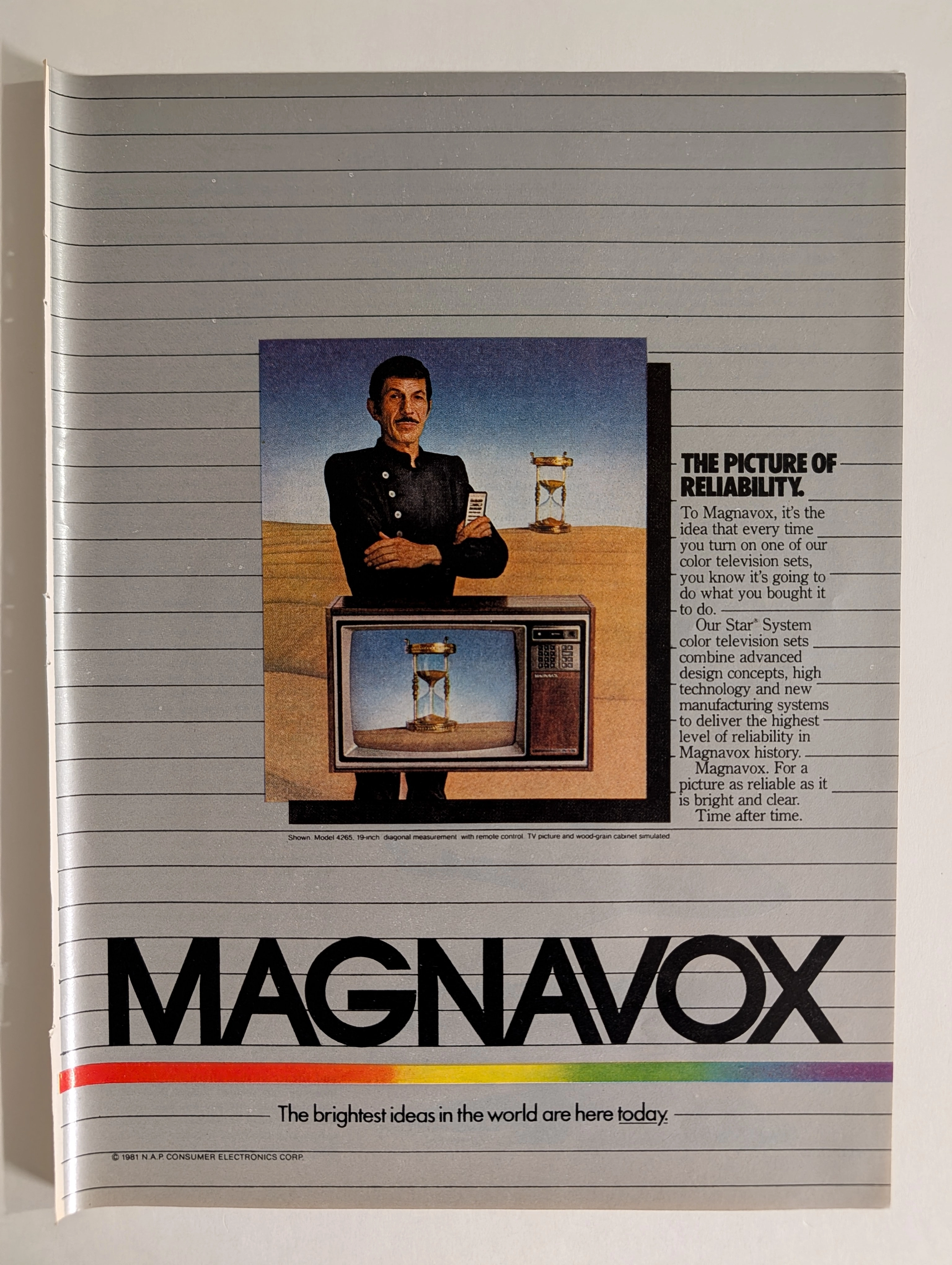
The central figure of this advertisement is a man in a black nehru-collar jacket with silver buttons, standing arms-crossed in a confident posture in a desert landscape, with an hourglass behind him and a Magnavox television set displaying a second hourglass at his feet. The physical resemblance to Leonard Nimoy — born Leonard Simon Nimoy on March 26, 1931, died February 27, 2015 — is striking and appears to go beyond coincidence. The sharp facial structure, the distinctive mustache, the confident bearing, and above all the nehru-collar black jacket with its deliberate echo of the Starfleet uniform from Star Trek, all point toward a deliberate marketing choice.
Leonard Nimoy in 1981 was at a peak of renewed cultural prominence. Star Trek: The Motion Picture had been released in December 1979 to considerable commercial success, and Star Trek II: The Wrath of Khan would follow in June 1982 — the film widely considered the finest of the franchise and the one that definitively secured the Original Series crew's place in American popular culture. Nimoy was, in this period, not merely a nostalgic television figure but an active and commercially valuable celebrity.
The marketing strategy of using a figure who strongly resembles Mr. Spock without explicitly naming him is sophisticated and legally cautious. Magnavox/N.A.P. could exploit the powerful cultural associations of Spock — logic, rationality, advanced technology, reliability, the future — without paying licensing fees to Paramount, which owned the Star Trek franchise. The nehru uniform is a deliberate visual signal to the audience: this is science-fictional authority, which is precisely the authority you want endorsing your television set. The desert landscape and hourglasses reinforce the 'time after time' tagline with which the advertisement closes, adding a philosophical depth unusual for a consumer electronics ad of this period.
1.3 The Visual Concept — Surrealism in Service of Consumer Electronics
The photographic composition of this advertisement belongs to the tradition of surrealist commercial photography that flourished in American magazine advertising from the late 1970s through the mid-1980s. The combination of a human figure, an anachronistic object (the hourglass), a technological object (the television), and a natural landscape (the desert) in a single, impossible-seeming tableau owes a clear debt to the visual vocabulary of René Magritte and Salvador Dali, filtered through the commercial sensibilities of Madison Avenue. The desert setting, lit with the clean blue sky of the American Southwest, creates a timeless and slightly otherworldly environment that strips away the domestic context in which televisions were actually used — thereby presenting the Magnavox as an object that transcends its mundane function.
The rainbow stripe at the base of the advertisement is a distinctive Magnavox/Philips visual identity element that ran consistently through the company's advertising in the early 1980s. Its significance is twofold: it directly references the color capability of the television product (a full spectrum of colors rendered accurately) and it provides a brand-recognition anchor that consumers could identify across multiple advertising contexts. The massively scaled MAGNAVOX wordmark below the rainbow stripe communicates with the confidence of a company that does not need to explain itself.
1.4 N.A.P. and the Philips Ecosystem
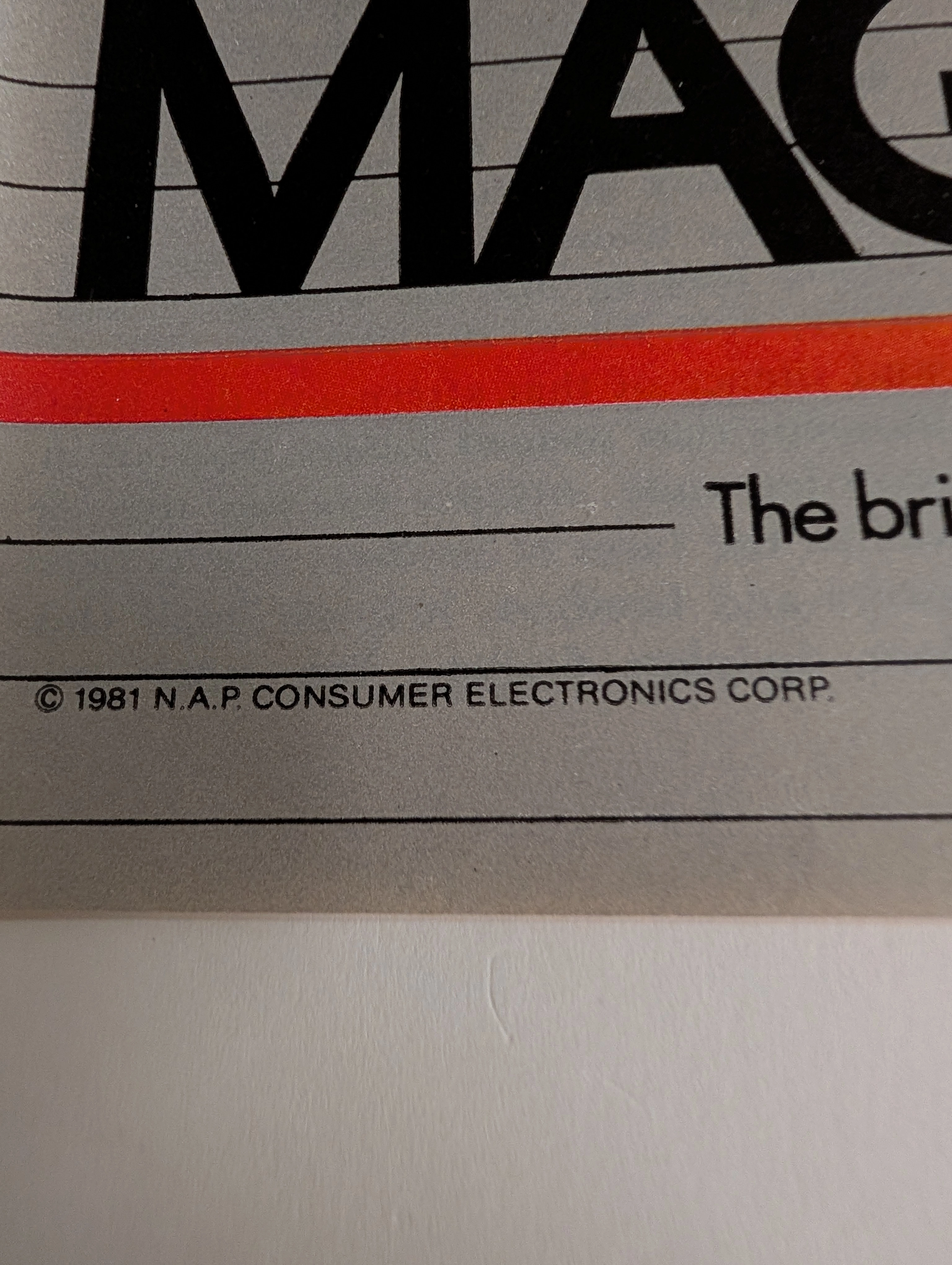
The copyright notice '© 1981 N.A.P. Consumer Electronics Corp.' places this advertisement within the broader context of the Philips global empire at the height of its consumer electronics power. Philips in 1981 was one of the world's leading technology companies — a pioneer of the compact cassette (1963), actively developing LaserDisc technology (which Magnavox marketed as Magnavision), and simultaneously collaborating with Sony on the compact disc standard that would revolutionize audio in 1982. To own a Magnavox in 1981 was to participate in this global technological ecosystem, even if most American consumers were unaware of the Philips connection.
Paper and Production Analysis (15%)
2.1 Paper and Condition
The paper stock is premium coated magazine weight, estimated at 80–100 gsm with a semi-gloss calendered finish, consistent with major American consumer magazine production of 1981. The condition visible in the photograph is Very Good to Fine for its 43–44-year age. Most notable is the exceptional preservation of the rainbow spectrum stripe at the base of the advertisement, which requires precise four-color register to maintain the smooth gradient transitions between colors — after over four decades, these transitions remain clean and unbroken. The horizontal stripe background pattern, which required very tight halftone screen registration to render evenly across the full page, also appears intact and sharp. The spine shadow visible at the left edge confirms the page has been maintained within its original bound magazine, the optimal storage condition for such material.
2.2 Technical Production Notes
The background pattern of horizontal grey stripes is a characteristic element of Magnavox advertising in 1981–1983, requiring exceptional registration precision in the printing process. This would have been a four-color offset lithographic print job run at approximately 150 LPI screen ruling. The central photographic composite — combining at minimum a studio portrait of the figure, a separately photographed hourglass, a studio photograph of the television set, and a location or studio desert background — would have been assembled in the darkroom using multiple-exposure or sandwiching techniques, the pre-digital equivalent of Photoshop compositing. The seamlessness of this composite, which remains convincing even under careful examination, represents high-end commercial photography and photo-retouching of the period.
Rarity, Market Valuation, and Classification
3.1 The Nimoy Variable — A Bifurcated Market
The collectibility of this advertisement is unusually dependent on a single confirmable fact: whether the figure depicted is Leonard Nimoy. If confirmation is available — through advertising agency records, Nimoy's personal records, or any contemporary source identifying this campaign — the piece transforms from a category-A vintage consumer electronics advertisement into a category-SS Leonard Nimoy / Star Trek memorabilia item, with all the premium pricing that entails. The Star Trek collector market is large, global, emotionally invested, and capable of sustaining prices that would seem irrational to a vintage advertising collector. A confirmed Leonard Nimoy television advertisement from 1981 would be a significant discovery.
3.2 Current Market Valuation (2024–2025)
As a Magnavox consumer electronics advertisement: Good $20–$50; VG $50–$100; Fine $100–$180. As a confirmed Leonard Nimoy / Star Trek adjacent advertisement: $150–$500+ with a strong upward ceiling driven by Trek collector demand. The complete source magazine in comparable condition: $100–$450 general market, potentially $300–$800 if the Nimoy connection is confirmed and marketed to Trek collectors specifically.
3.3 Future Market Outlook (2025–2035)
Star Trek's 60th anniversary in 2026 will stimulate significant collector activity across all Trek-adjacent memorabilia. The analog nostalgia wave — which has already rehabilitated vinyl records, instant film, and CRT video game monitors in the collector market — will continue to appreciate vintage television advertising. The Nimoy estate's ongoing licensing activity and the continued global popularity of Star Trek across streaming platforms ensures sustained collector interest. Projected values by 2030: $80–$500 general market; $200–$900+ confirmed Nimoy/Trek market. Potential for reclassification to SS upon confirmation of Nimoy's involvement.
★ RARITY CLASS: A ★ — Magnavox Star System 1981 Full-Page Ad — Probable Leonard Nimoy / Philips NAP
Class A as a general vintage consumer electronics advertisement, with strong potential for SS reclassification upon confirmed Nimoy attribution. The combination of Magnavox brand (now essentially dormant in the U.S. market), Philips technological heritage, the 1981 CRT television historical context, and the likely Star Trek / Nimoy connection places this advertisement at the intersection of at least three independent collector communities: vintage advertising, vintage consumer electronics, and Star Trek memorabilia. Surviving examples in Fine condition are uncommon; confirmed Nimoy examples would be genuinely scarce.
Exhibition Halls
The Archive Continues
Continue the Exploration
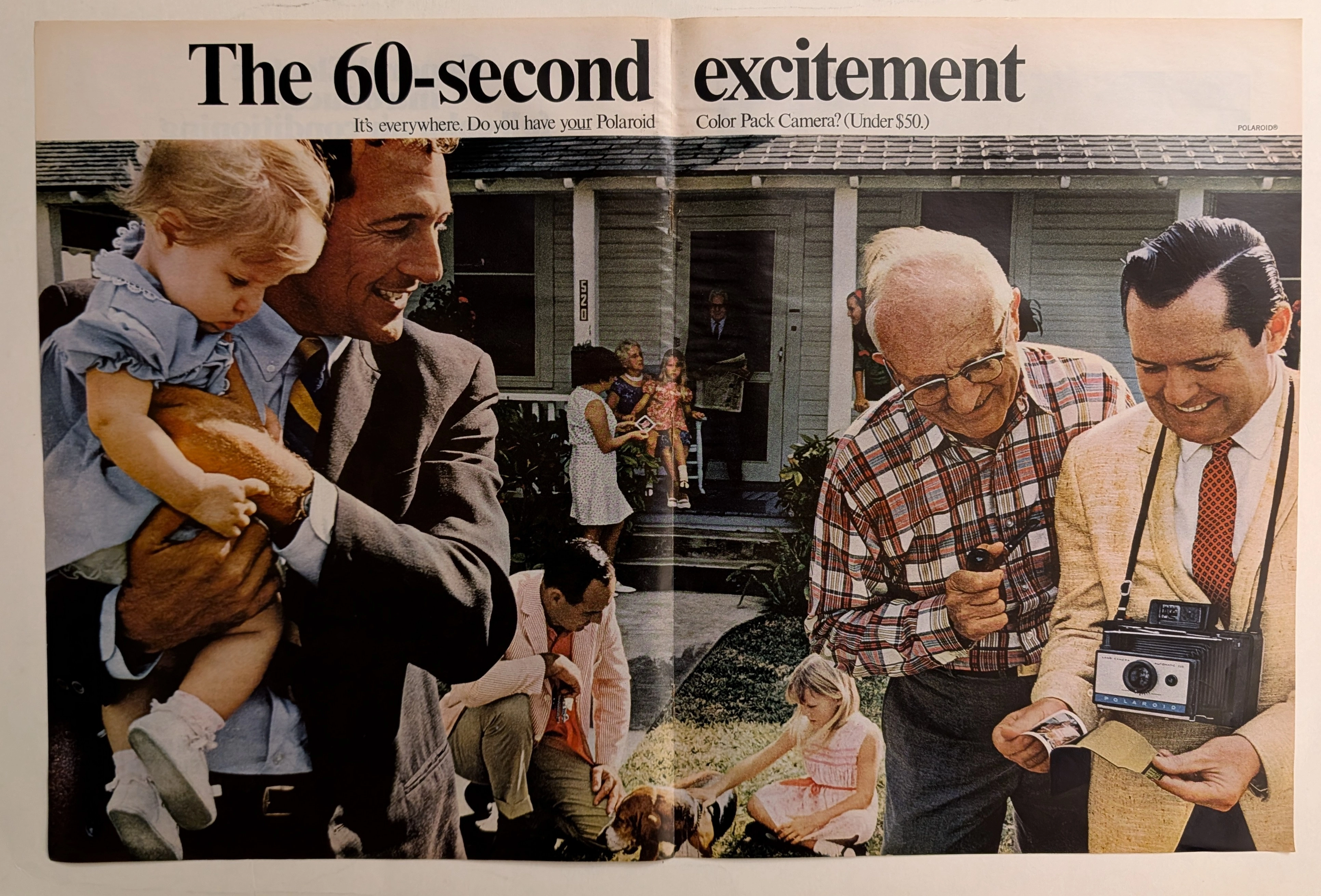
Polaroid · Technology
The Time Traveller's Dossier: The Instant Gratification Protocol – The Polaroid Color Pack Camera Exhibitio
The evolution of photography from a delayed, solitary, and highly technical chemical process into an instantaneous, shared, and interactive social event stands as one of the most profound technological and sociological shifts of the twentieth century. The historical artifact securely and elegantly positioned upon the analytical table of The Record Institute today is a majestic, large-format, two-page print advertisement for the Polaroid Color Pack Camera (Automatic 210), originating from the cultural zenith of the late 1960s. This document completely transcends the traditional boundaries of camera marketing and consumer electronics promotion. It operates as a sophisticated, multi-layered declaration of how optical innovation fundamentally altered human interaction, transforming the act of taking a photograph from a mere recording of memory into an active, thrilling focal point of social gatherings and familial bonding. This world-class, comprehensive dossier conducts a meticulous, unyielding, and exceptionally deep examination of the artifact, operating under the absolute most rigorous parameters of historical, sociopolitical, and material science evaluation. We will decode the vibrant, multi-generational suburban scene that perfectly encapsulates the "60-second excitement" phenomenon, analyzing the complex historical lineage of the Polaroid Corporation and the specific cultural impact of the Automatic 210 model. Furthermore, as we venture deeply into the chemical and physical foundations of this analog printed ephemera, we will reveal the precise mechanical fingerprints of the CMYK halftone rosettes and the graceful, natural oxidation of the paper substrate. This precise intersection of visual nostalgia, mid-century commercial artistry, and the immutable chemistry of time cultivates a serene wabi-sabi aesthetic—a natural, irreversible phenomenon that serves as the primary engine driving up its market value exponentially within the elite global spheres of Vintage Photography Ephemera and Americana collecting.
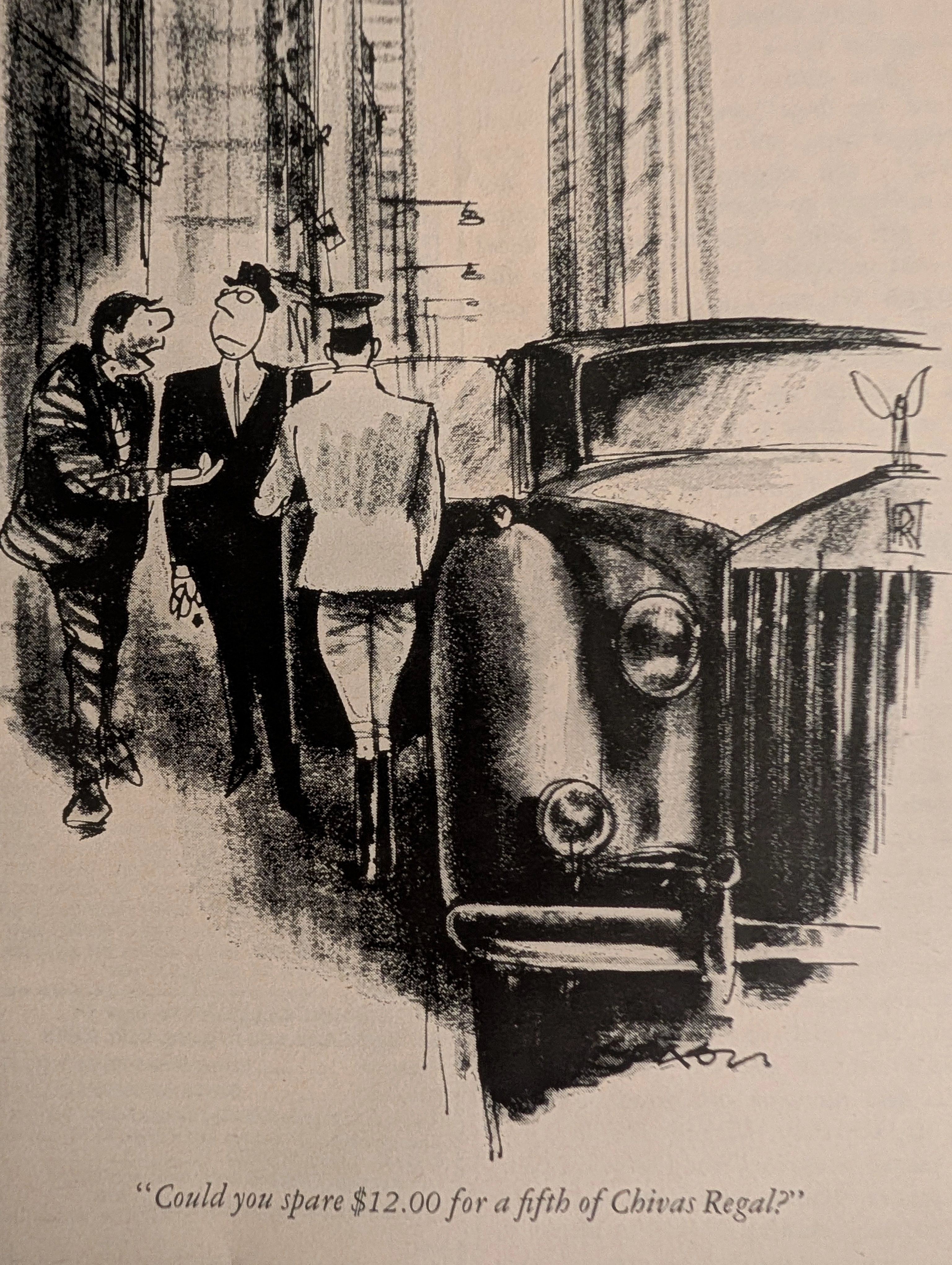
Vintage Chivas Regal x Charles Saxon Ad: The Vanishing Playboy Art | The Record
An in-depth look at the Chivas Regal ad from Playboy magazine, illustrated by legendary artist Charles Saxon. A magazine-sized piece of authentic analog art on degrading vintage paper, driving up its value as an alternative asset.
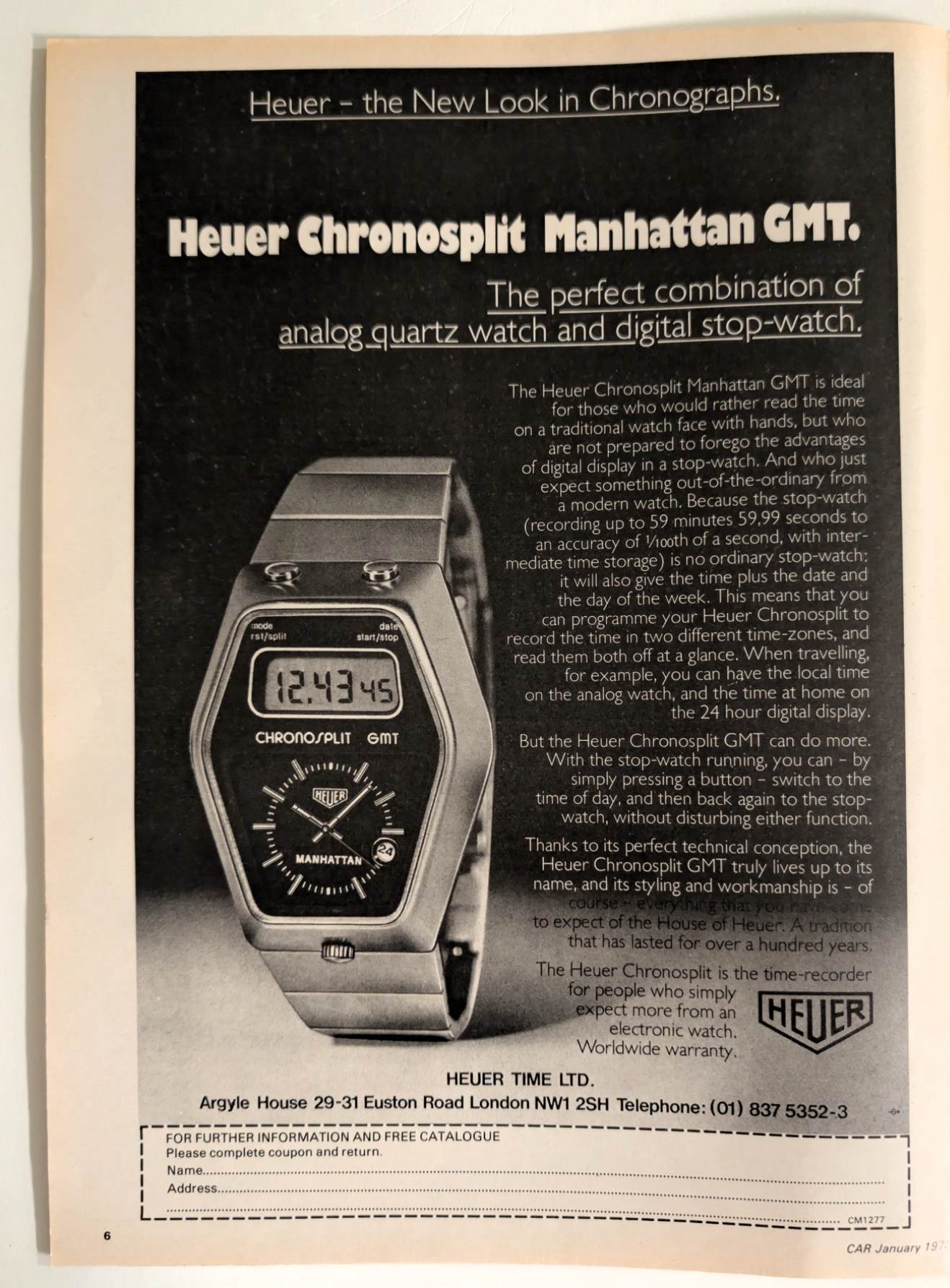
Ahead of Its Time: The 1978 Heuer Chronosplit Manhattan GMT
Rediscover the ultimate analog-digital hybrid timepiece through a rare 1978 vintage magazine advertisement, meticulously preserved as a single sheet cut-out.