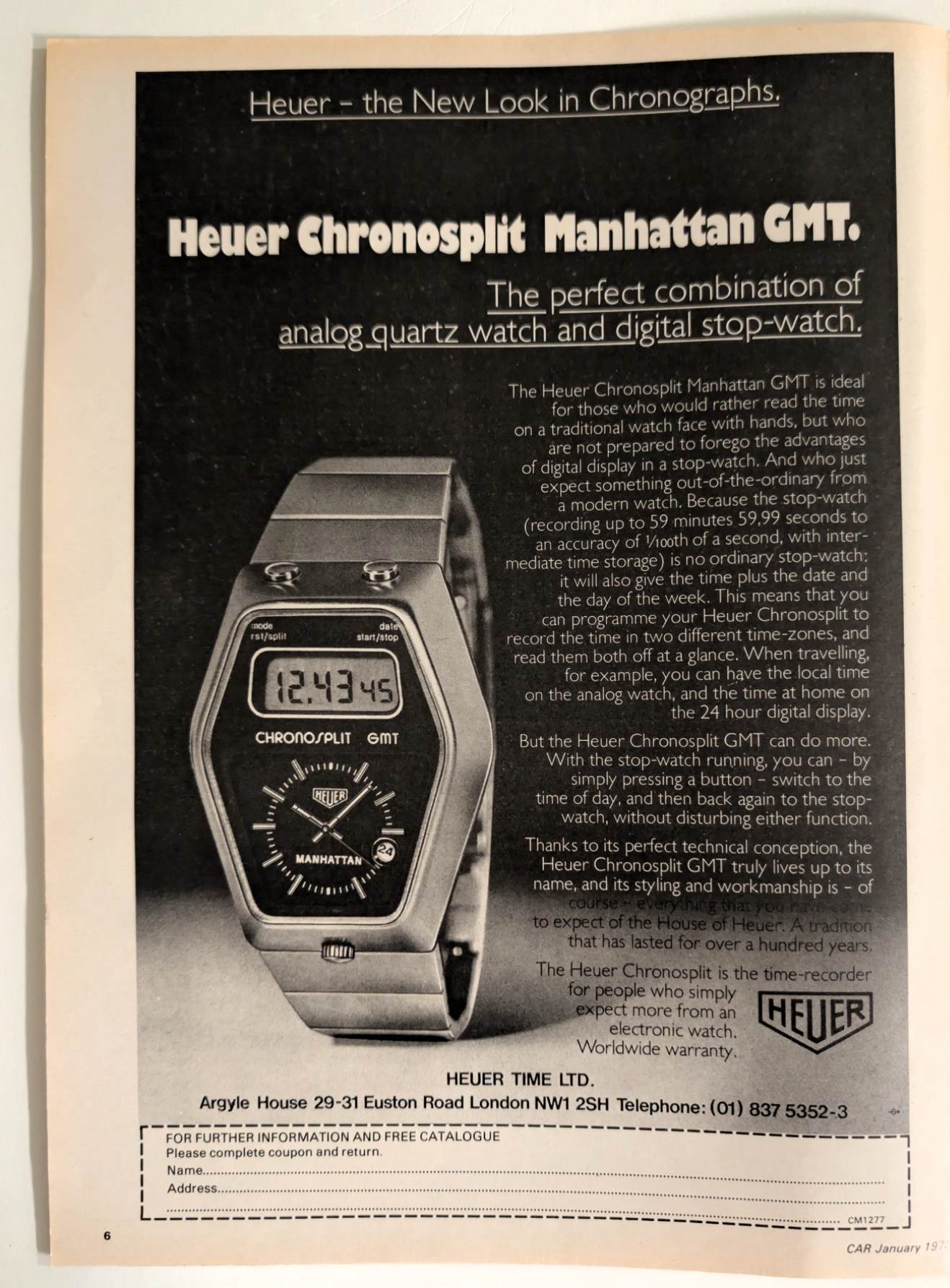
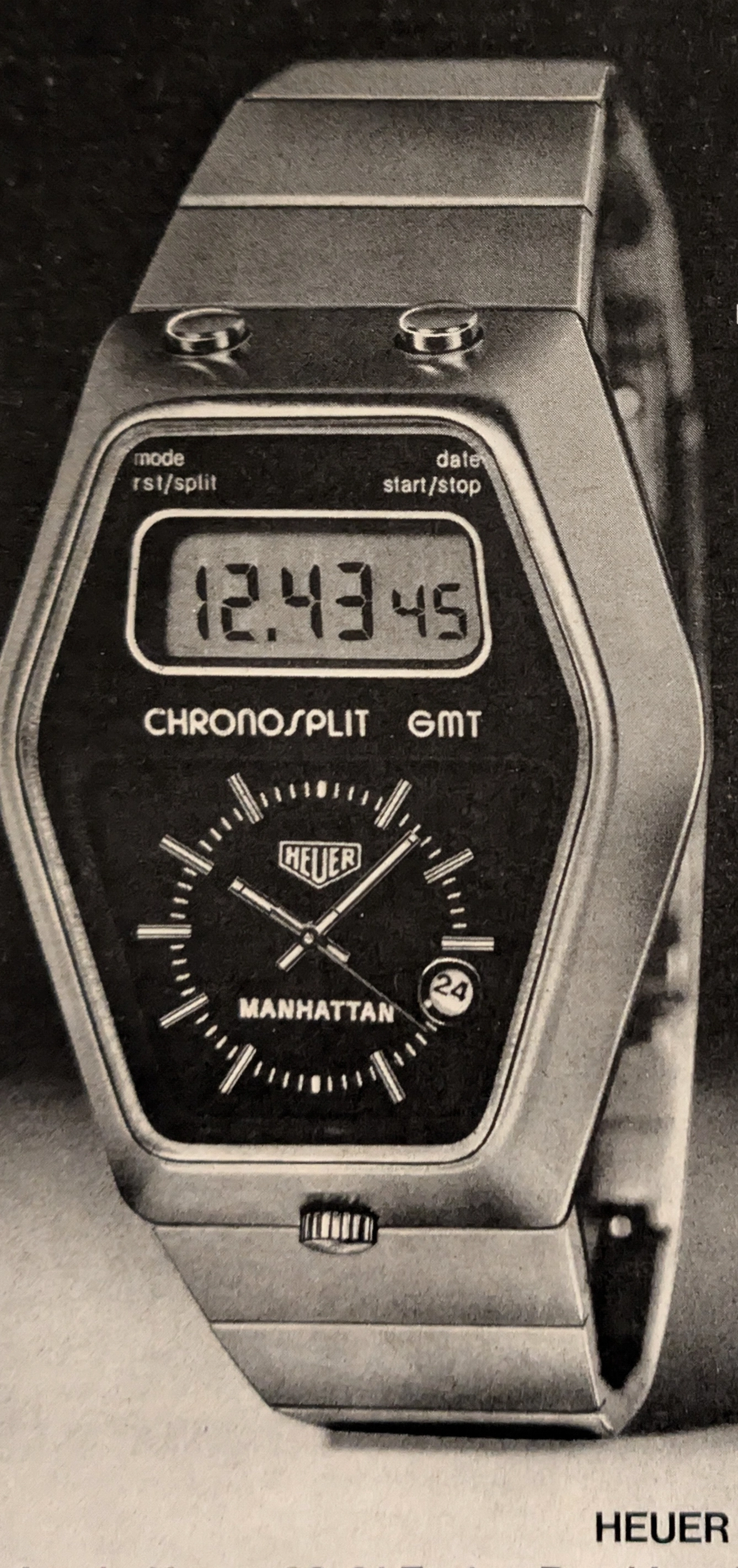
Ahead of Its Time: The 1978 Heuer Chronosplit Manhattan GMT
The History
Long before smartwatches, this was the absolute pinnacle of 1978 technology. Heuer (pre-TAG) revolutionized horology with the Chronosplit Manhattan GMT, brilliantly combining a traditional analog face with a digital LCD stopwatch. Extracted directly from the January 1978 issue of CAR magazine, this single-sheet vintage print embodies the raw charm of the pre-2000 analog era. The natural yellowing and degradation of the paper are not flaws; they are badges of authenticity that amplify its rarity. This is an essential, tangible piece of history for serious vintage watch collectors.
Exhibition Halls
The Archive Continues
Continue the Exploration
Whirlpool · Technology
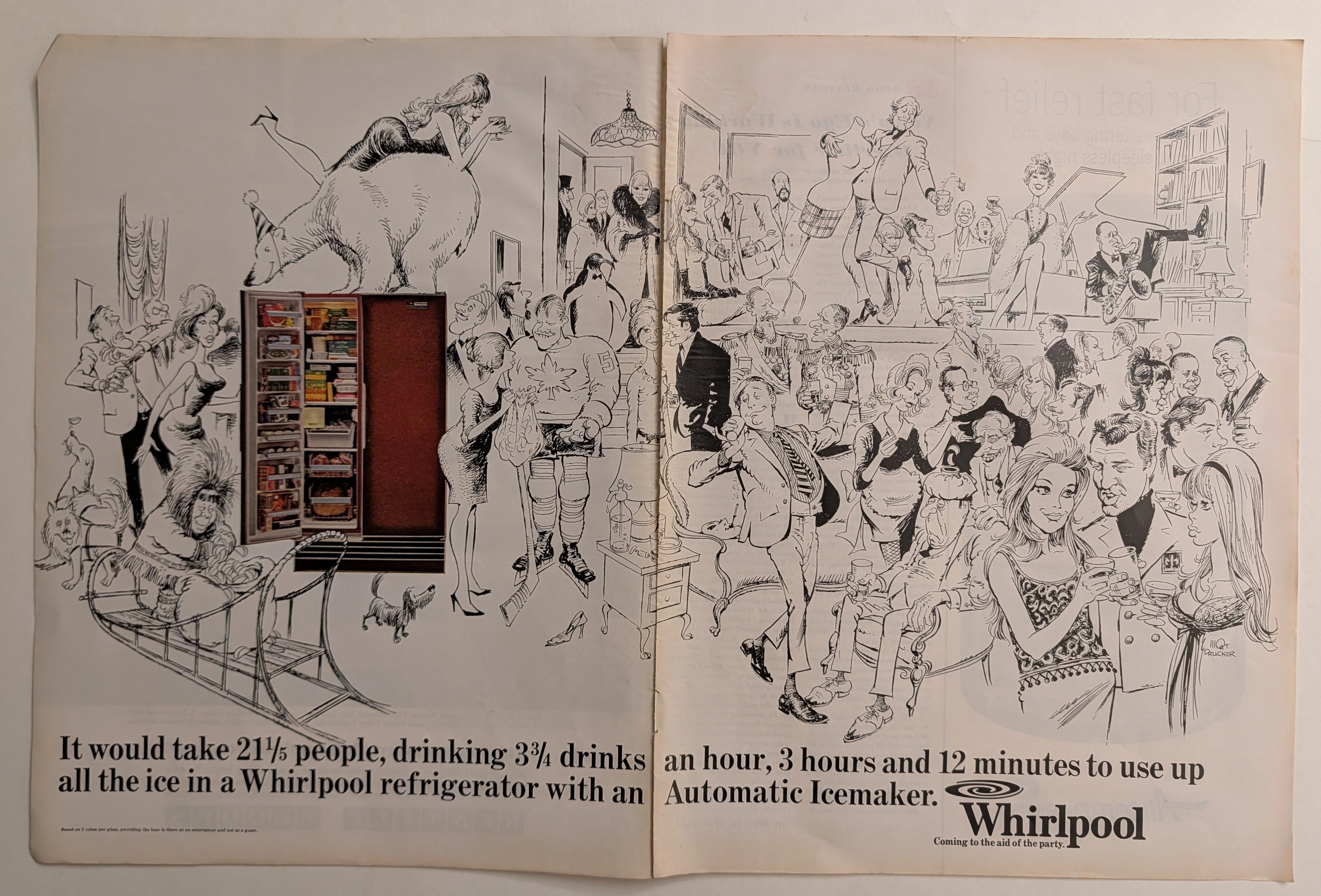
The Time Traveller's Dossier: The Sub-Zero Socialite – The Whirlpool Automatic Icemaker Exhibition by Mort Drucker
The evolution of the domestic appliance from a purely utilitarian instrument of labor into a central pillar of social entertainment and psychological comfort is one of the most fascinating sociological phenomena of mid-twentieth-century America. The historical artifact elegantly and securely positioned upon the analytical table of The Record Institute today is a majestic, large-format, two-page print advertisement for the Whirlpool Refrigerator with an Automatic Icemaker, originating from the cultural zenith of the 1960s. This document completely transcends the traditional boundaries of household goods marketing. It operates as a profound, sophisticated declaration of how technological innovation liberated the American middle class, transforming the private kitchen into a nexus of boundless hospitality, leisure, and social status. This world-class, comprehensive dossier will conduct a meticulous, unyielding, and deep examination of the artifact, operating under the absolute most rigorous parameters of historical, sociological, and material science evaluation. We will decode the brilliant, chaotic, and highly kinetic party scene birthed from the pen of legendary illustrator Mort Drucker, and analyze the dramatic visual juxtaposition of this monochromatic chaos against the highly structured, full-color reality of the Whirlpool refrigerator. Furthermore, as we venture into the chemical and physical foundations of this analog printed ephemera, we will reveal the mechanical fingerprints of the CMYK halftone rosettes and the graceful, natural oxidation of the paper substrate. This precise intersection of visual nostalgia, pop-art mastery, and the chemistry of time cultivates a serene wabi-sabi aesthetic—a natural, irreversible phenomenon that serves as the primary engine driving up its market value exponentially within the elite global spheres of Vintage Appliance Ephemera and Commercial Art collecting.
Ford · Automotive
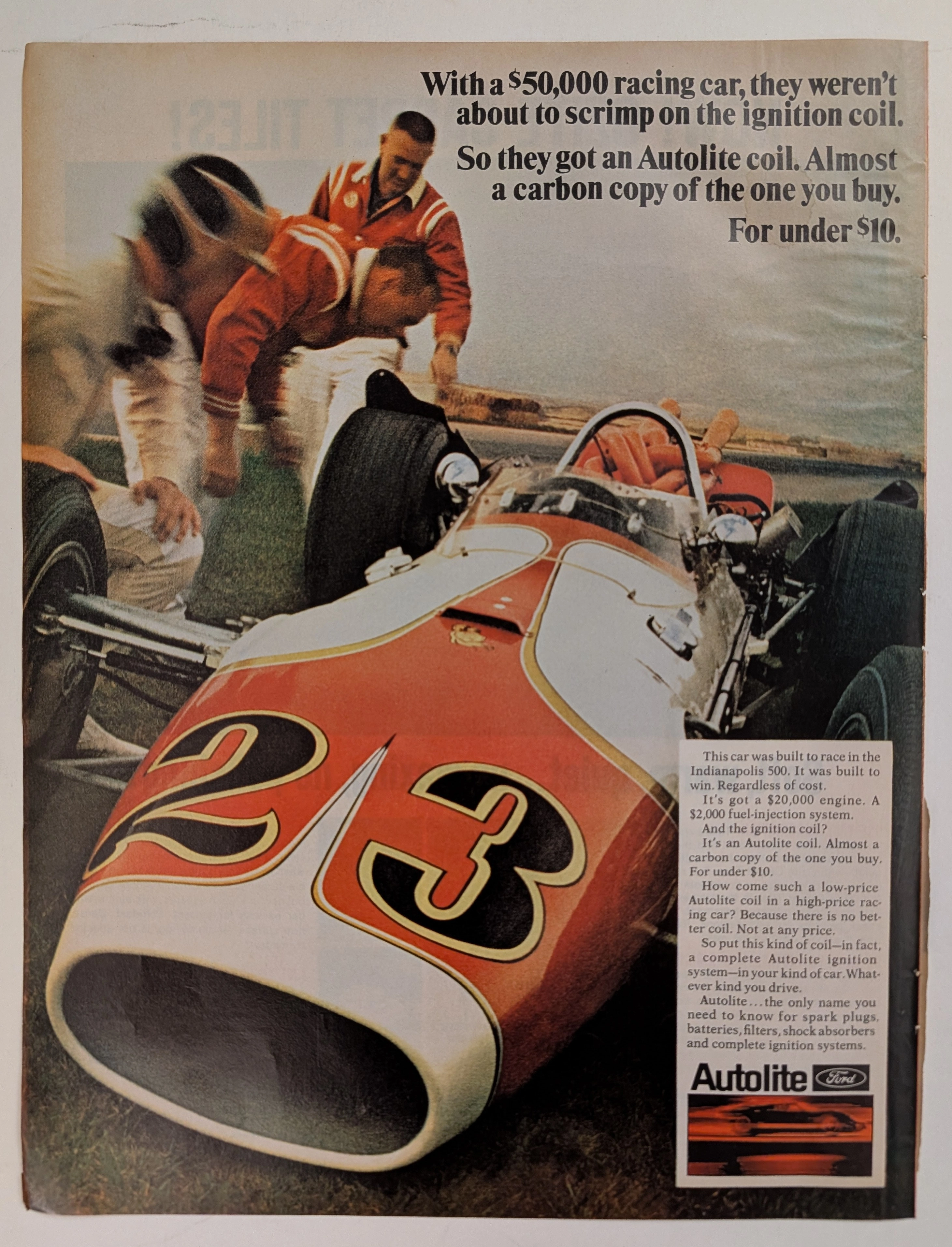
The Time Traveller's Dossier: The Ten-Dollar Titan – The Autolite Ford Indianapolis 500 Exhibition
The synthesis of high-stakes motorsport engineering and everyday consumer accessibility represents a pinnacle achievement in mid-twentieth-century American commercial strategy. The historical artifact elegantly secured upon the analytical table of The Record Institute today is a majestic full-page print advertisement for Autolite Ford Ignition Coils, originating from the golden era of 1960s automobile racing. This document completely transcends the traditional boundaries of automotive parts marketing. It operates as a profound, sophisticated declaration of how cutting-edge technological innovation on the racetrack was democratized and delivered directly into the hands of the American middle class, transforming the daily commute into an extension of the Indianapolis 500. This world-class, comprehensive dossier conducts a meticulous and deep examination of the artifact, operating under the absolute most rigorous parameters of historical, sociological, and material science evaluation. We will decode the brilliant, kinetic pit-stop scene capturing an open-wheel race car, and analyze the dramatic visual juxtaposition of this high-speed chaos against the highly structured, calculated copywriting of the Ford Motor Company. Furthermore, as we venture into the chemical and physical foundations of this analog printed ephemera, we will reveal the mechanical fingerprints of the CMYK halftone rosettes and the graceful, natural oxidation of the paper substrate. This precise intersection of visual nostalgia, motorsport heritage, and the chemistry of time cultivates a serene wabi-sabi aesthetic—a natural, irreversible phenomenon that serves as the primary engine driving up its market value exponentially within the elite global spheres of Vintage Automotive Ephemera and Motorsports Archives collecting.
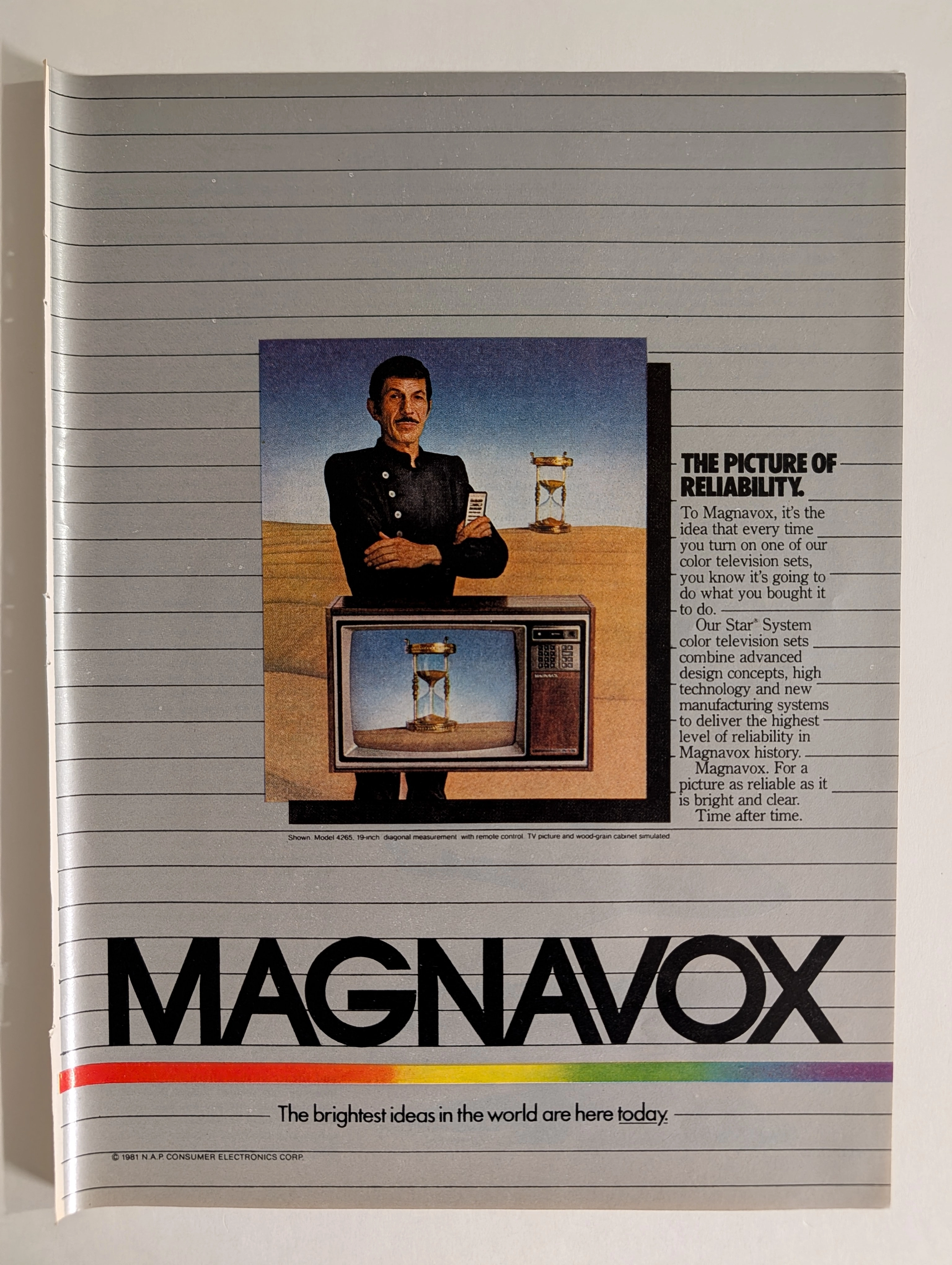
Magnavox Star System 1981 Leonard Nimoy TV Advertisement | 'The Picture of Reliability' | Deep Analysis Rarity Class A-SS
The advertisement analyzed here is a full-page full-color magazine promotion for Magnavox's Star® System color television sets, copyright © 1981 N.A.P. Consumer Electronics Corp. The ad features what is almost certainly Leonard Nimoy — iconic for his role as Mr. Spock in Star Trek — dressed in a black nehru-collar uniform against a surrealist desert landscape, standing above a Magnavox color TV set (Model 4265, 19-inch diagonal) that displays an hourglass on screen. A second hourglass appears behind him. The visual concept communicates timeless reliability. The headline 'The Picture of Reliability' and tagline 'The brightest ideas in the world are here today' frame Magnavox's Star System as the pinnacle of 1981 television technology. The rainbow spectrum stripe at the bottom is a distinctive brand element that ran across Magnavox advertising throughout the early 1980s. N.A.P. (North American Philips) Consumer Electronics Corp. was the American subsidiary of Philips that owned the Magnavox brand at this time, having acquired it in 1974.