Nina Ricci "L'Air du Temps": The Eternal Dove of Peace (1948–Present) (1980) — Class S vintage Luxury Brands
CLASS S
1 of 3

Nina Ricci "L'Air du Temps": The Eternal Dove of Peace (1948–Present)

Category|Luxury Brands
Subcategory|Fashion
Year|1980
Rarity Class|CLASS S
Archive Views|18

Last updated: 26 Mar 2026

Historical Context

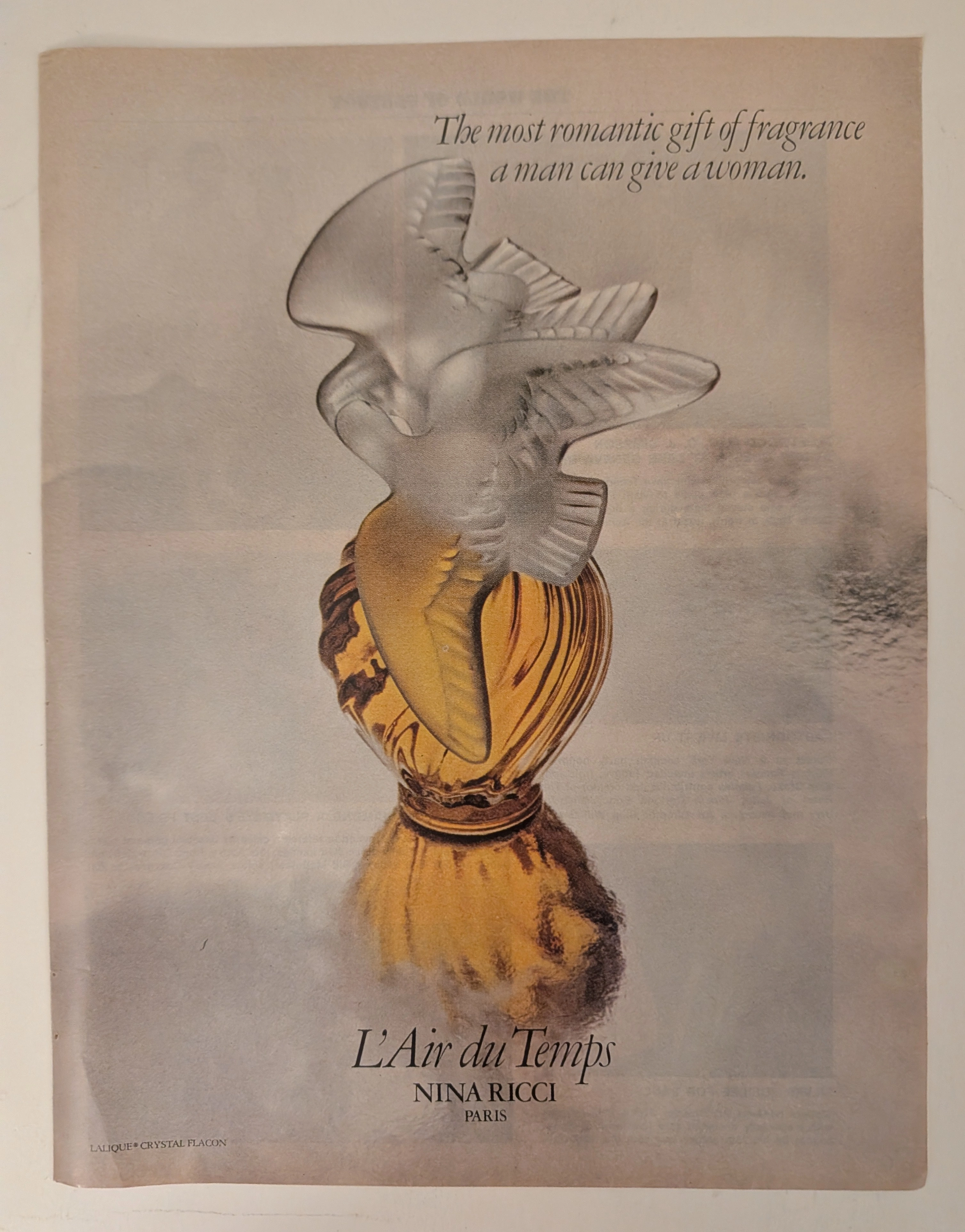
In the realm of vintage ephemera, few images evoke such profound emotion as the interlaced doves of L'Air du Temps. This advertisement is more than marketing; it is a visual manifesto of post-war recovery and timeless French elegance. ​The Visionaries Behind the Icon: ​Maria "Nina" Ricci (1883–1970): An Italian-born couturière who founded her house in Paris in 1932. Her aesthetic was defined by effortless femininity and impeccable craftsmanship, providing the foundation for the brand's prestige. ​Robert Ricci (1905–1988): Nina’s son and a marketing genius. He sought to expand the house into fragrance, commissioning L'Air du Temps in 1948. He understood that after the horrors of WWII, women didn't just want a scent—they wanted a symbol of freedom. ​Marc Lalique (1900–1977): The legendary glassmaker. His collaboration with Robert Ricci resulted in the "Twin Doves" crystal flacon. This bottle is widely considered one of the most beautiful in history, capturing the fragility and strength of peace. ​The Cultural Significance: Launched in the late 1940s, the fragrance arrived at a pivotal moment. The world was transitioning from the grit of war to the glamour of the 1950s. The name itself, L'Air du Temps, suggests the "vibe" or "spirit of the moment." In this specific print ad, the use of Film Photography captures the amber liquid and the intricate Lalique glass with a depth that modern digital renders cannot replicate. The subtle Halftone Printing and the natural patina of the paper serve as a testament to its authenticity. It represents a time when luxury was measured by the soul of the artisan, not just the brand name.

Paper & Print Condition

The paper exhibits exceptional structural integrity, resisting the brittleness common in 80s newsstand prints. The uniform warm cream patina enhances the amber tones of the fragrance without clouding the white space. The ink saturation remains vivid, with halftone dots appearing crisp under magnification, suggesting a low-wear press run. No signs of foxing or UV damage are present, indicating a decades-long shielding from light.

Provenance & Rarity

Sourced from a curated European fashion archive, this full-page specimen is a rare survivor of the pre-digital era. Most high-format ads were either damaged by moisture or extracted for mood boards, making a pristine A4-scale page a "High-Yield" asset. This 1980s iteration represents a critical bridge in art direction between 70s romanticism and 80s bold minimalism.

Share This Archive

From the Journal

Related Articles

THE TIME TRAVELER'S DOSSIER: THE KOREAN WAR ANCHOR AND THE SCARCITY OF LUXURY — related article
Read Article

THE TIME TRAVELER'S DOSSIER: THE KOREAN WAR ANCHOR AND THE SCARCITY OF LUXURY

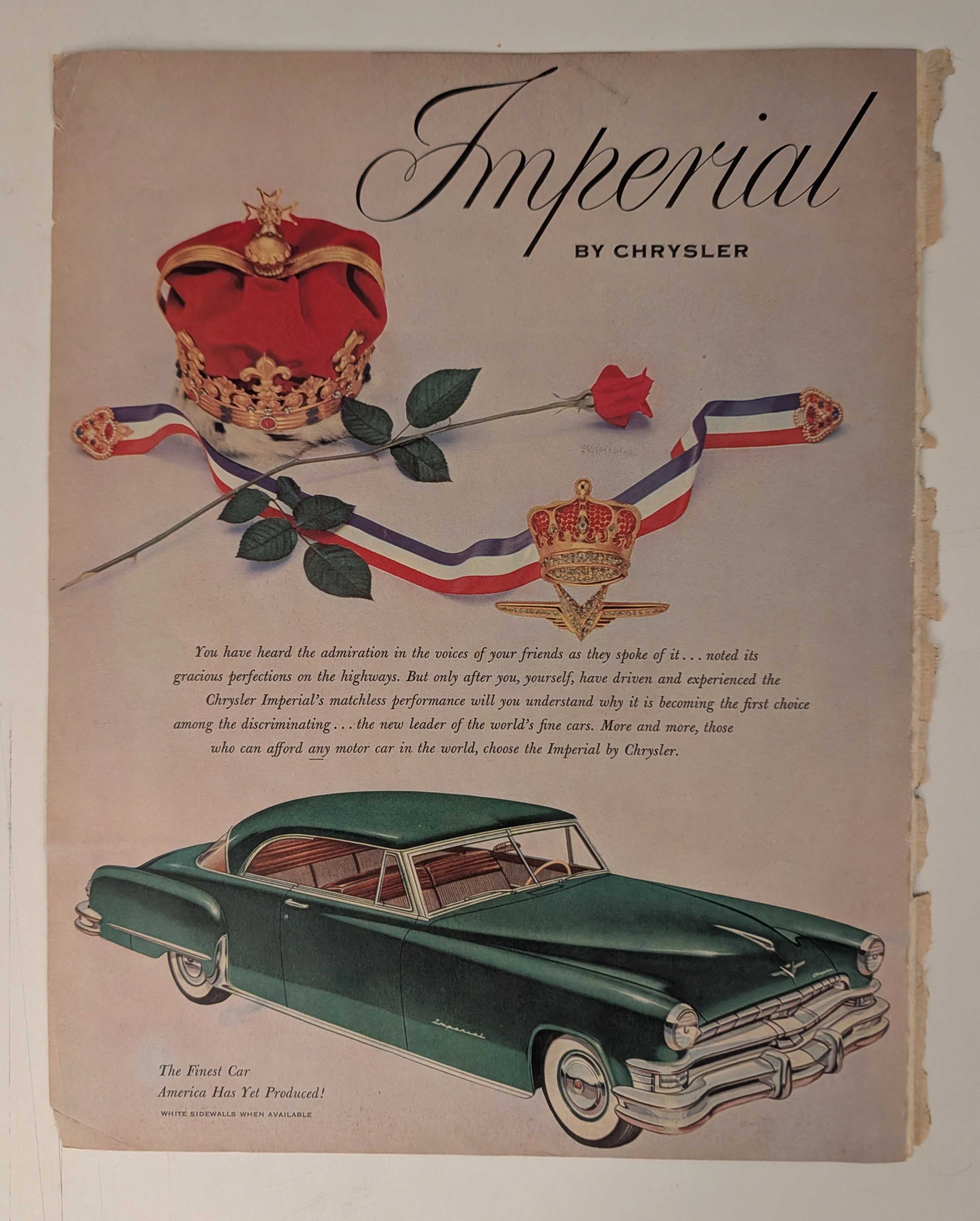
The artifact under our uncompromising, unprecedented museum-grade analysis is a profoundly preserved Historical Relic excavated from the golden age of post-WWII American opulence. This Primary Art Document is a monumental magazine advertisement for the Imperial by Chrysler, dating to the pivotal 1951-1952 era. This document is a "Forensic Blueprint of American Aristocracy and Geopolitical Crisis." It masterfully weaponizes regal European iconography to elevate Chrysler's flagship model above mere transportation, explicitly targeting "those who can afford any motor car in the world". Yet, its most significant historical anchor is hidden in the microscopic fine print: "WHITE SIDEWALLS WHEN AVAILABLE". This single sentence instantly transforms the advertisement into a wartime relic, reflecting the severe rubber shortages imposed during the Korean War. Grounded by the iconic jeweled emblem and its breathtaking wabi-sabi chemical degradation—highlighted by its violently torn binding edge—this artifact commands an irreplaceable status, cementing its Rarity Class A designation.
Vintage 70s Crown Royal Ad: Vanishing Analog Art | The Record — related article
Read Article

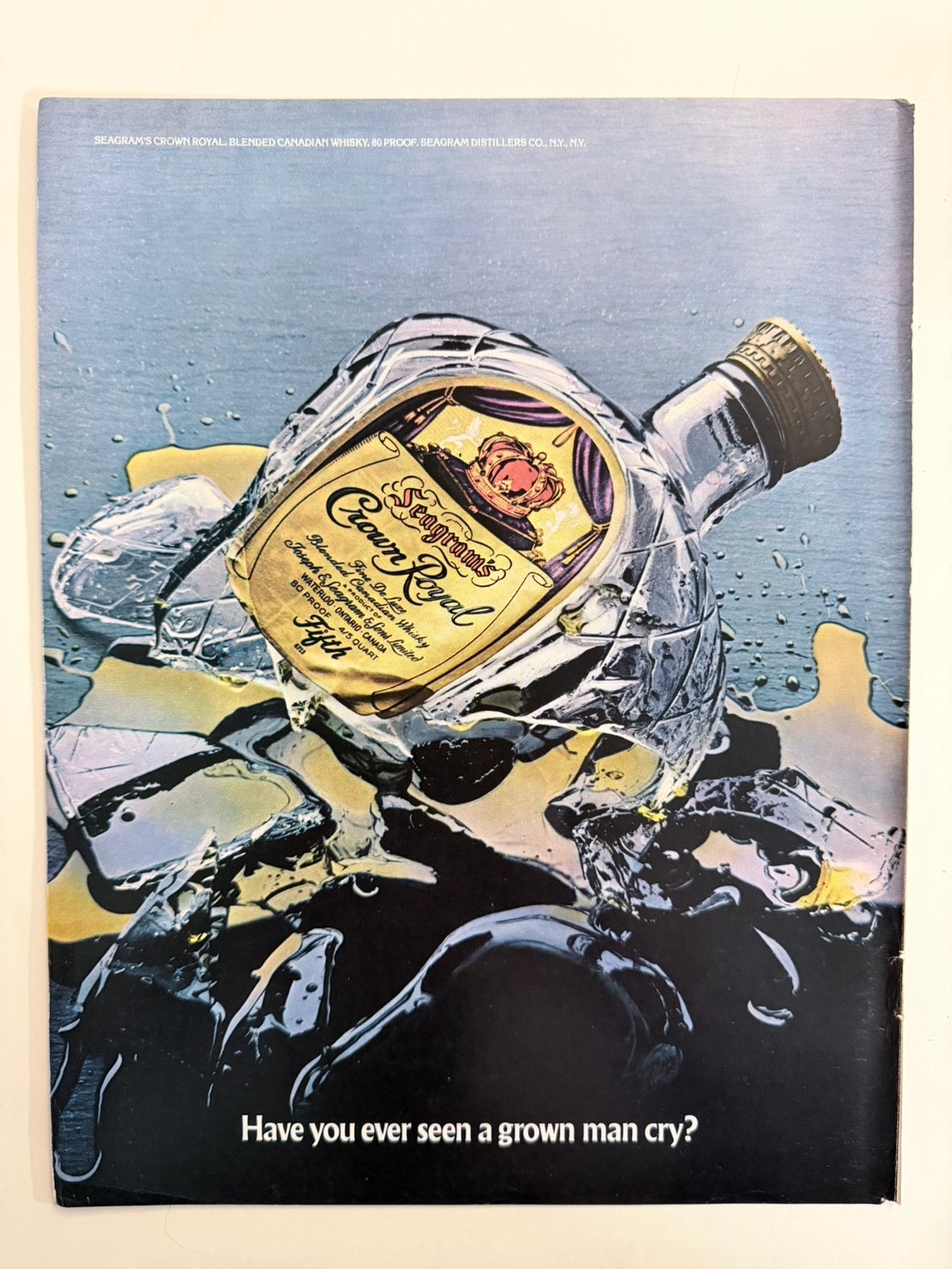
Vintage 70s Crown Royal Ad: Vanishing Analog Art | The Record

An in-depth look at the priceless 1970s Crown Royal "Have you ever seen a grown man cry?" advertisement. A masterpiece of authentic analog photography on degrading vintage paper, driving up the value of this original print as global supply inevitably shrinks.
Vintage Chivas Regal x Charles Saxon Ad: The Vanishing Playboy Art | The Record — related article
Read Article

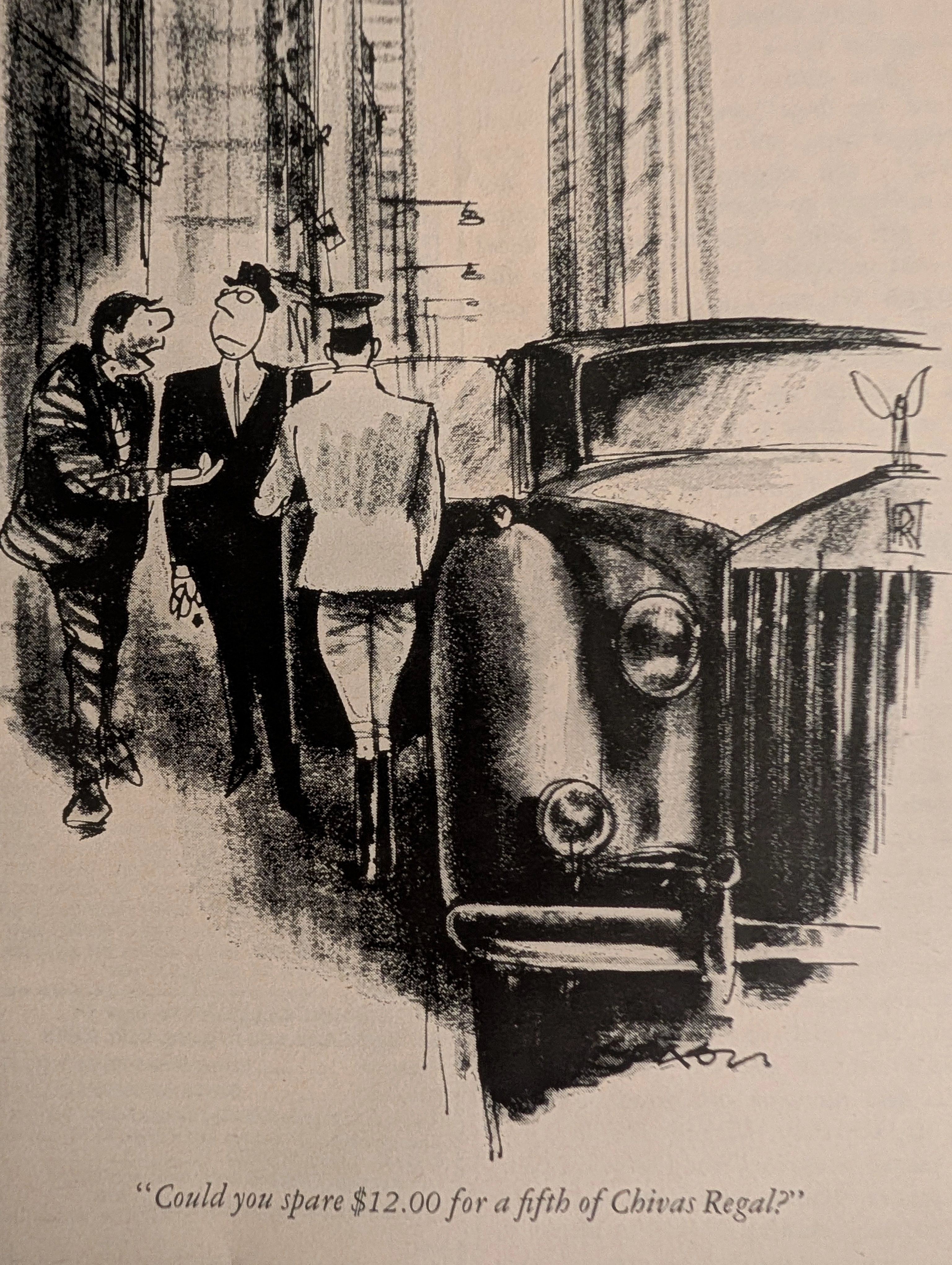
Vintage Chivas Regal x Charles Saxon Ad: The Vanishing Playboy Art | The Record

An in-depth look at the Chivas Regal ad from Playboy magazine, illustrated by legendary artist Charles Saxon. A magazine-sized piece of authentic analog art on degrading vintage paper, driving up its value as an alternative asset.
Magnavox Star System 1981 Leonard Nimoy TV Advertisement | 'The Picture of Reliability' | Deep Analysis Rarity Class A-SS — related article
Read Article

Magnavox Star System 1981 Leonard Nimoy TV Advertisement | 'The Picture of Reliability' | Deep Analysis Rarity Class A-SS

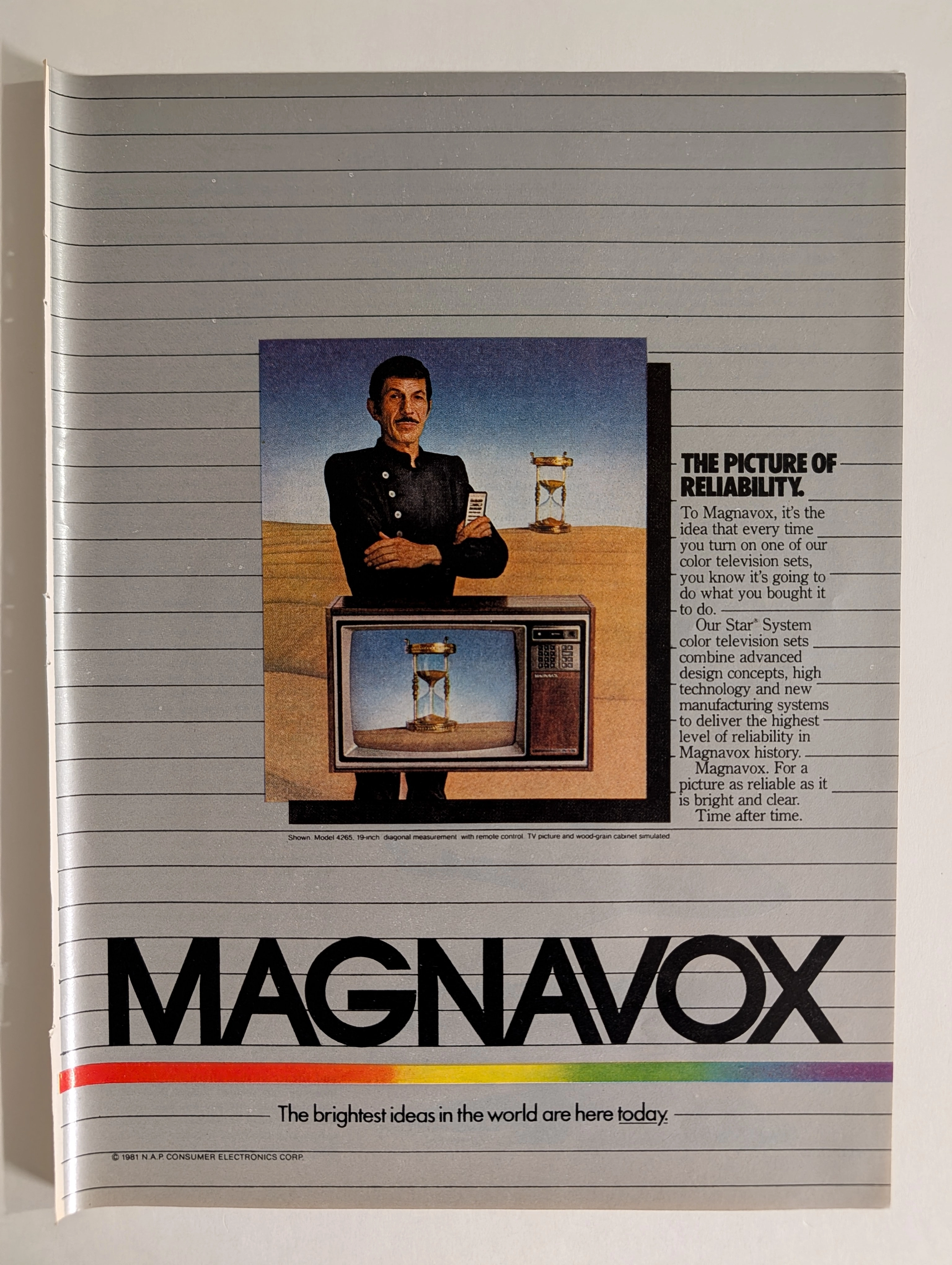
The advertisement analyzed here is a full-page full-color magazine promotion for Magnavox's Star® System color television sets, copyright © 1981 N.A.P. Consumer Electronics Corp. The ad features what is almost certainly Leonard Nimoy — iconic for his role as Mr. Spock in Star Trek — dressed in a black nehru-collar uniform against a surrealist desert landscape, standing above a Magnavox color TV set (Model 4265, 19-inch diagonal) that displays an hourglass on screen. A second hourglass appears behind him. The visual concept communicates timeless reliability. The headline 'The Picture of Reliability' and tagline 'The brightest ideas in the world are here today' frame Magnavox's Star System as the pinnacle of 1981 television technology. The rainbow spectrum stripe at the bottom is a distinctive brand element that ran across Magnavox advertising throughout the early 1980s. N.A.P. (North American Philips) Consumer Electronics Corp. was the American subsidiary of Philips that owned the Magnavox brand at this time, having acquired it in 1974.