Vintage Chivas Regal x Charles Saxon Ad: The Vanishing Playboy Art | The Record
The History
THE AUDACIOUS REQUEST
The Ultimate High-Class Beggary on a Playboy Page
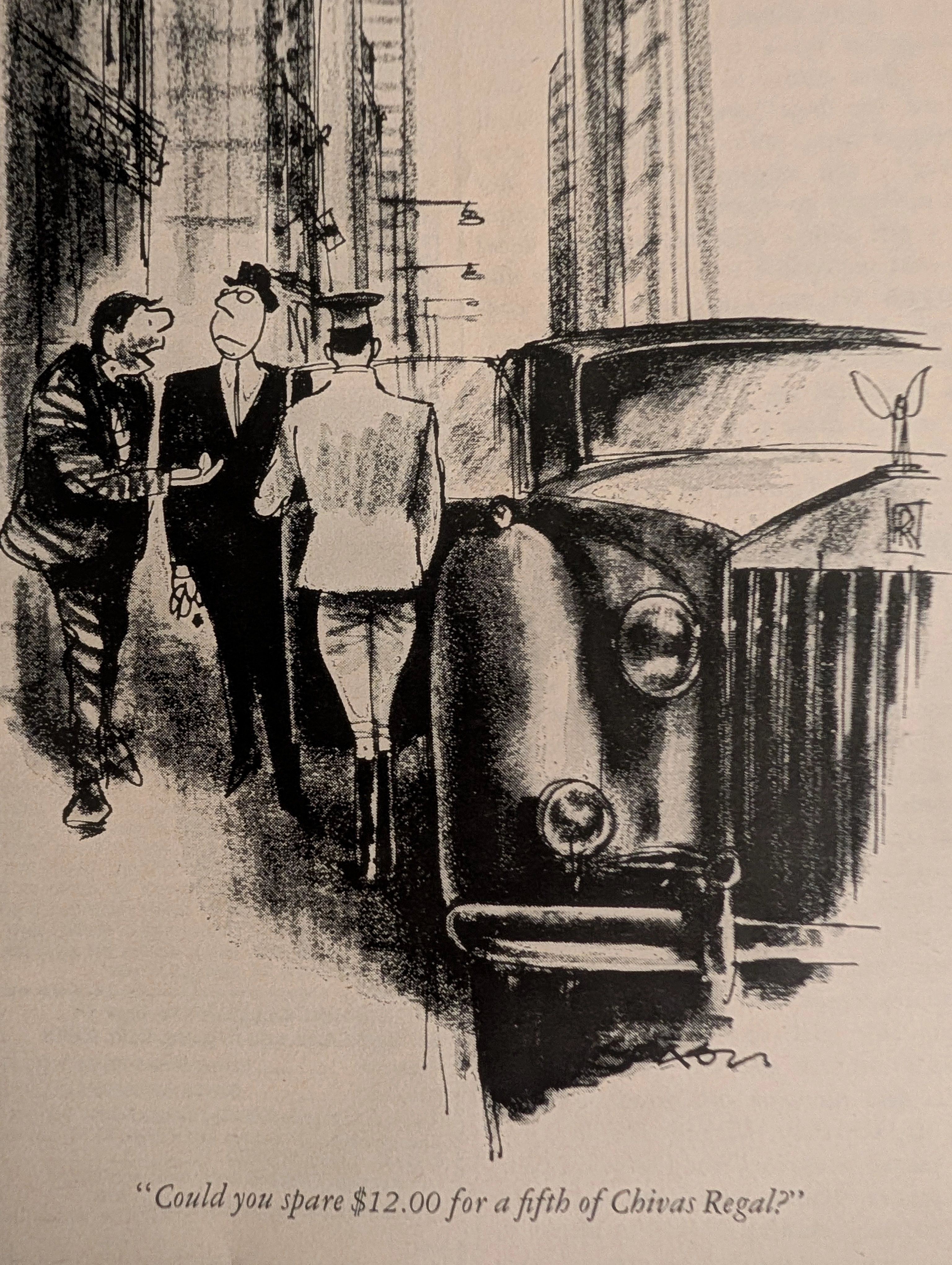
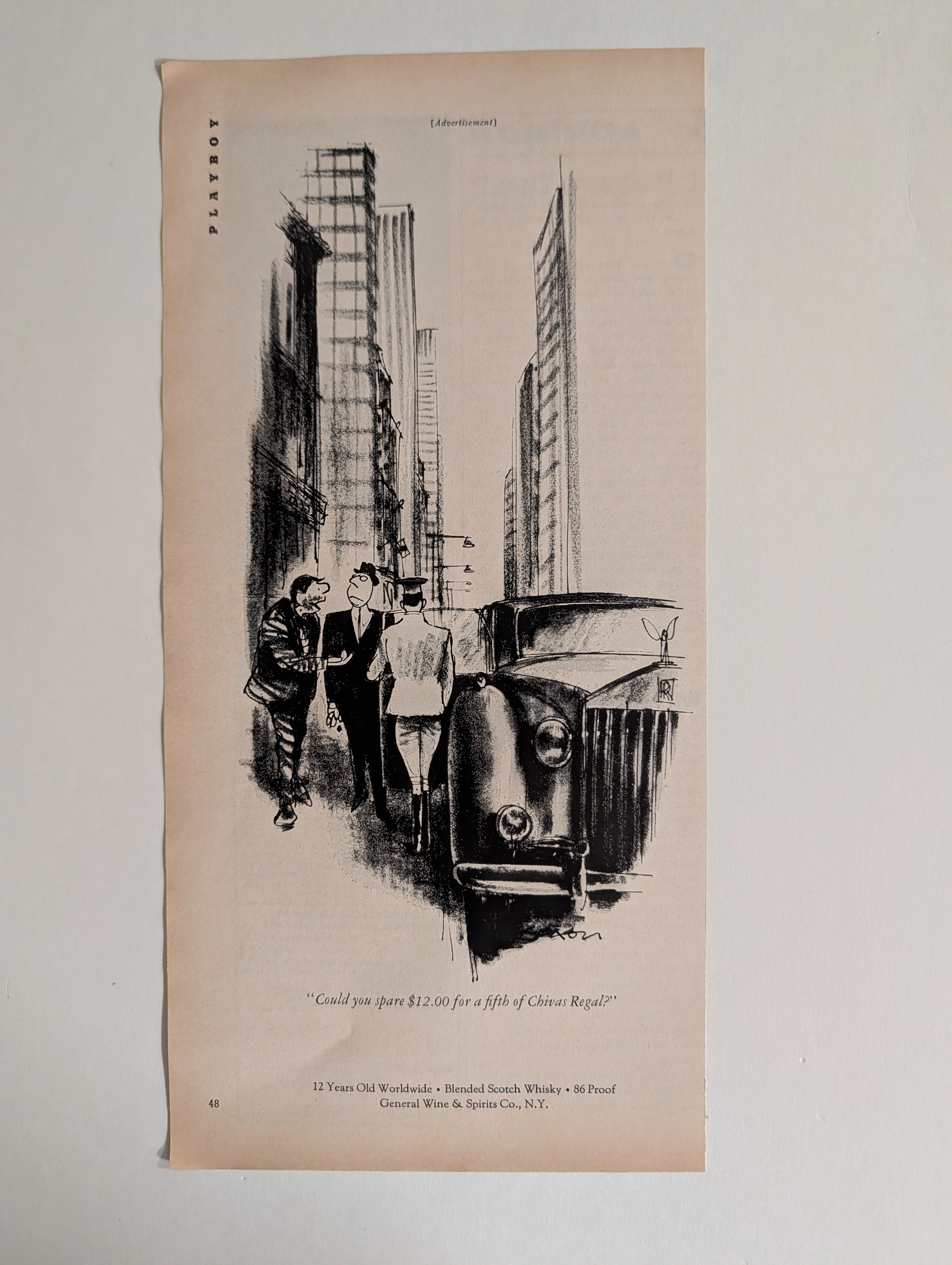
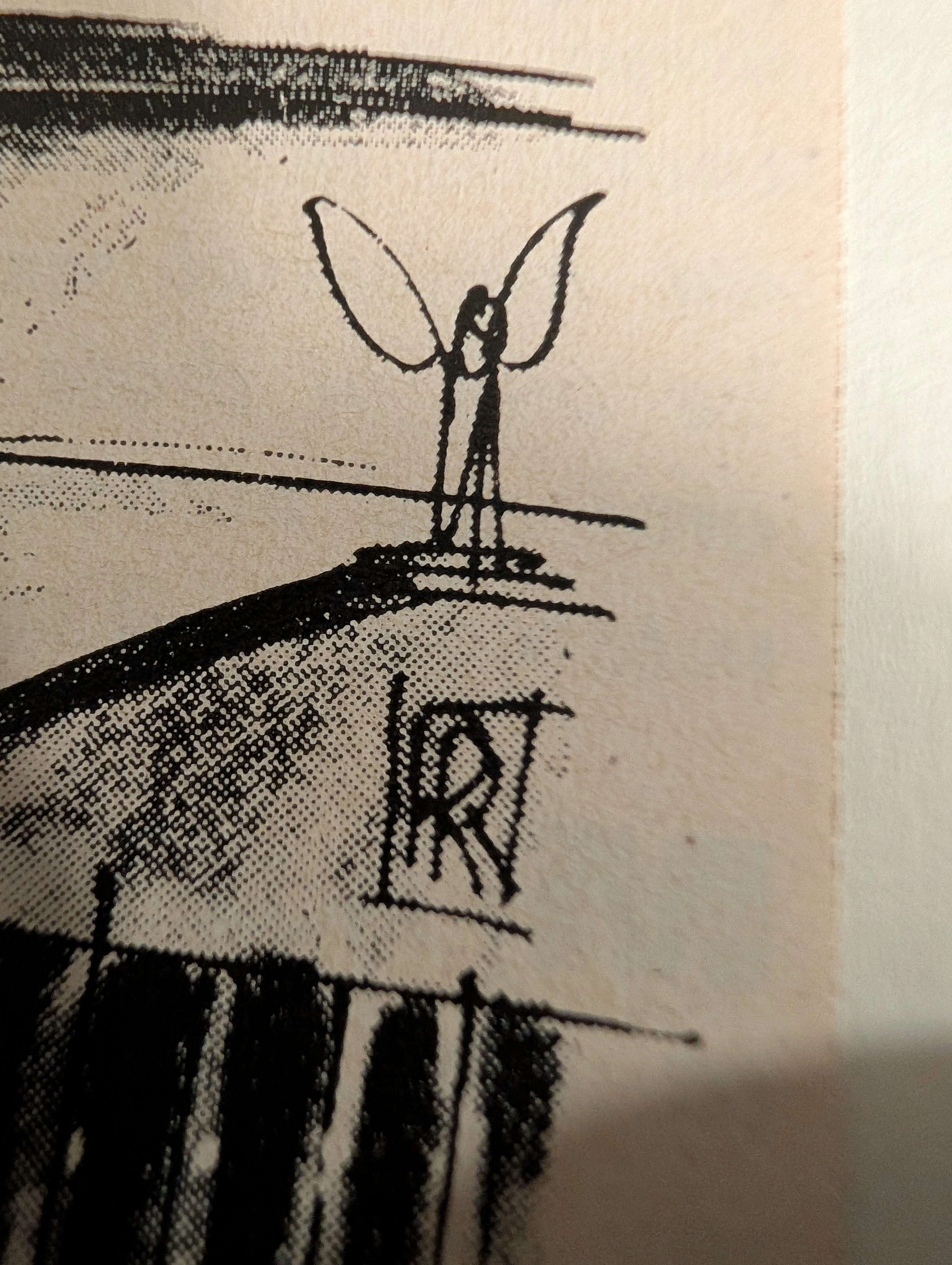
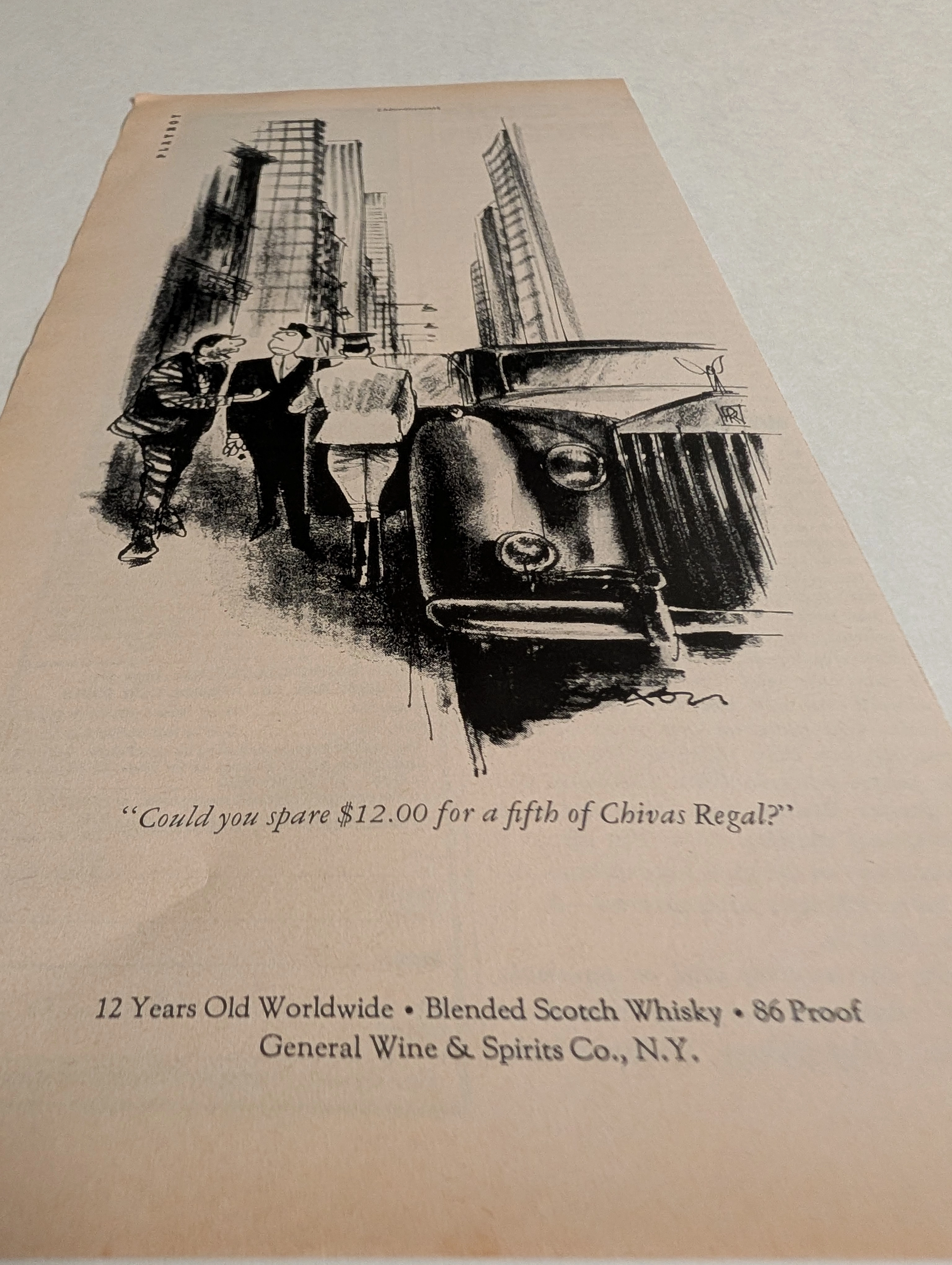
As the Chief Curator of The Record, I present a masterpiece that brilliantly merges refined humor with absolute luxury. This original Chivas Regal advertisement, salvaged from the pages of a vintage Playboy magazine, features the distinctive linework of the legendary illustrator Charles Saxon. This magazine-sized print is not just a comedic sketch; it is a "Museum Grade Artifact" documenting high-society ideals, analog illustration, and the fragile nature of decaying paper.
🏛️ CHAPTER I: THE HERITAGE OF LUXURY & THE MASTER ILLUSTRATOR
The Brand: Positioned as a premium blended Scotch whisky, Chivas Regal brilliantly uses this ad to mock everyday beggary. The beggar asks, "Could you spare $12.00 for a fifth of Chivas Regal?"—elevating the brand to an absolute necessity even for the destitute.
The Artist (Charles Saxon): The signature "Saxon" belongs to Charles Saxon, a renowned American cartoonist famous for his work in The New Yorker. His masterful ink strokes effortlessly convey the stark contrast between the wealthy gentleman and the ambitious beggar.
📷 CHAPTER II: THE CRAFT OF ANALOG ILLUSTRATION & PRINTING
Analog Execution: Before digital tablets, Saxon crafted this using physical ink and wash techniques. Translating his hand-drawn shadows into the CMYK halftone printing of pre-2000s magazines created a unique, textured dot pattern. It is an authentic analog footprint that modern printing simply cannot replicate.
⏳ CHAPTER III: THE FRAGILITY OF HISTORY & PAPER DEGRADATION
The Chemistry of Decay: This paper contains Lignin, which oxidizes when exposed to light and air. The beautiful, warm yellowing (patina) you see is the physical manifestation of acid autocatalysis—the paper is slowly consuming itself. This page's survival over decades makes it a rare, decaying artifact of the analog age.
📈 CHAPTER IV: THE ECONOMICS OF SCARCITY
Alternative Asset: Original vintage Playboy magazines are steadily being destroyed by time and elements. As the source material vanishes, intact original prints like this transform into high-yield alternative assets. Framed perfectly, this magazine-sized piece elevates any home art gallery or luxury bar.
The Archive Continues
Continue the Exploration
Roll Royce · Automotive
THE TIME TRAVELER'S DOSSIER: THE ENGINEERING OF IMMORTALITY AND ARISTOCRATIC AESTHETICS
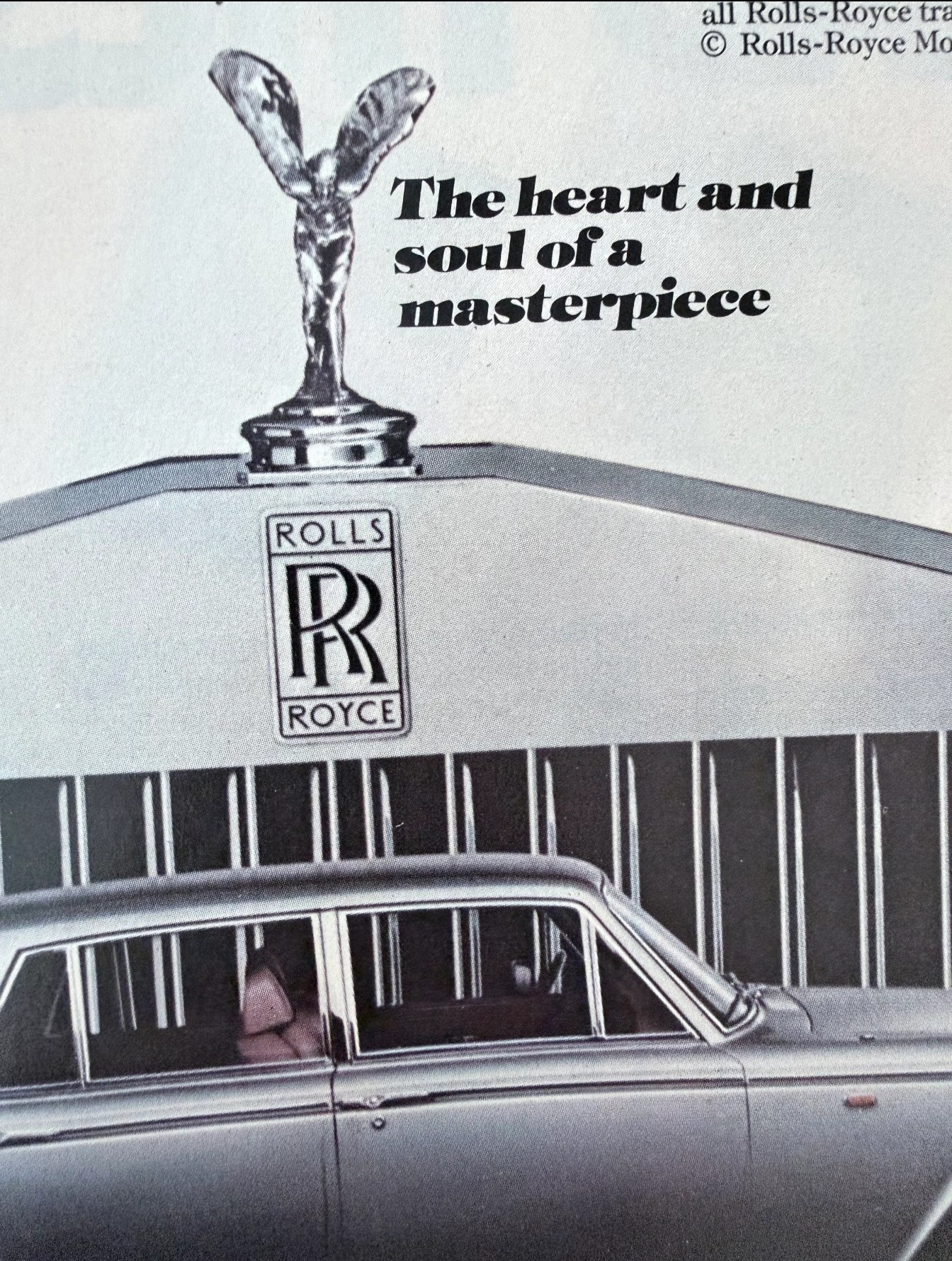
The artifact under exhaustive, uncompromising, and unprecedented museum-grade analysis is an exceptionally preserved Historical Relic originating from the absolute zenith of British automotive engineering and aristocratic luxury. This Primary Art Document is a monumental, full-page theatrical advertisement for the Rolls-Royce Silver Shadow II, forensically and definitively dated to 1977 by the explicit copyright text: "© Rolls-Royce Motors Inc. 1977". This is not a mere car advertisement; it is a "Forensic Manifesto of Absolute Perfection." Published twelve years after the conception of the original 1965 edition, this document heralds the arrival of the refined Silver Shadow II. It aggressively weaponizes the brand's legacy, explicitly stating that more than half of all Rolls-Royce motor cars built since 1904 were still "humming along" in 1977. The visual architecture is dominated by the legendary "Spirit of Ecstasy" mascot, described here as "The heart and soul of a masterpiece", standing guard over the iconic Parthenon-inspired radiator grille. Rescued from the binding of a prestige 1970s periodical, this pre-2000s analog artifact exhibits a beautifully authentic warm ivory oxidation across its surface. This majestic chemical aging transforms a mass-produced piece of luxury propaganda into an irreplaceable, ready-to-frame Primary Art Document of automotive and sociological history. Quick-Reference Summary Table
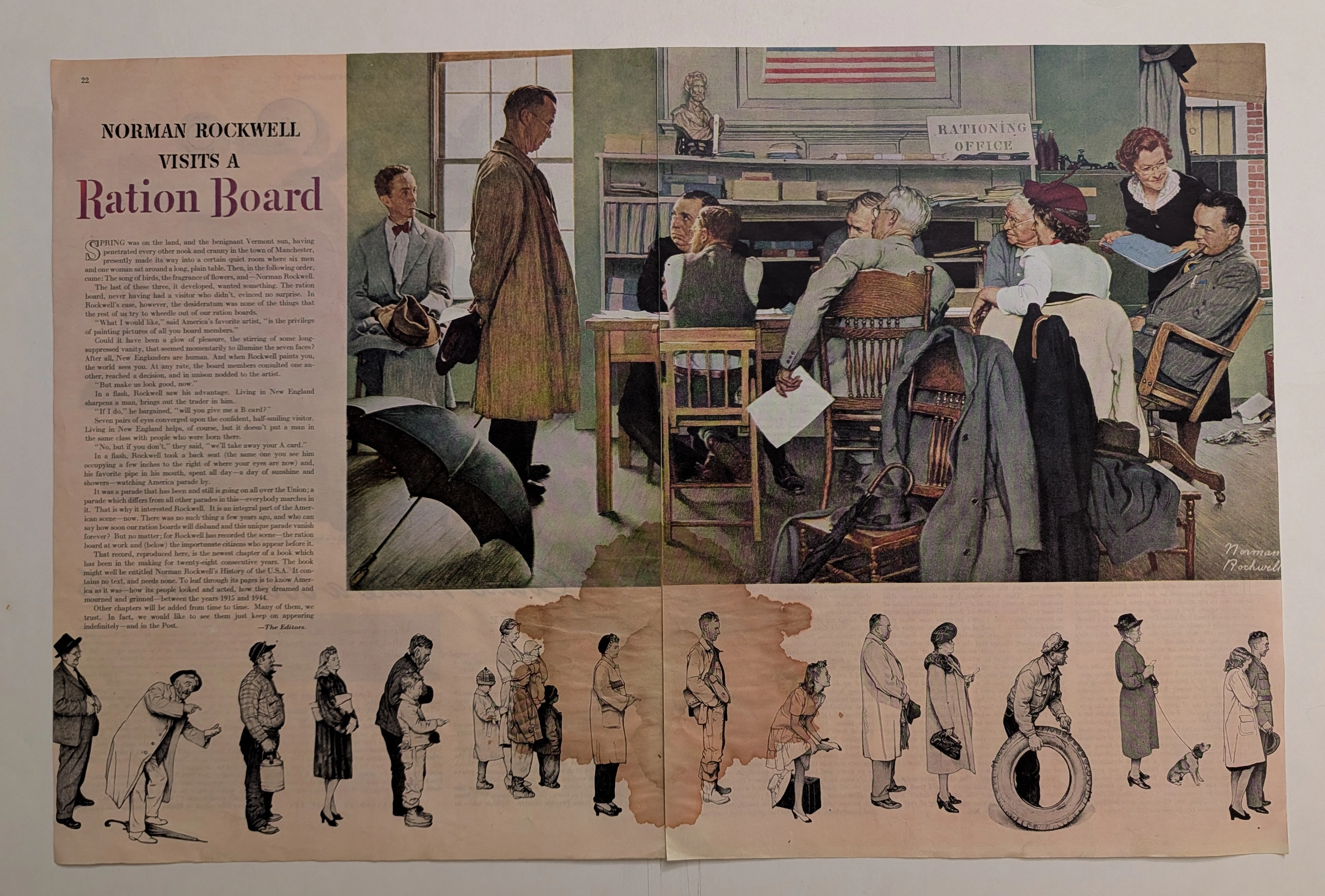
THE TIME TRAVELLER'S DOISSIER — THE WWII HOME FRONT AND THE AESTHETICS OF DESTRUCTION
Executive summary of the original vintage double-page cut sheet featuring Norman Rockwell's WWII masterpiece, "Norman Rockwell Visits a Ration Board" (circa 1944). This artwork masterfully captures the egalitarian struggle of the American home front rationing system. The massive, rust-colored water stain blooming across the highly acidic 80-year-old paper is not damage, but a profound 'historical scar' that exemplifies the beautiful decay of analog media. Surviving wartime paper drives, this frame-ready primary artifact commands a Rarity Class S designation.
๋Joy De Jean Patou · Fashion
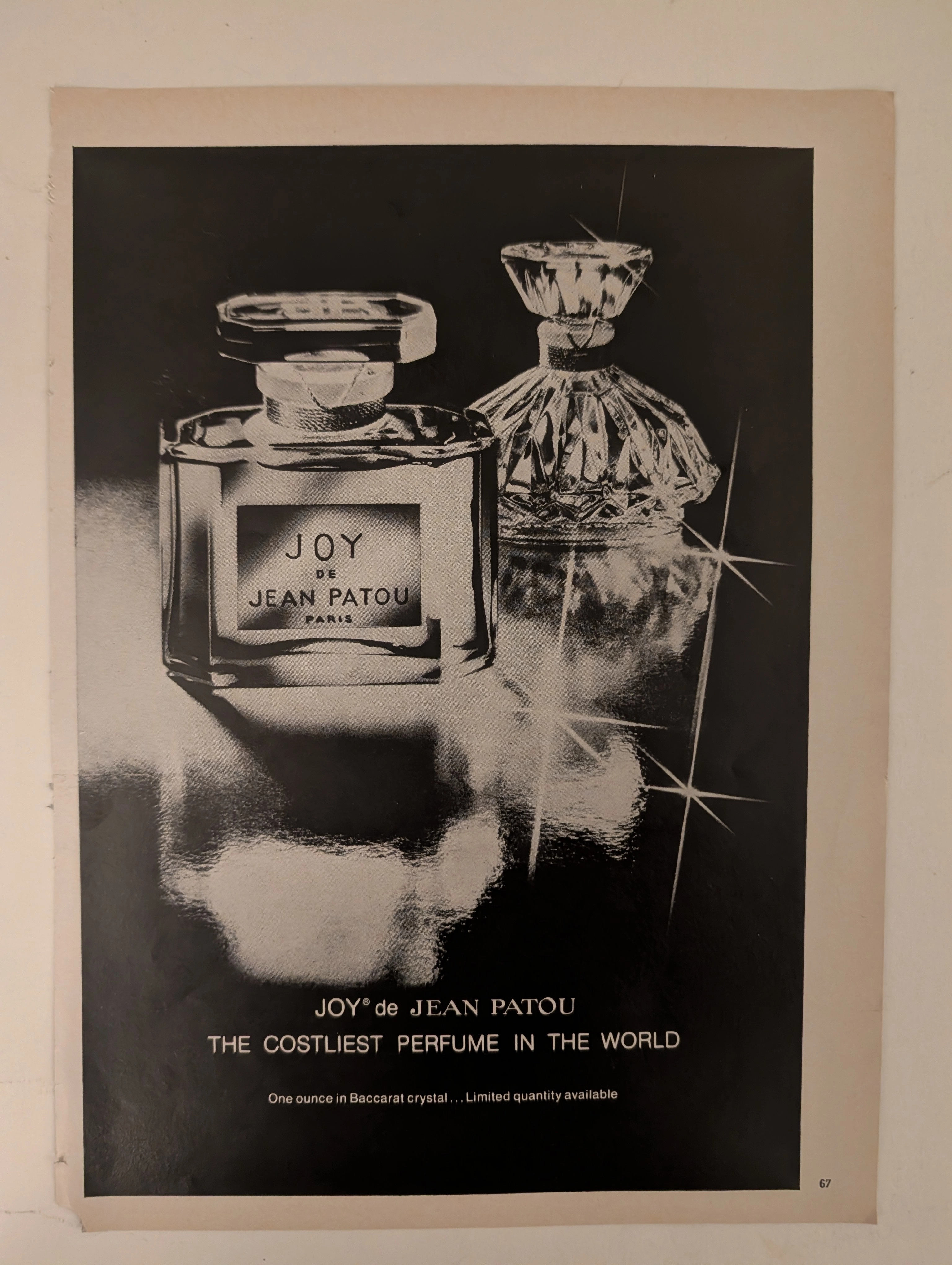
The Time Traveller's Dossier: The Semantics of Arrogance – JOY de Jean Patou Advertisement (Circa 1980s)
History is not written by the victors; it is printed by the industrialists. Long before digital algorithms began to sterilely dictate human consumption and virtual reality stripped away authentic tactile sensation, societal engineering and consumer psychology were executed through the calculated, mathematical geometry of the four-color offset press and the absolute mastery of analog darkroom photography. The historical artifact before us is not merely a disposable magazine tear sheet meant to peddle a fragrance. It is a perfectly weaponized blueprint of absolute capitalist supremacy, a visual declaration of class warfare, and an unwavering testament to an era of uncompromising, unapologetic ultra-luxury. This museum-grade, academic archival dossier presents an exhaustive deconstruction of a late-analog print advertisement for the legendary fragrance "JOY de Jean Patou," dating from the late 1970s to the early 1980s. Operating on a profound and ruthless binary structure, this document records a calculated paradigm shift within the global luxury goods industry. It captures the precise historical fracture where luxury transitioned conceptually from being a mere indicator of high-quality craftsmanship into a blatant, arrogant weapon of socioeconomic exclusion. Through the highly specialized lens of late-analog commercial artistry and stringent visual forensics, this document serves as a masterclass in psychological marketing. It established the foundational archetype for selling astronomically priced, exclusionary items—an archetype that unconditionally dictates the visual and strategic totems of modern ultra-luxury brands today.