
Vintage PRAYBOY 1984 Cover: The Vanishing Analog Satire | The Record
The History
PRAYBOY: THE SATIRICAL MASTERPIECE
When Sanctity Met Satire in the 1980s
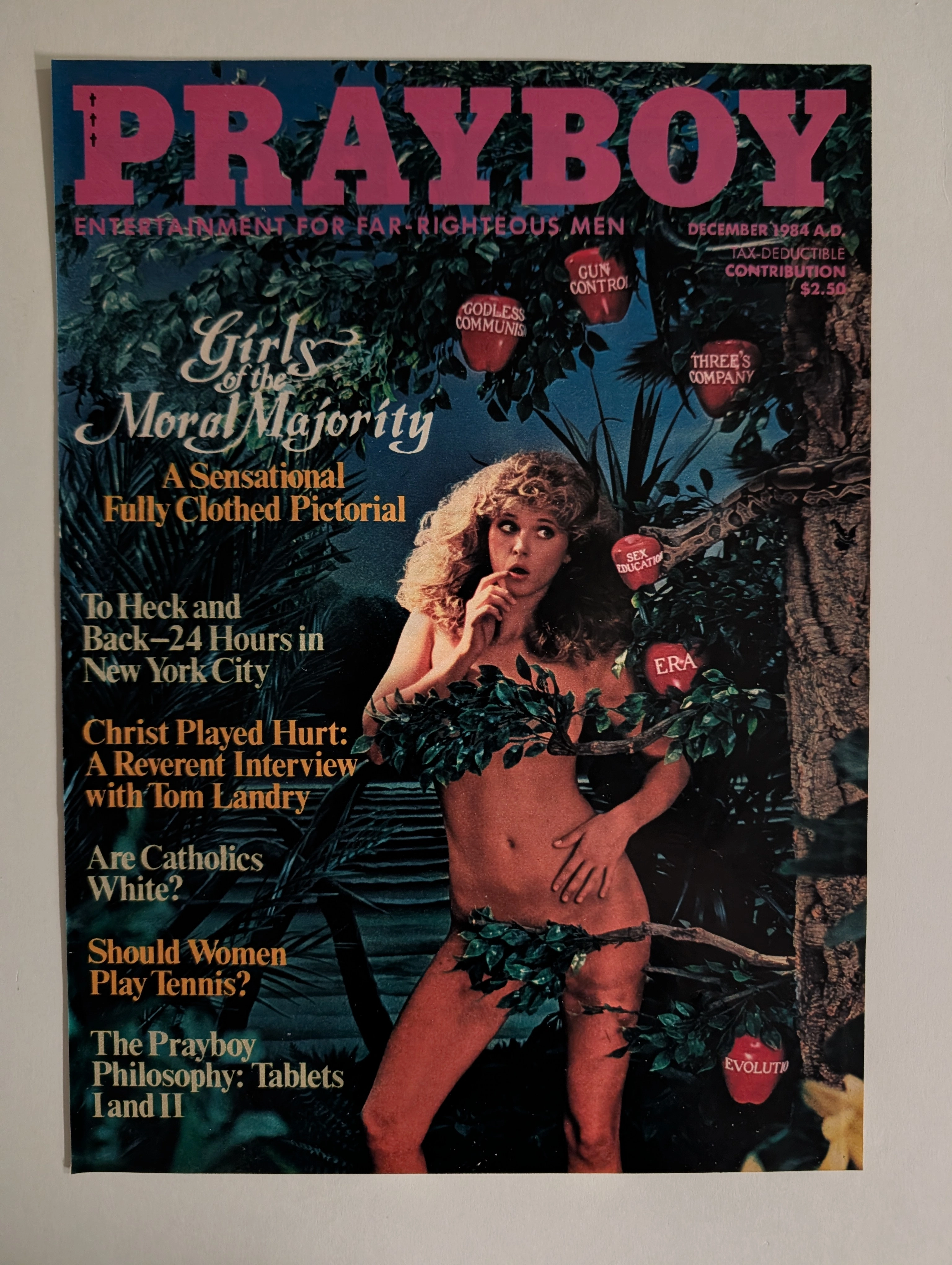
This is not a conventional magazine cover; it is a "Museum Grade Artifact" of 1980s cultural rebellion. The December 1984 issue of "PRAYBOY" (Entertainment for Far-Righteous Men) is a brilliant, biting parody of Playboy, mocking the extreme conservative "Moral Majority" of the era. This magazine-sized analog print is a fading piece of bold historical satire.
🏛️ CHAPTER I: THE HISTORY OF REBELLION & SATIRE
The Cultural Clash: In the 1980s, right-wing religious conservatism was a dominant political force in the US. This cover fearlessly parodies those ideals, featuring Eve attempting to cover herself under the headline "Girls of the Moral Majority: A Sensational Fully Clothed Pictorial." The apples of sin are labeled with the era's hot-button issues like "EVOLUTION," "GUN CONTROL," and "SEX EDUCATION."
📷 CHAPTER II: THE GOLDEN AGE OF ANALOG CRAFTSMANSHIP
Practical Set Design: Created pre-Photoshop, this required masterful studio photography and art direction. The lighting simulating moonlight, the placement of the artificial Eden, and the hand-painted typography on real apples were all physical, analog accomplishments captured on film.
⏳ CHAPTER III: THE FRAGILITY OF HISTORY & PAPER DEGRADATION
The Chemistry of Decay: Pre-2000 paper contains Lignin, which oxidizes over time. This page is literally consuming itself through acidic autocatalysis. Its survival over 40 years gives it a beautiful, natural patina that authenticates its museum-grade status.
📈 CHAPTER IV: THE ECONOMICS OF SCARCITY
Niche Scarcity: Parody publications had drastically lower print runs than mainstream media. Combined with the daily destruction of vintage paper by the elements, this magazine-sized original print has evolved into a highly scarce Alternative Asset for any sophisticated home art gallery.
The Archive Continues
Continue the Exploration
Admiral · Technology
The Time Traveller's Dossier: The Zenith of the American Living Room – Admiral Rectangular Color TV
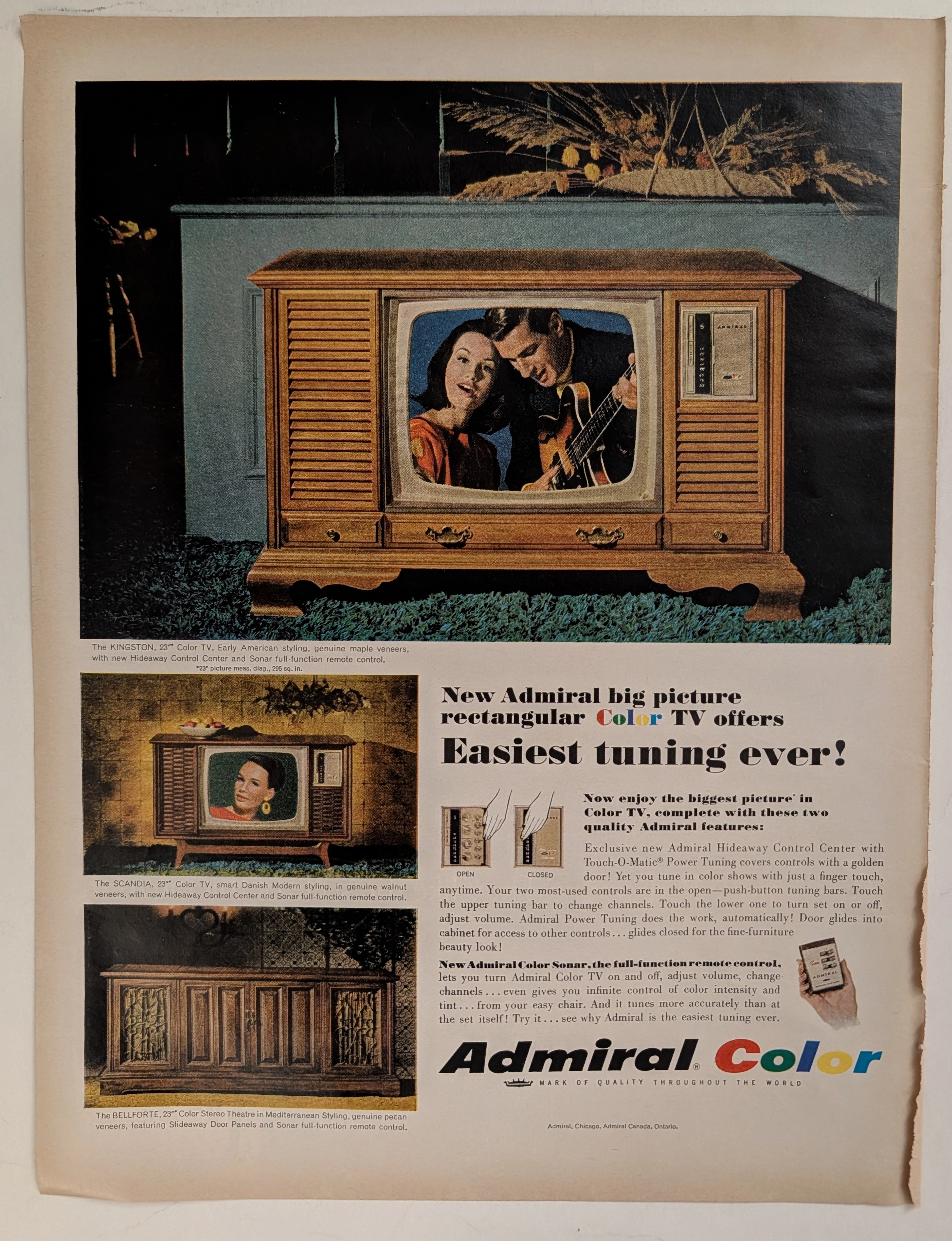
The evolution of the American domestic interior during the mid-twentieth century was fundamentally redefined by the introduction and subsequent democratization of color television. The historical artifact elegantly and securely positioned upon the analytical table of The Record Institute today is a majestic, full-page print advertisement for Admiral Color TV, originating from the transitional technological era of the late 1960s. This document completely transcends the traditional boundaries of consumer electronics marketing. It operates as a highly sophisticated, multi-layered cultural and historical mirror, reflecting the exact moment when the magic of color broadcasting collided with the rigorous aesthetic demands of suburban domestic styling on a single printed page. This world-class, comprehensive dossier conducts a meticulous, unyielding, and exceptionally deep examination of the artifact, operating under the absolute most rigorous parameters of historical, sociological, and material science evaluation. With our analytical focus dedicated heavily to its historical gravity, we will decode the brilliant marketing psychology embedded within the "rectangular" tube innovation, analyze the space-age luxury of the "Sonar" remote control, and dissect the rich semiotics of disguised technology through "genuine walnut veneers". Furthermore, as we venture deeply into the chemical and physical foundations of this analog printed ephemera, we will reveal the precise mechanical fingerprints of the CMYK halftone rosettes and the graceful, natural oxidation of the paper substrate. This precise intersection of visual nostalgia, mid-century commercial artistry, and the immutable chemistry of time cultivates a serene wabi-sabi aesthetic—a natural, irreversible phenomenon that serves as the primary engine driving up its market value exponentially within the elite global spheres of Vintage Commercial Ephemera, Consumer Electronics Archives, and Mid-Century Lifestyle collecting.
kodak · Technology
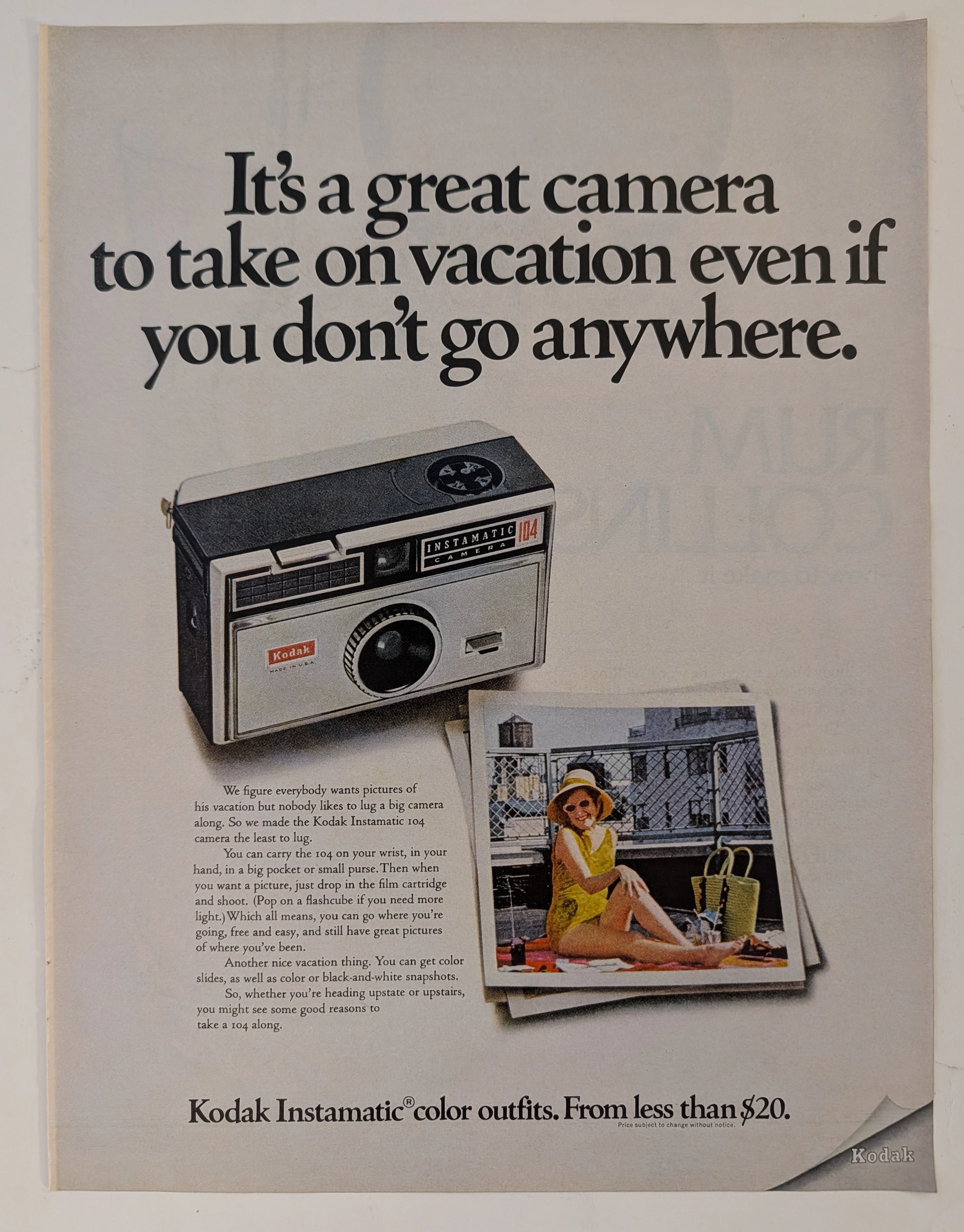
TThe Time Traveller's Dossier: The Democratization of Memory – An Academic Archival Analysis of the Kodak Instamatic 104 Advertisement
The human desire to capture a fleeting moment and preserve it for eternity is a profound psychological instinct. The historical artifact elegantly positioned upon the analytical table of The Record Institute today is a full-page print advertisement for the Kodak Instamatic 104, originating from the mid-1960s. This document transcends the boundaries of conventional camera promotion; it is a profound declaration of technological emancipation. It represents the exact historical juncture where photography was permanently liberated from the exclusive domain of skilled technicians and delivered directly into the hands of the everyday consumer. This comprehensive, world-class academic archival dossier will conduct a meticulous and deep examination of the artifact, operating under the most rigorous parameters of historical and material science evaluation. We will decode the brilliant copywriting that masterfully elevates everyday life into a "vacation," and illuminate the engineering triumphs of the 126 film cartridge and the revolutionary Flashcube system. Furthermore, venturing into the chemical foundations of this analog offset lithography, we will reveal the mechanical fingerprints of the CMYK halftone rosettes and the natural, graceful oxidation of the paper substrate. This precise intersection of visual nostalgia and the chemistry of time cultivates a serene wabi-sabi aesthetic—a natural phenomenon that serves as the primary engine driving up its market value exponentially within the elite global spheres of Vintage Photography Ephemera collecting.
Marantz · Entertainment
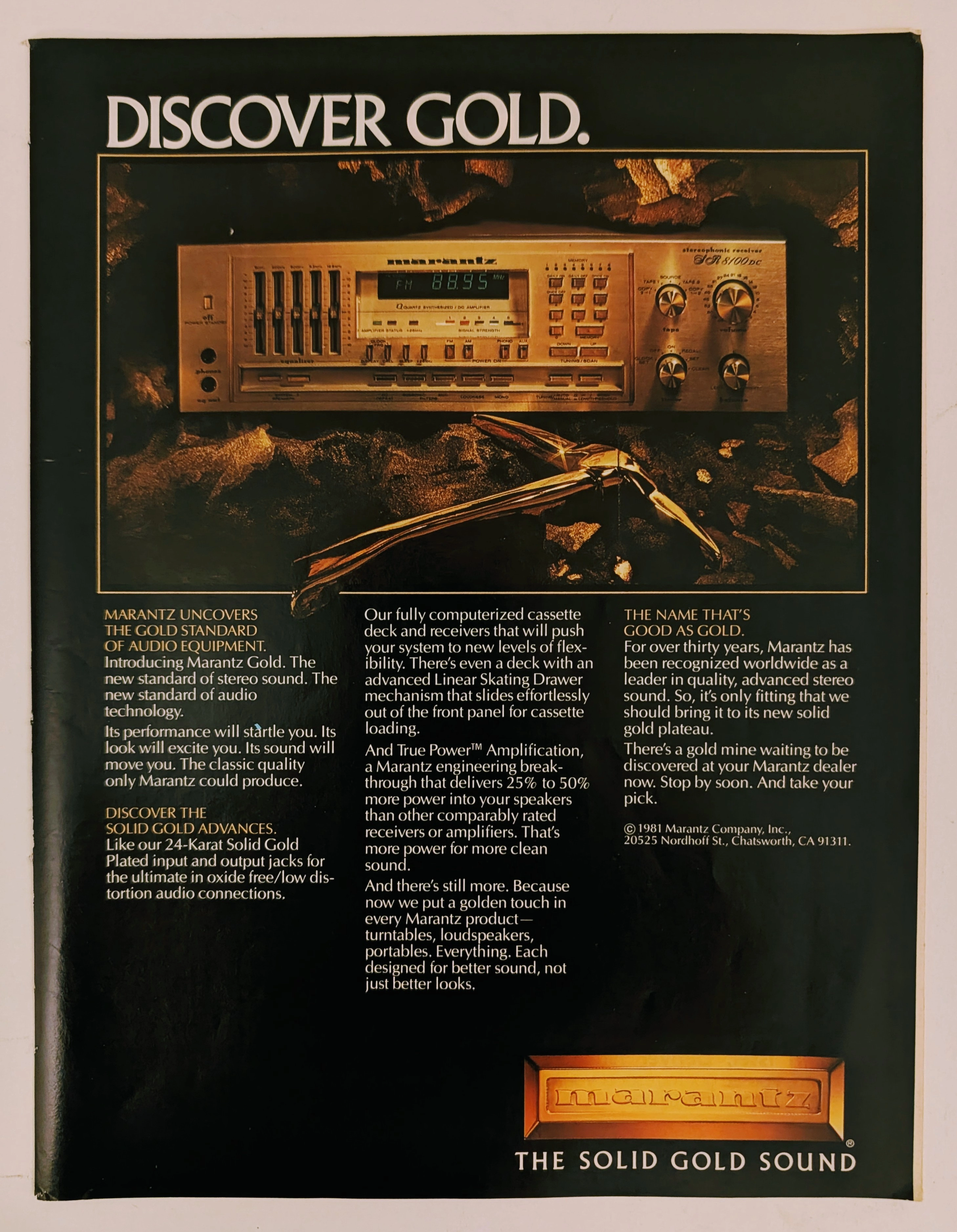
The Time Traveller's Dossier: The Alchemy of Acoustics – Marantz "Discover Gold" Advertisement (1981)
History is not an accidental sequence of events; it is a meticulously engineered illusion crafted by those who command the aesthetic and cultural narratives of their time. Long before digital algorithms could sterilely dictate consumer preferences, the ultimate manifestation of psychological manipulation and corporate alchemy was executed through the calculated precision of the offset printing press and the absolute mastery of analog darkroom photography. The historical artifact before us is not merely a disposable page torn from a vintage magazine. It is a perfectly weaponized blueprint of audio-exoticism, a visual declaration of extreme consumer luxury, and an unwavering testament to an era where electronic hardware was sold not merely as a functional utility, but as a precious, excavated commodity. This museum-grade, academic archival dossier presents an exhaustive, microscopic deconstruction of a 1981 print advertisement for the Marantz "Solid Gold" audio equipment line. Operating on a profound and ruthless binary structure, this document records a calculated paradigm shift within the global consumer electronics industry. It captures the precise historical fracture where silicon, copper, and plastic were conceptually transmuted into a literal, physical embodiment of a precious metal. Through the highly specialized lens of late-analog commercial artistry and stringent visual forensics, this document serves as a masterclass in psychological marketing. It established the foundational archetype for selling technology as a high-yield status symbol—an archetype that unconditionally dictates the visual and strategic totems of the modern high-end audiophile industry today.