THE TIME TRAVELER'S DOSSIER: THE FLAVOR OF AUTHENTICITY AND THE PROPHET OF CAPITALISM
The History
( THE HISTORY: The Search for Truth in the 70s, Psychological Warfare, and Pop-Art Architecture )
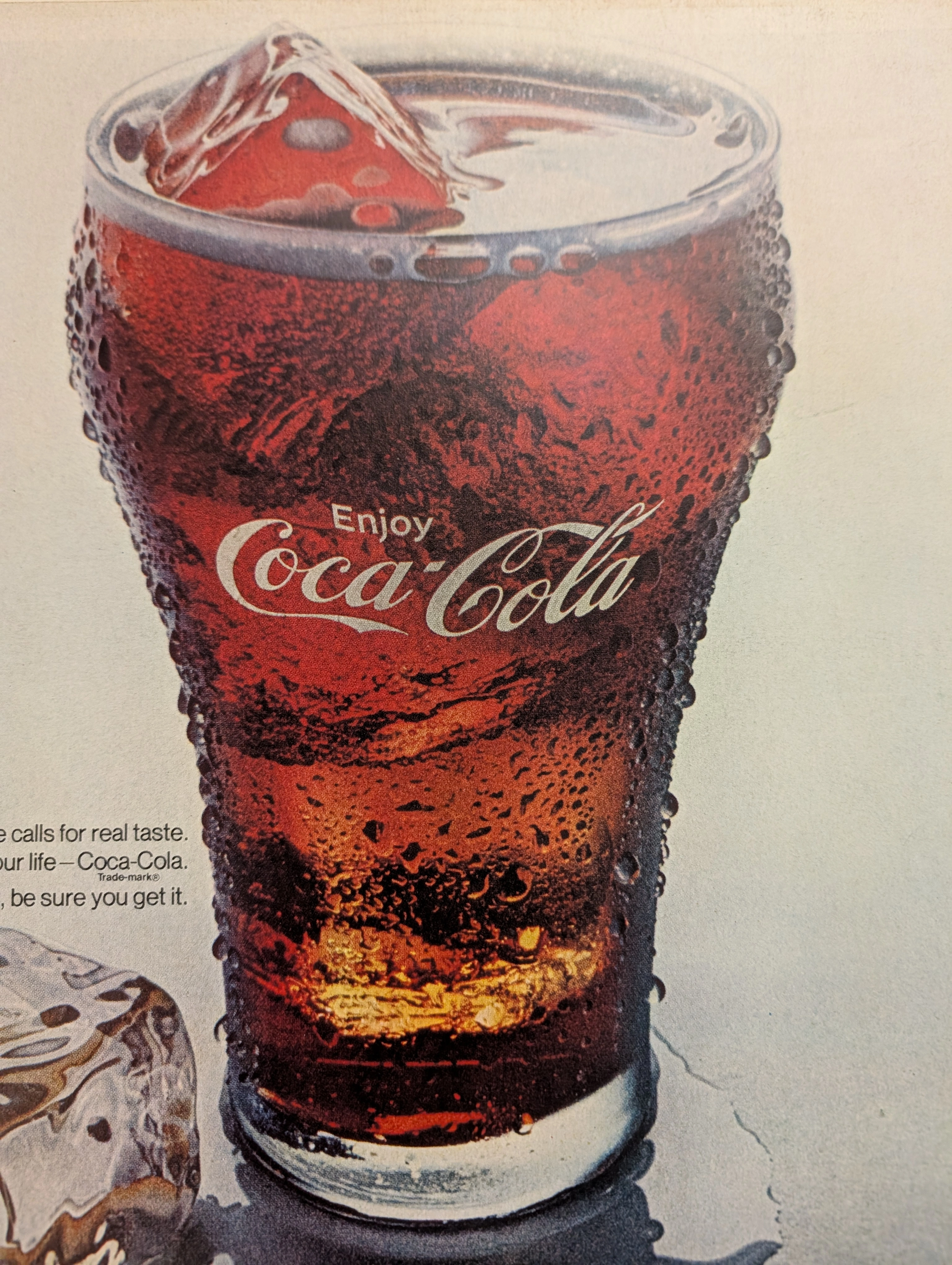
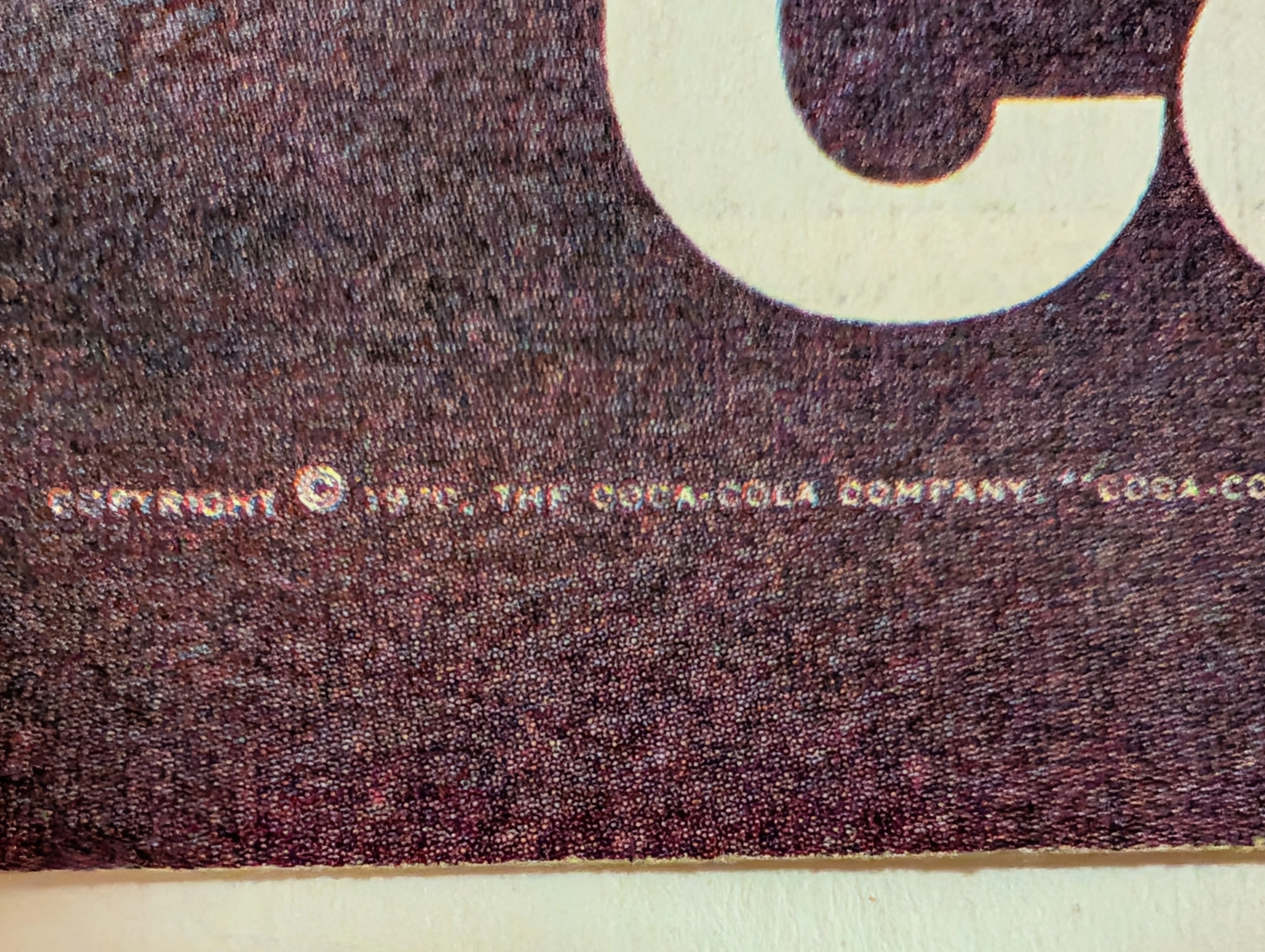
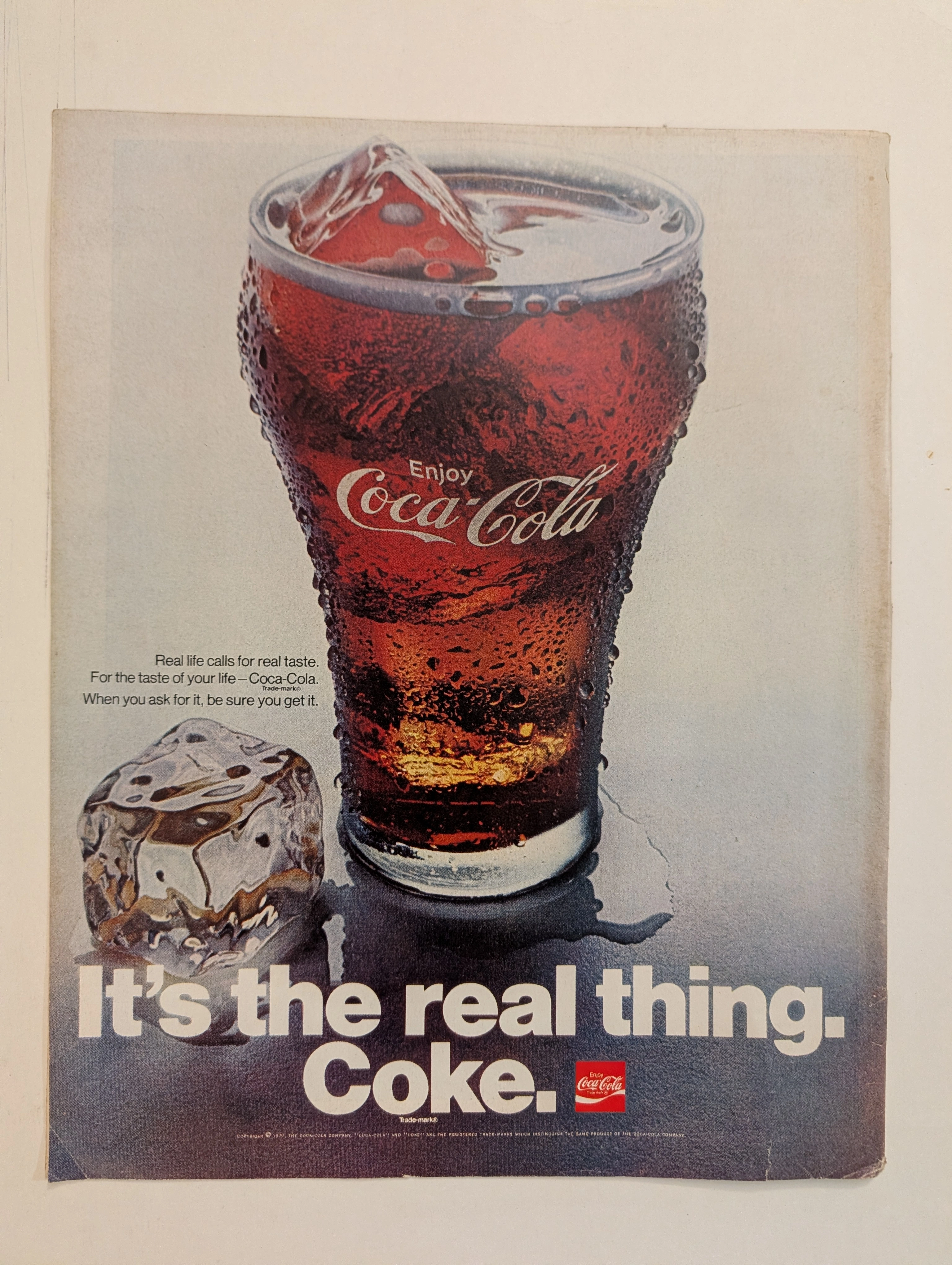
As the Chief Curator of The Record, I welcome you to the absolute epicenter of American pop culture. The impeccably preserved Historical Relic before you is not a mere, soulless soft drink advertisement. It is a forensic "Blueprint of Consumer Psychology," specifically engineered in the culturally explosive year of 1970 (as undeniably verified by the microscopic legal text: "COPYRIGHT © 1970, THE COCA-COLA COMPANY").
This Primary Art Document is the most formidable visual representation of arguably the greatest advertising campaign in corporate history: "It's the real thing." To decode the immense, staggering gravity of this artifact, you must first immerse yourself in the sociopolitical landscape of America at the turn of the decade. The late 1960s had fractured the American psyche. The nation was bleeding from the Vietnam War, reeling from political assassinations, and fractured by the counter-culture movement. The youth of 1970 were profoundly disillusioned. They actively questioned the "fakeness" of the government, the media, and the plastic, manufactured society they lived in. They were desperately, violently craving "Authenticity."
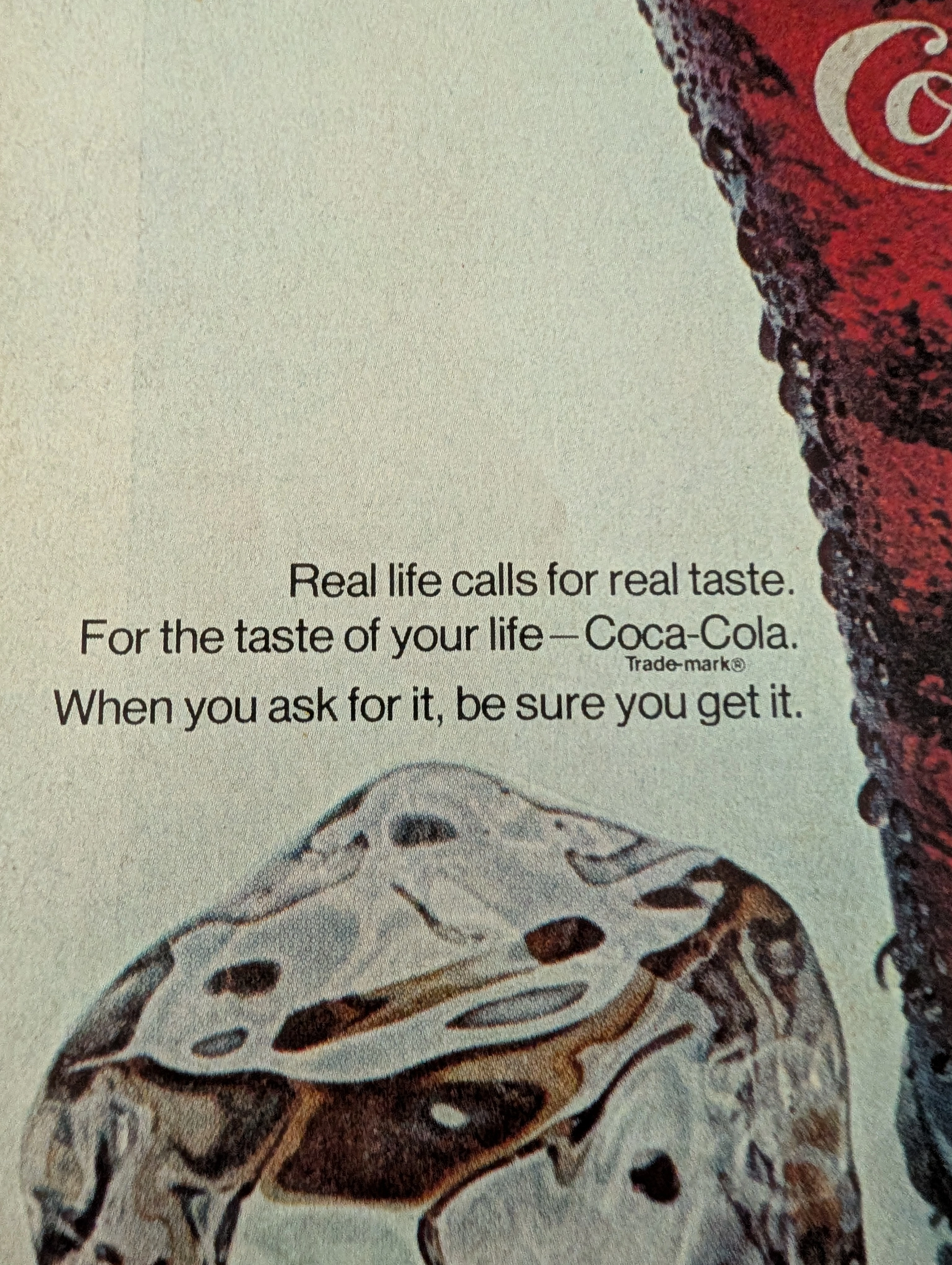
The Coca-Cola Company identified this massive spiritual vacuum and aggressively positioned their brand as the "Prophet of Authenticity." The masterful copywriting—"Real life calls for real taste. For the taste of your life - Coca-Cola. When you ask for it, be sure you get it."—is not merely pitching carbonated sugar water. It is a profound sociological directive. Coca-Cola was whispering to a disillusioned generation: In a world full of lies and artificiality, this glass is the one thing you can absolutely trust. This is real. This exact campaign laid the indestructible foundation for the iconic 1971 "Hilltop" (I'd like to buy the world a Coke) commercial.
In terms of Visual Architecture, this artifact is the absolute zenith of commercial Hyper-realism. The glass of Coke looms like a towering monolith. The illustration/photography is executed with microscopic, obsessive fidelity. The tactile, weeping condensation on the glass reflects light so perfectly that it triggers an immediate, visceral biological craving. The standalone, melting ice cube juxtaposed against the massive, uncompromising block typography and the classic red "Enjoy Coca-Cola" square logo elevates this from marketing to high Pop-Art. It holds the same cultural weight as an Andy Warhol piece; it is the deliberate transfiguration of a democratic commodity into a sacred Icon.
( THE PAPER: The Aesthetics of Decay (Wabi-Sabi) — The Scars of 1970s Acidic Pulp )
At The Record, our ultimate, uncompromising reverence is reserved for the inevitable, tragic beauty of analog destruction. This standalone Primary Art Document was meticulously rescued and preserved. Mass-market magazines in the 1970s were printed on cheap, highly acidic wood-pulp paper. They were explicitly designed for disposable consumption, harboring a chemical death sentence within their very fibers from the moment they were pressed.
Direct your curatorial gaze to the surface of the paper. After more than half a century, ambient oxygen and ultraviolet light have waged a relentless chemical war against the paper's inherent lignin. This irreversible oxidation process has birthed a magnificent, undeniable "patina," transforming the once-sterile white background into a warm, creamy ivory and toasted amber. The vibrant reds of the logo and the deep blacks of the ink have settled permanently into the brittle, degrading fibers. This is the profound aesthetic of wabi-sabi—finding absolute perfection in impermanence. This paper is literally burning itself alive at a molecular level. No modern digital reprint can ever replicate the fragile, tactile soul, nor the distinct olfactory signature of aging 1970s pulp. Its slow, majestic death is precisely what transfigures it into immortal Primary Art.
( THE RARITY: Class A — A Survivor of the Consumer Purges )
To understand the valuation of this artifact, you must comprehend the brutal reality of ephemera survival. Millions of these ads were printed in 1970, but they were manufactured exclusively to be thrown away. They were discarded in waiting rooms, tossed in household garbage, or left to rot in damp attics. The statistical probability of a magazine page surviving over 50 years in such crisp, visually immaculate condition—where the micro-details of the condensation remain hyper-sharp and the paper bears no devastating creases—is staggeringly low.
When you fuse this physical scarcity with the monumental historical presence of the "It's the real thing" campaign—a holy grail for Americana and Pop-Art collectors globally—this artifact unequivocally commands a Rarity Class A designation. It has evolved far beyond a disposable piece of commercial advertising. It is a highly coveted Historical Relic, demanding to be framed and preserved by a curator who truly understands the heavy, beautiful weight of American capitalist history.
Exhibition Halls
The Archive Continues
Continue the Exploration
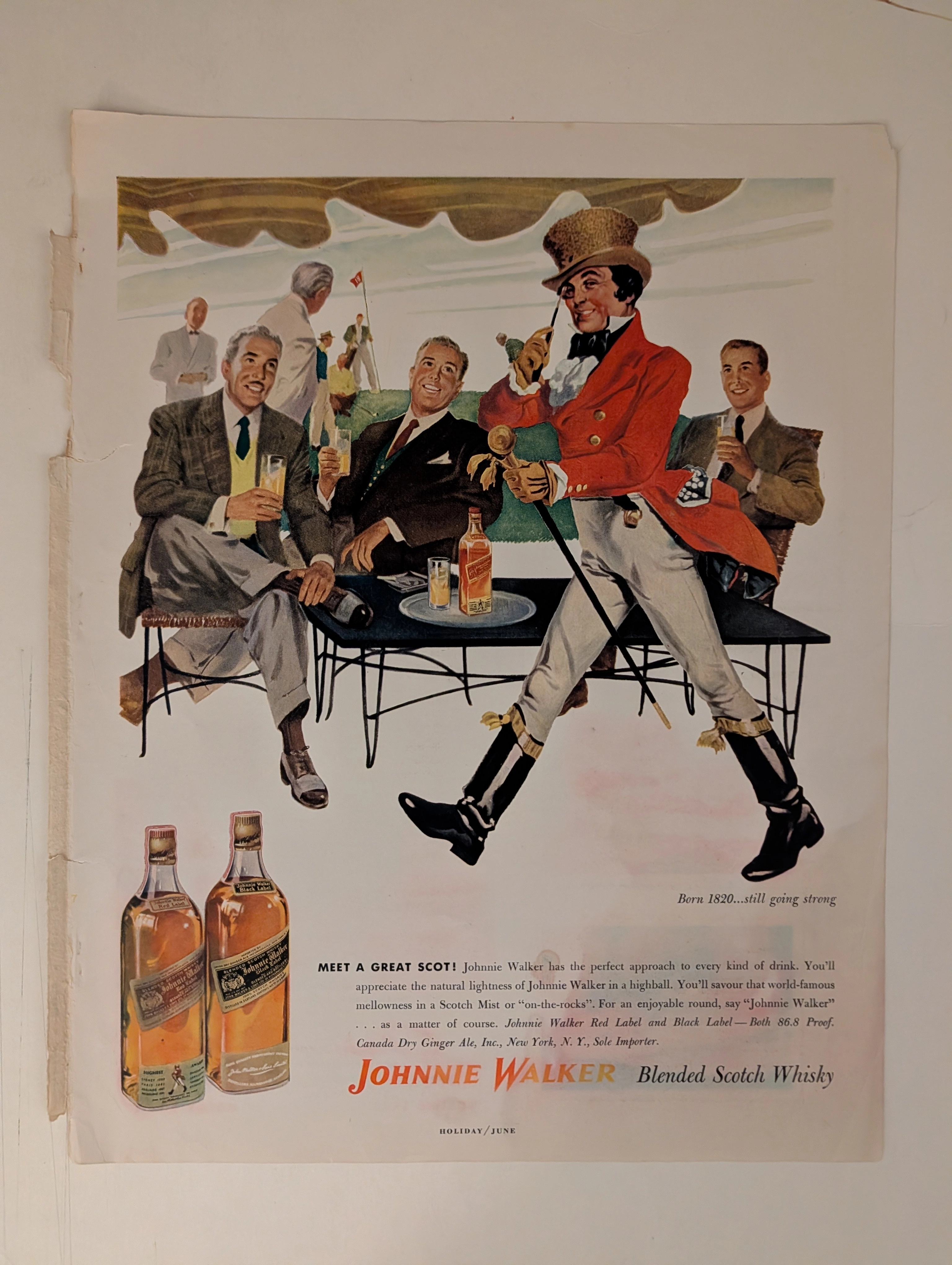
Johnnie walker · Beverage
THE TIME TRAVELER'S DOSSIER :THE APPARITION OF HERITAGE — THE STRIDING MAN
The artifact currently subjected to our uncompromising, museum-grade analysis is a profoundly preserved Historical Relic excavated from the zenith of mid-century American prosperity. This Primary Art Document is a full-page magazine advertisement for Johnnie Walker Blended Scotch Whisky. Functioning as a "Forensic Blueprint of the Transatlantic Leisure Class," the document masterfully weaponizes British aristocratic heritage (embodied by the Striding Man) to validate the newly acquired wealth of post-war American consumers. Its historical context is irrefutably anchored by the microscopic fine print identifying the importer as "Canada Dry Ginger Ale, Inc., New York, N.Y.", a specific corporate era of distribution. Grounded by extreme macro details of analog halftone lithography and the breathtaking wabi-sabi chemical degradation highlighted by its violently torn binding edge, this artifact commands an irreplaceable status, cementing its Rarity Class A designation as a masterpiece of corporate sociological engineering.
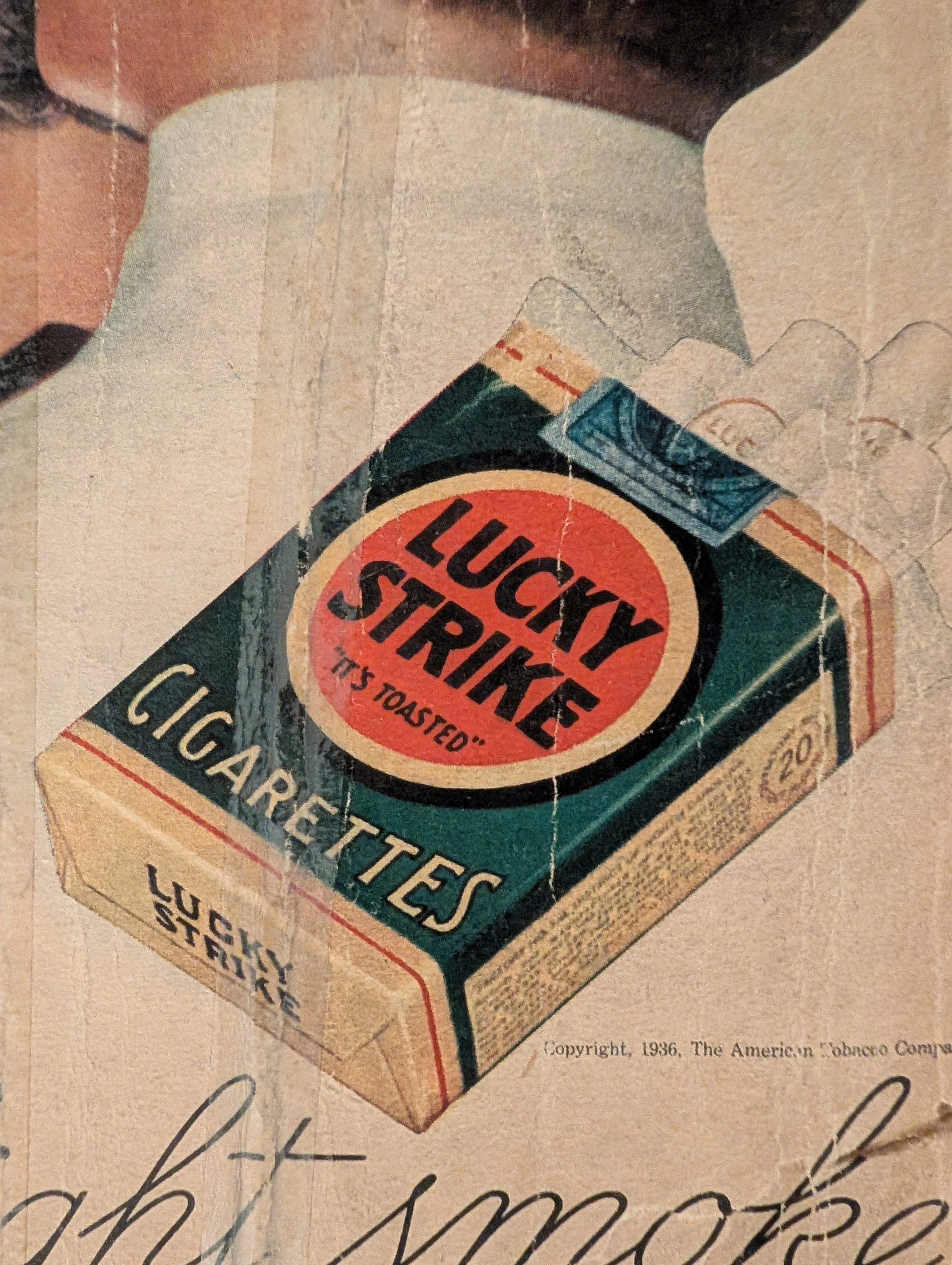
THE TIME TRAVELER'S DOSSIER: THE GOLDEN LIE AND THE PROPAGANDA OF 1936
The artifact under exhaustive, uncompromising, and unprecedented museum-grade analysis is an exceptionally rare, battle-scarred Historical Relic originating from the absolute zenith of the American tobacco empire. This Primary Art Document is a monumental, full-page advertisement for Lucky Strike Cigarettes, forensically and definitively dated to 1936 by the explicit copyright text: "Copyright, 1936, The American Tobacco Company". This is not merely a vintage tobacco ad; it is a profound "Sociological Blueprint of Corporate Propaganda" from the interwar period. Emerging in the heart of the Great Depression, this artifact captures the audacious peak of 1930s psychological marketing. The commanding headline, "Smoke to Your Throat's Content", represents the era's surreal, medically ironic strategy where tobacco conglomerates aggressively marketed deadly carcinogens as "smooth" and "non-irritating" to the throat. Furthermore, the legendary slogan "It's Toasted" serves as a masterclass in advertising spin, transforming a standard manufacturing process into an exclusive health benefit. Visually, the ad brilliantly normalizes and glamorizes female smoking—a direct continuation of the industry's sociological engineering to double their consumer base. Rescued from the inevitable oblivion of disposable mass media, this pre-2000s analog artifact is a breathtaking embodiment of the Japanese aesthetic of wabi-sabi. Printed on highly acidic wood-pulp paper, it exhibits severe, violent edge trauma, deep structural creasing, ancient tape residue, and a profound, burning amber oxidation across its entire surface. This unstoppable molecular death transforms a piece of mass-produced corporate propaganda into an irreplaceable, ready-to-frame Primary Art Document of American marketing history.
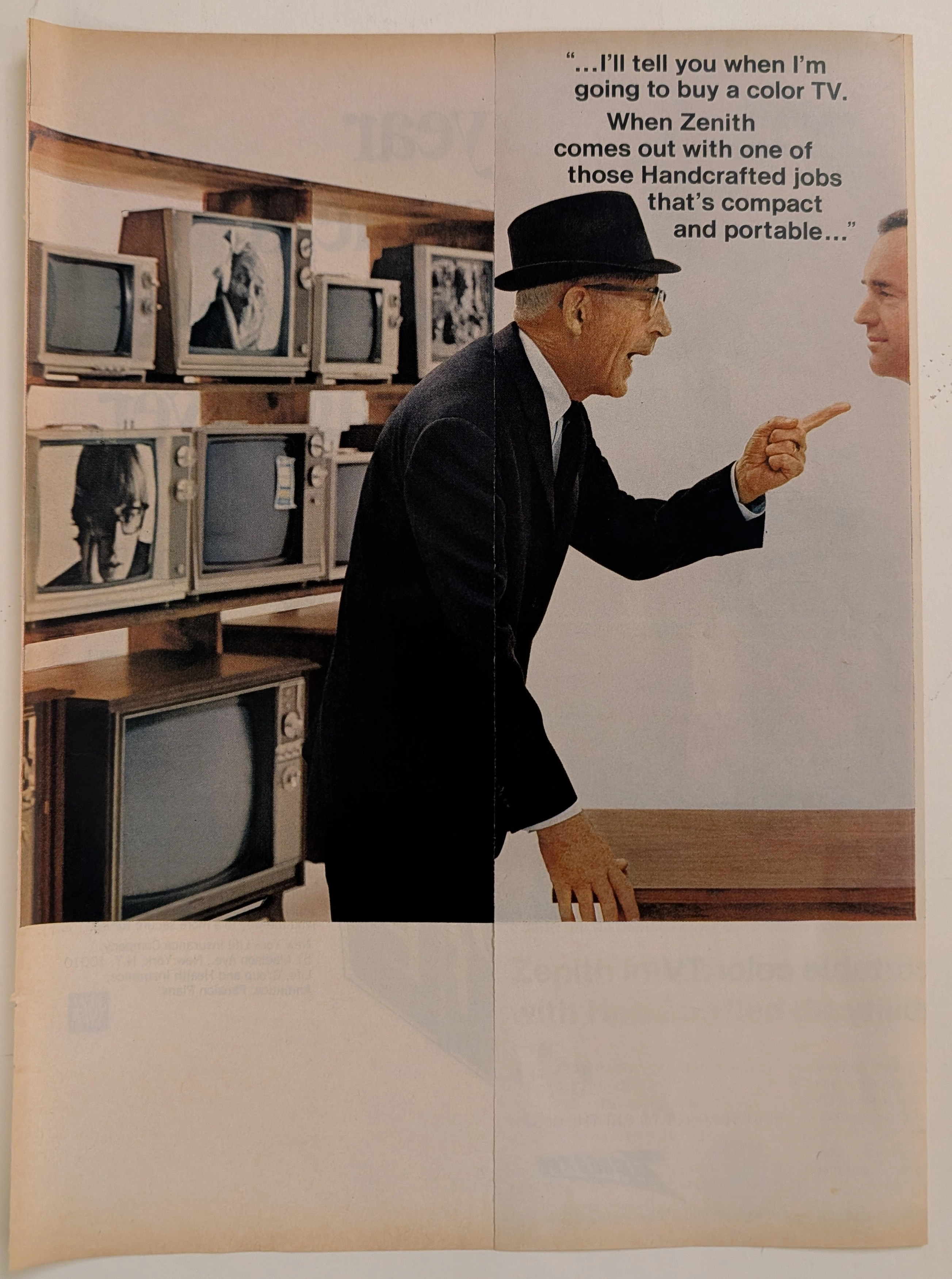
The Time Traveller's Dossier: The Color Revolution – The 1968 Zenith Handcrafted Golden Jubilee and the Generational Shift in Consumer Electronics
The evolution of the mid-twentieth-century American living room was fundamentally defined by the rapid, fiercely competitive technological arms race in consumer electronics. The historical artifact elegantly and securely positioned upon the analytical table of The Record Institute today is a striking, two-page centerfold print advertisement for the 1968 Zenith 14" Portable Color TV, originating from a highly transformative era in global broadcasting. This document completely transcends the standard, utilitarian boundaries of appliance marketing. It operates as a highly sophisticated, multi-layered cultural mirror, reflecting the precise era when American manufacturers had to psychologically persuade a cautious, older generation to adopt a radically new, expensive technology by anchoring it to traditional concepts of craftsmanship and reliability. This world-class, comprehensive dossier conducts a meticulous, unyielding, and exceptionally exhaustive examination of the artifact, operating under the absolute most rigorous parameters of historical, sociological, and material science evaluation. Dedicating the overwhelming majority of our analytical focus to its immense historical gravity, we will decode the brilliant marketing psychology embedded within the multi-page narrative of the "skeptical buyer," analyze the sociopolitical impact of Zenith's "Handcrafted" manufacturing philosophy during the rise of automation, and dissect the profound cultural semiotics of broadcasting the American pastime—baseball—in vivid color. Furthermore, as we venture deeply into the chemical and physical foundations of this analog printed ephemera, we will reveal the precise mechanical fingerprints of the CMYK halftone rosettes captured in the macro imagery of the television screen and corporate logos. Finally, we will assess its archival rarity, exploring how the graceful, natural oxidation of the paper substrate cultivates a serene wabi-sabi aesthetic—a natural, irreversible phenomenon that serves as the primary engine driving up its market value exponentially within the elite global spheres of Vintage Commercial Ephemera and Technology Archives.