THE TIME TRAVELER'S DOSSIER: THE HOME FRONT SMILE AND THE 1944 PSYCHOLOGICAL WAR
The History
( THE HISTORY: World War II, Propaganda, and the Spirit of 7-Up )
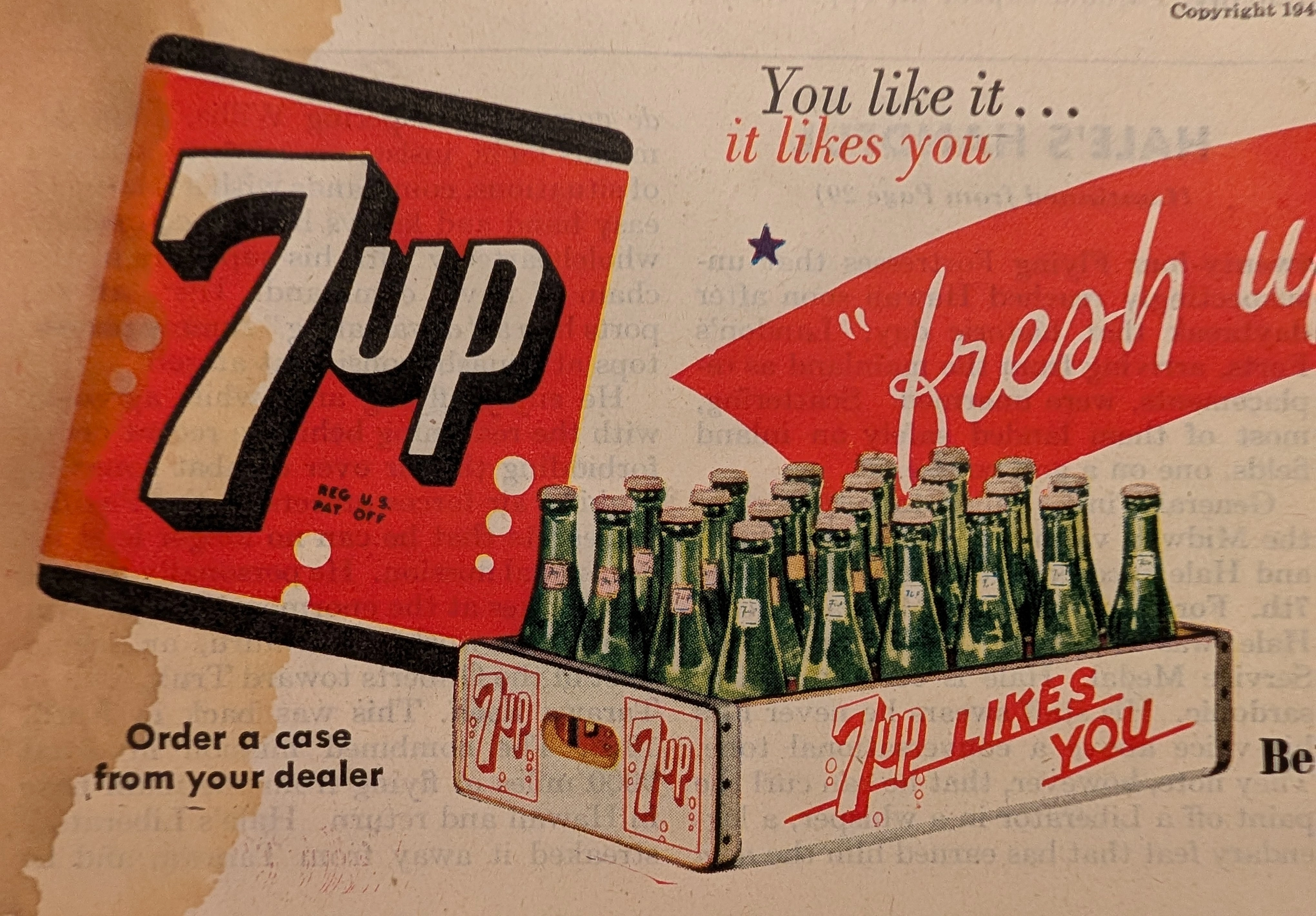
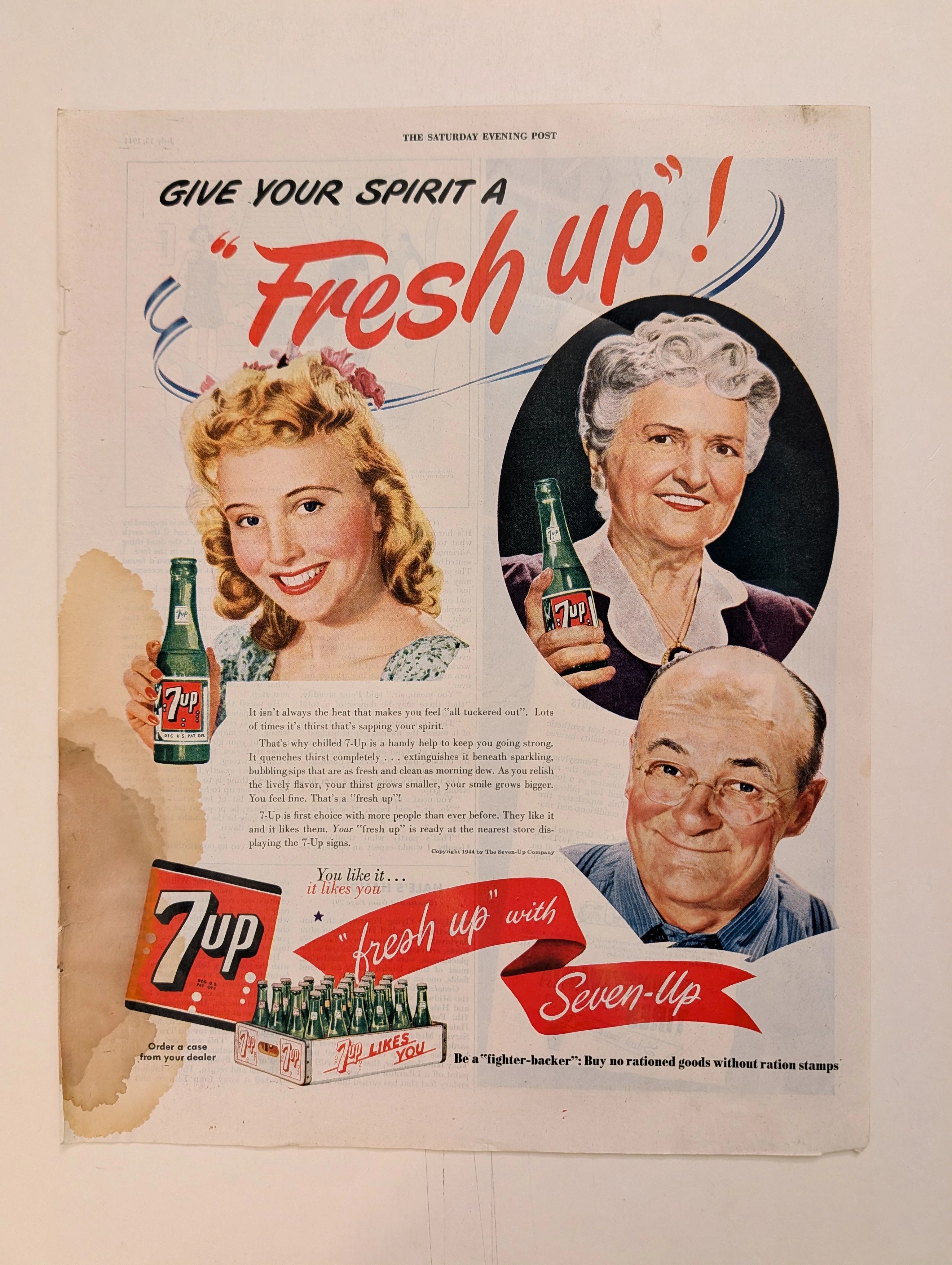
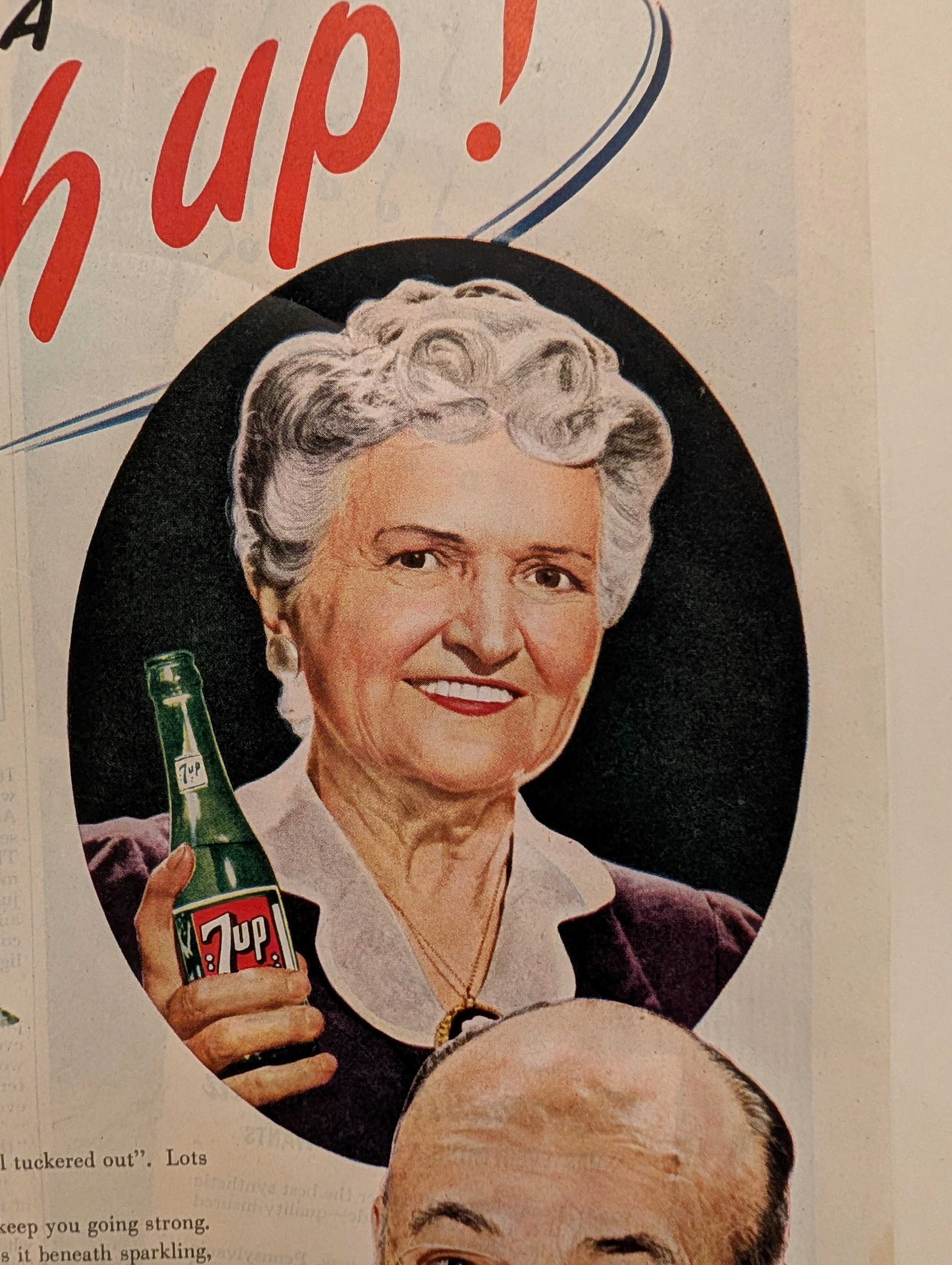
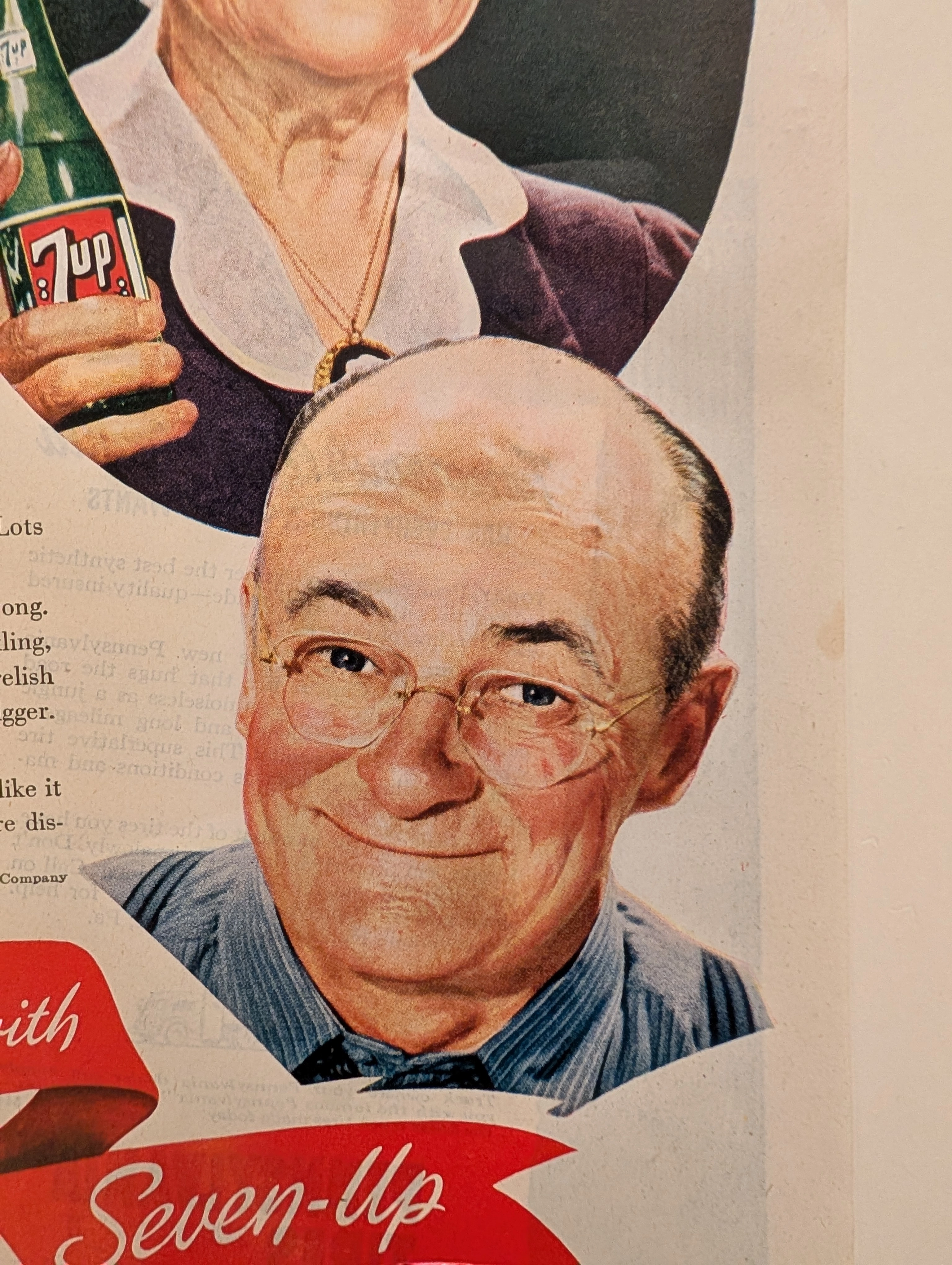
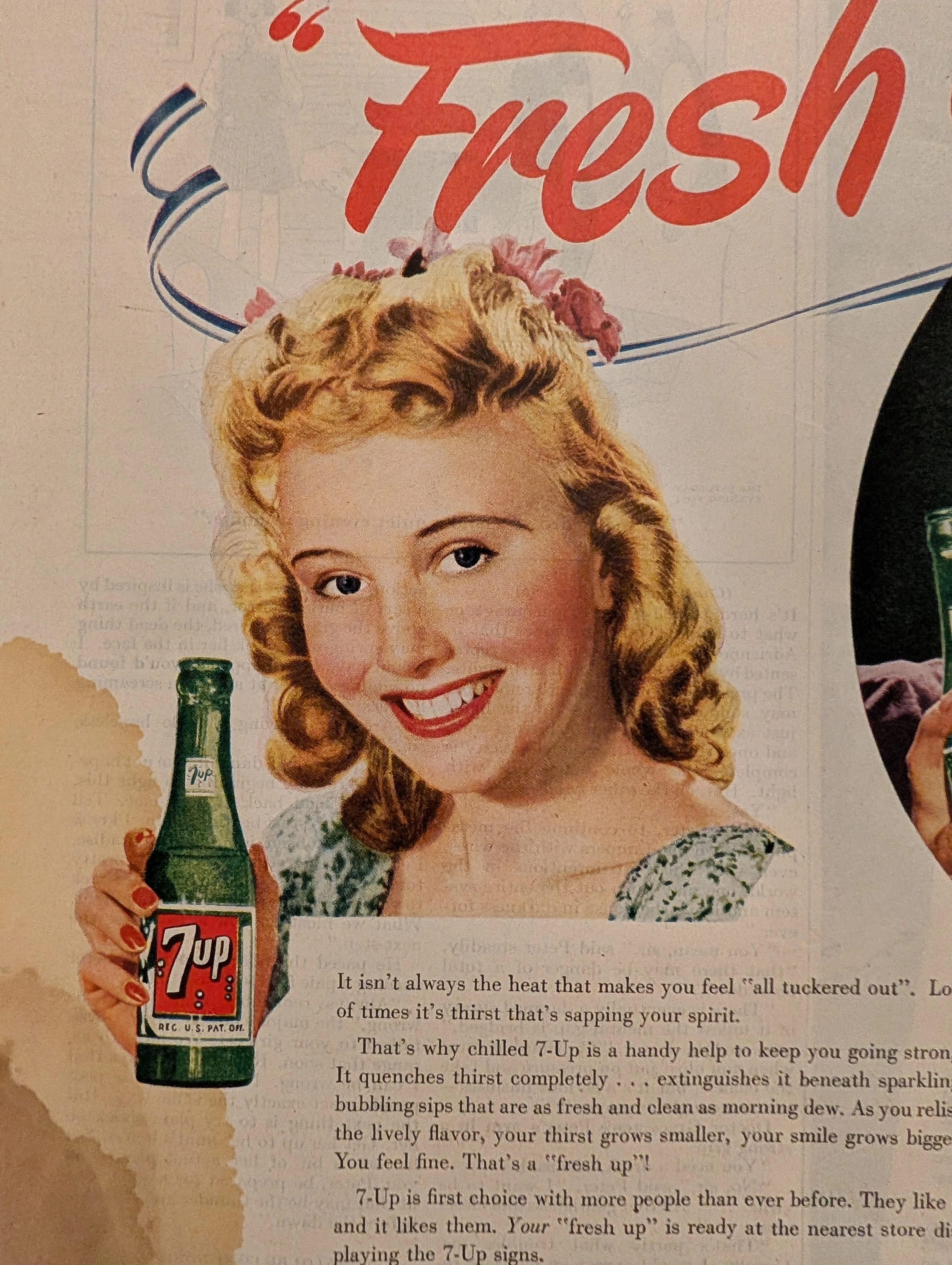
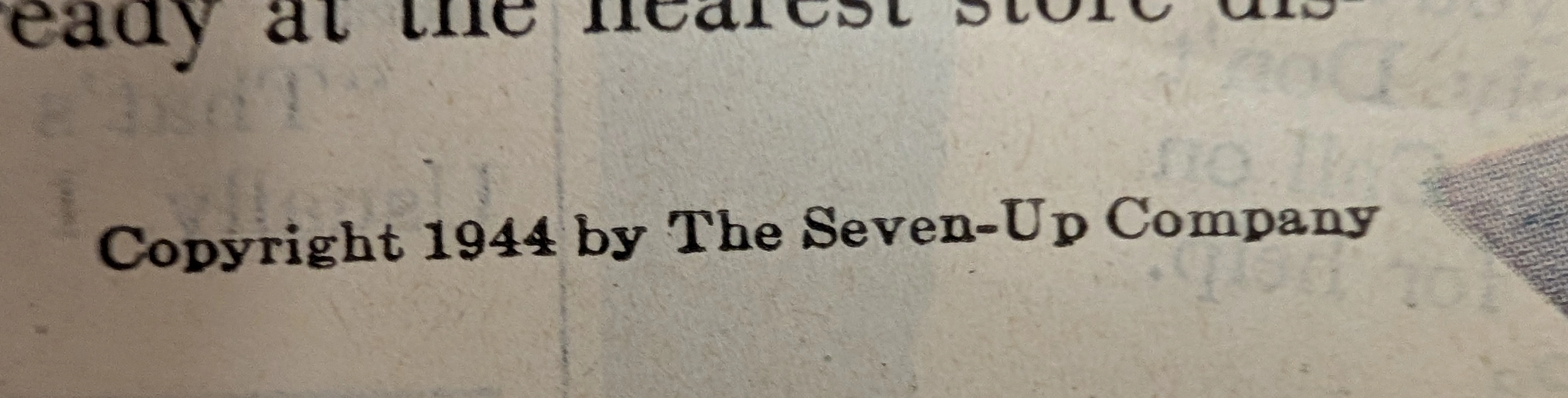
Step into the vault of The Record, where we do not simply observe paper; we interrogate it. The artifact before you is a vibrant 7-Up advertisement surgically extracted from a 1944 edition of The Saturday Evening Post. To the untrained eye, this is merely a charming mid-century beverage ad featuring the smiling faces of three distinct American generations. But as Chief Curator, I direct your focus to the microscopic text buried in the bottom right corner: "Be a 'fighter-backer': Buy no rationed goods without ration stamps." In an instant, this piece of commercial marketing is transmuted into a weapon of wartime psychological alignment.
The year 1944 represented the grueling, blood-soaked apex of World War II. As Allied forces prepared for the monumental D-Day invasion, the American "Home Front" was buckling under the immense psychological and physical strain of the war machine. The U.S. government had instituted draconian rationing protocols. Sugar, coffee, meat, and gasoline were severely restricted. A profound, collective "war weariness" was sapping the spirit of the nation.
The Seven-Up Company recognized this spiritual vacuum and executed a masterpiece of psychological marketing. They were no longer selling carbonated water; they were selling a spiritual resurrection—"Give your spirit a 'Fresh up'!" The genius of this ad lies in its subtle redirection of the citizen's burden. It suggests that the exhaustion Americans felt wasn't just the crushing weight of global conflict; it was merely thirst. 7-Up offered a guilt-free, non-rationed moment of relief.
Furthermore, by integrating the "fighter-backer" slogan, 7-Up brilliantly chained its corporate identity to unwavering patriotism. It commanded citizens to obey the rationing laws, implicitly stating that drinking a 7-Up was the beverage choice of a loyal American supporting the troops. This page is not a soda advertisement; it is a primary historical document of wartime propaganda seamlessly blended with consumerism.
( THE PAPER: The Aesthetics of Decay — The Watermark of Time )
The absolute core of The Record's philosophy is the glorification of analog decay. This artifact is an individual, standard-sized cut page, isolated from its original binding. Its most breathtaking feature is not the illustration, but the massive, dramatic water stain blossoming along its left margin.
Printed in the 1940s on highly acidic wood-pulp paper, this document was born with a chemical death sentence. When moisture met the inherent lignin within the paper fibers, it triggered an aggressive oxidation process. The resulting rust-colored stain and the deep, warm amber patina of the paper are not damages; they are unforgeable historical scars. This is the profound aesthetic of wabi-sabi—finding beauty in inevitable destruction. This paper is burning alive at a molecular level, and its extreme physical fragility is what elevates it from disposable media to a verified, irreplaceable Primary Art Print.
( THE RARITY: Class A — A Survivor of the War Machine )
During WWII, paper was critical ammunition. Millions of magazines were surrendered to nationwide "Paper Drives," shredded and pulped to manufacture artillery boxes and rationing books. The survival rate of a fragile magazine page from 1944 is astoundingly low.
Because it survived the wartime incinerators, evaded eight decades of environmental ruin, and bears such a majestic, naturally occurring water stain, this artifact undeniably commands a Rarity Class A designation. You are not looking at a vintage ad; you are looking at a dying survivor of the 20th century's greatest conflict, ready to be framed before it turns to dust.
Exhibition Halls
The Archive Continues
Continue the Exploration
ฺีฺBulova · Fashion
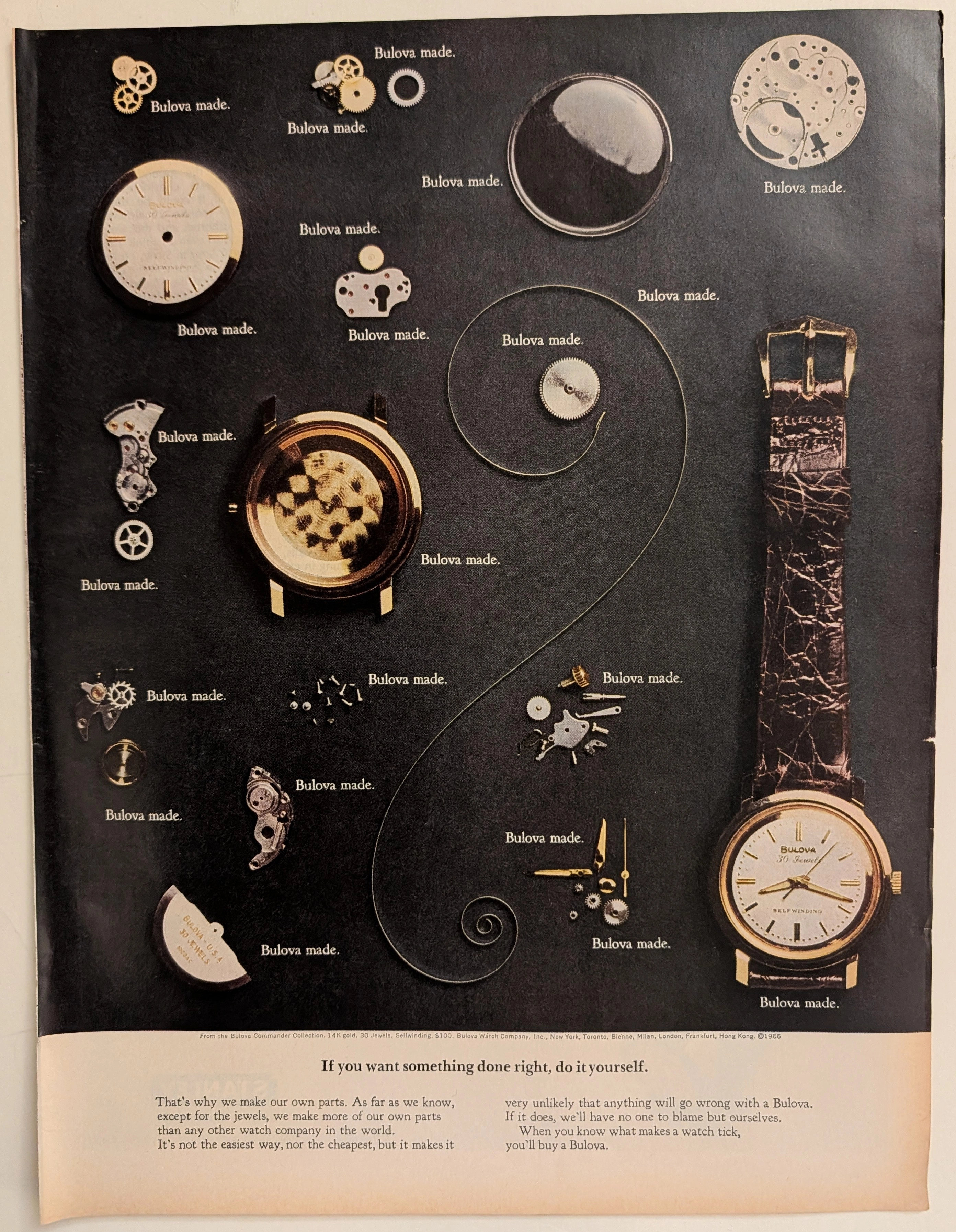
The Time Traveller's Dossier: The Anatomy of Autonomy – The 1966 Bulova Commander Collection and the American System of Watchmaking
The evolution of the mid-twentieth-century luxury consumer market was fundamentally propelled by an intense post-war desire for unwavering reliability and transparent corporate accountability. The historical artifact elegantly and securely positioned upon the analytical table of The Record Institute today is a striking, full-page print advertisement for the 1966 Bulova Commander Collection, originating from a highly transformative era in global horology. This document completely transcends the standard, utilitarian boundaries of jewelry marketing. It operates as a highly sophisticated, multi-layered cultural mirror, reflecting the precise era when American industrial might directly challenged the fragmented traditions of European watchmaking, explicitly packaging and selling the concept of total mechanical autonomy to the American middle-class consumer. This world-class, comprehensive dossier conducts a meticulous, unyielding, and exceptionally exhaustive examination of the artifact, operating under the absolute most rigorous parameters of historical, sociological, and material science evaluation. With the vast majority of our analytical focus dedicated to its immense historical gravity, we will decode the brilliant marketing psychology embedded within the "If you want something done right, do it yourself" campaign, analyze the sociopolitical impact of the "American System of Watchmaking," and dissect the profound visual semiotics of the exploded mechanical view. Furthermore, as we venture deeply into the chemical and physical foundations of this analog printed ephemera, we will reveal the precise mechanical fingerprints of the CMYK halftone rosettes captured in the macro imagery of the watch dial and alligator strap. Finally, we will assess its archival rarity, exploring how the graceful, natural oxidation of the paper substrate cultivates a serene wabi-sabi aesthetic—a natural, irreversible phenomenon that serves as the primary engine driving up its market value exponentially within the elite global spheres of Vintage Commercial Ephemera and Horological Archives.
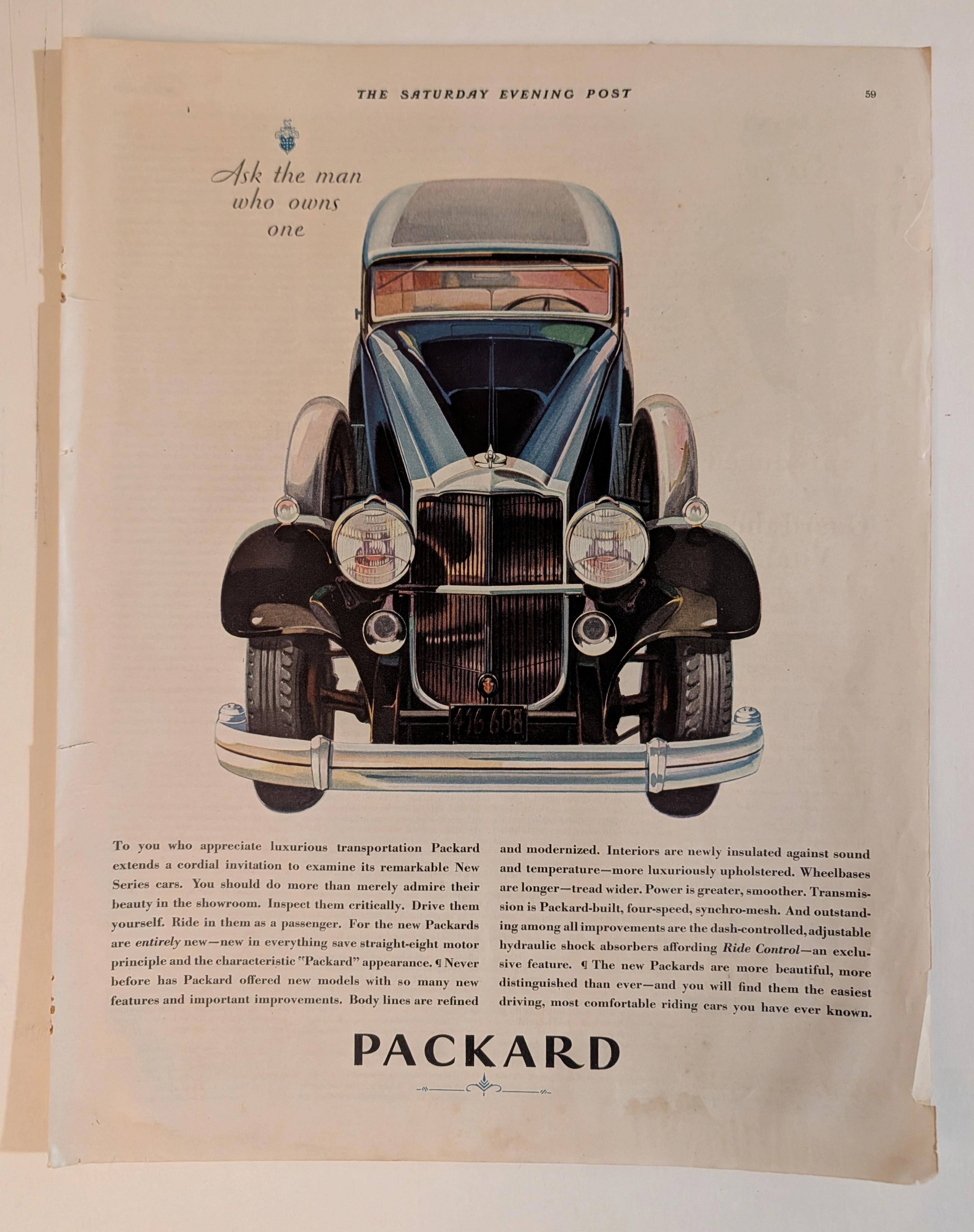
THE TIME TRAVELER'S DOSSIER: THE AUTOMOTIVE ARISTOCRACY AND THE AESTHETICS OF RUIN
The artifact under rigorous, museum-grade analysis is an exceptionally preserved Historical Relic originating from the golden age of American automotive supremacy. Sourced from a vintage issue of The Saturday Evening Post, this Primary Art Document features a commanding, full-page advertisement for Packard, one of the most prestigious luxury automobile manufacturers in world history. Visually dominated by a striking, head-on illustration of a New Series Packard, the piece explicitly highlights the legendary corporate slogan: "Ask the man who owns one". Published during the turbulent economic landscape of the early 1930s Great Depression, this advertisement is a profound sociological marker. It boldly markets uncompromising luxury—boasting features like a four-speed synchro-mesh transmission and "Ride Control" shock absorbers—to an elite aristocracy largely insulated from the era's financial collapse. Physically, this pre-2000s analog artifact is a breathtaking embodiment of wabi-sabi. It exhibits a violently torn left binding edge, significant moisture blooming along the bottom margin, and deep amber lignin oxidation. This natural chemical and environmental degradation transforms a mass-produced commercial print into an irreplaceable, ready-to-frame Primary Art Document, forever capturing the magnificent mortality of the analog age.
Johnnie walker · Beverage
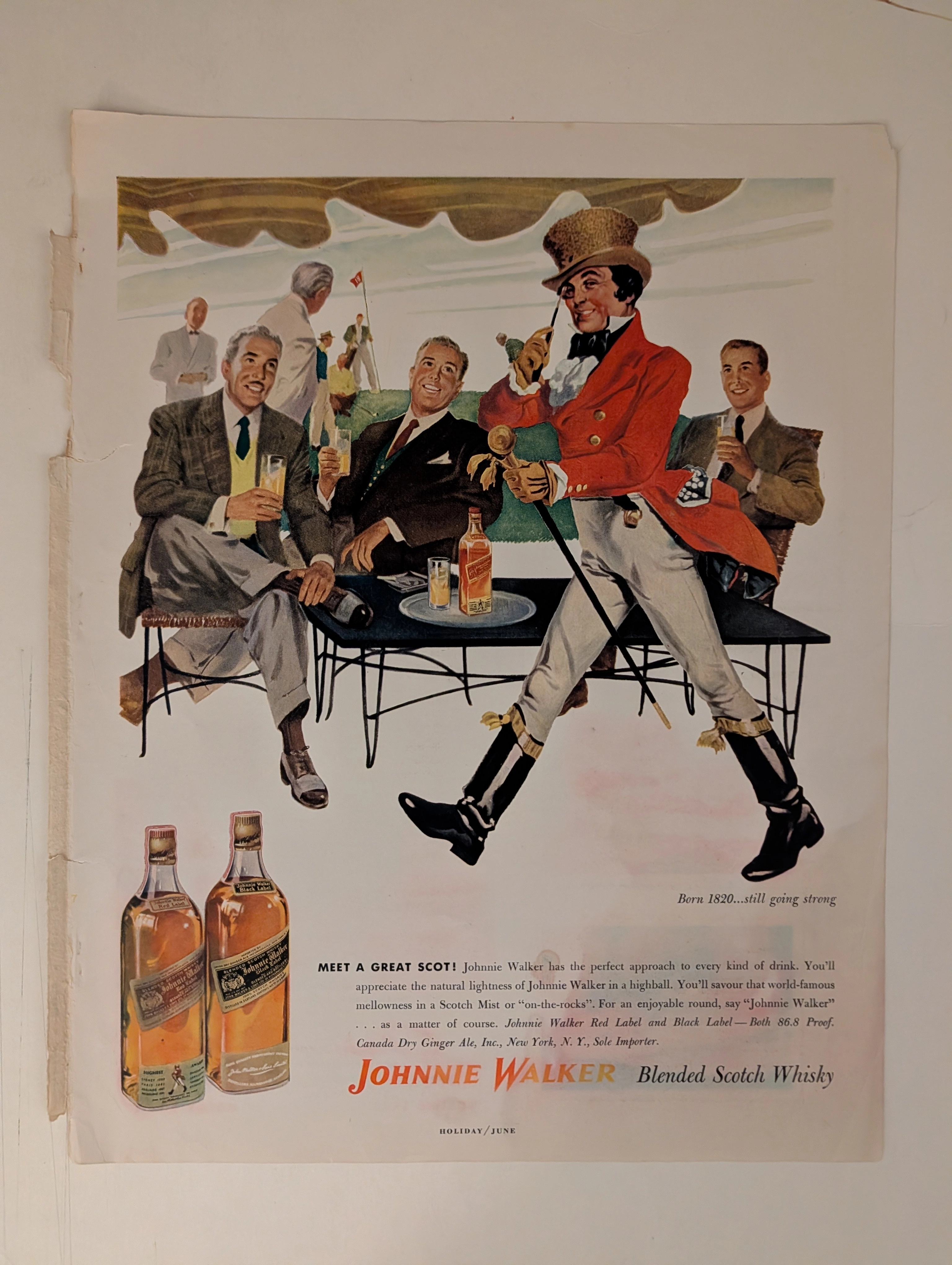
THE TIME TRAVELER'S DOSSIER :THE APPARITION OF HERITAGE — THE STRIDING MAN
The artifact currently subjected to our uncompromising, museum-grade analysis is a profoundly preserved Historical Relic excavated from the zenith of mid-century American prosperity. This Primary Art Document is a full-page magazine advertisement for Johnnie Walker Blended Scotch Whisky. Functioning as a "Forensic Blueprint of the Transatlantic Leisure Class," the document masterfully weaponizes British aristocratic heritage (embodied by the Striding Man) to validate the newly acquired wealth of post-war American consumers. Its historical context is irrefutably anchored by the microscopic fine print identifying the importer as "Canada Dry Ginger Ale, Inc., New York, N.Y.", a specific corporate era of distribution. Grounded by extreme macro details of analog halftone lithography and the breathtaking wabi-sabi chemical degradation highlighted by its violently torn binding edge, this artifact commands an irreplaceable status, cementing its Rarity Class A designation as a masterpiece of corporate sociological engineering.