Back to All Halls

The Combustion Chronicles

Classic automobiles, racing heritage, and the chrome-plated dreams of the open road. From Detroit muscle to European grand tourers.

The Time Traveller's Dossier : 1980 Fuzzbuster Elite - The Architecture of Electronic Insurgency — The Record Institute Journal
14

Featured

The Time Traveller's Dossier : 1980 Fuzzbuster Elite - The Architecture of Electronic Insurgency

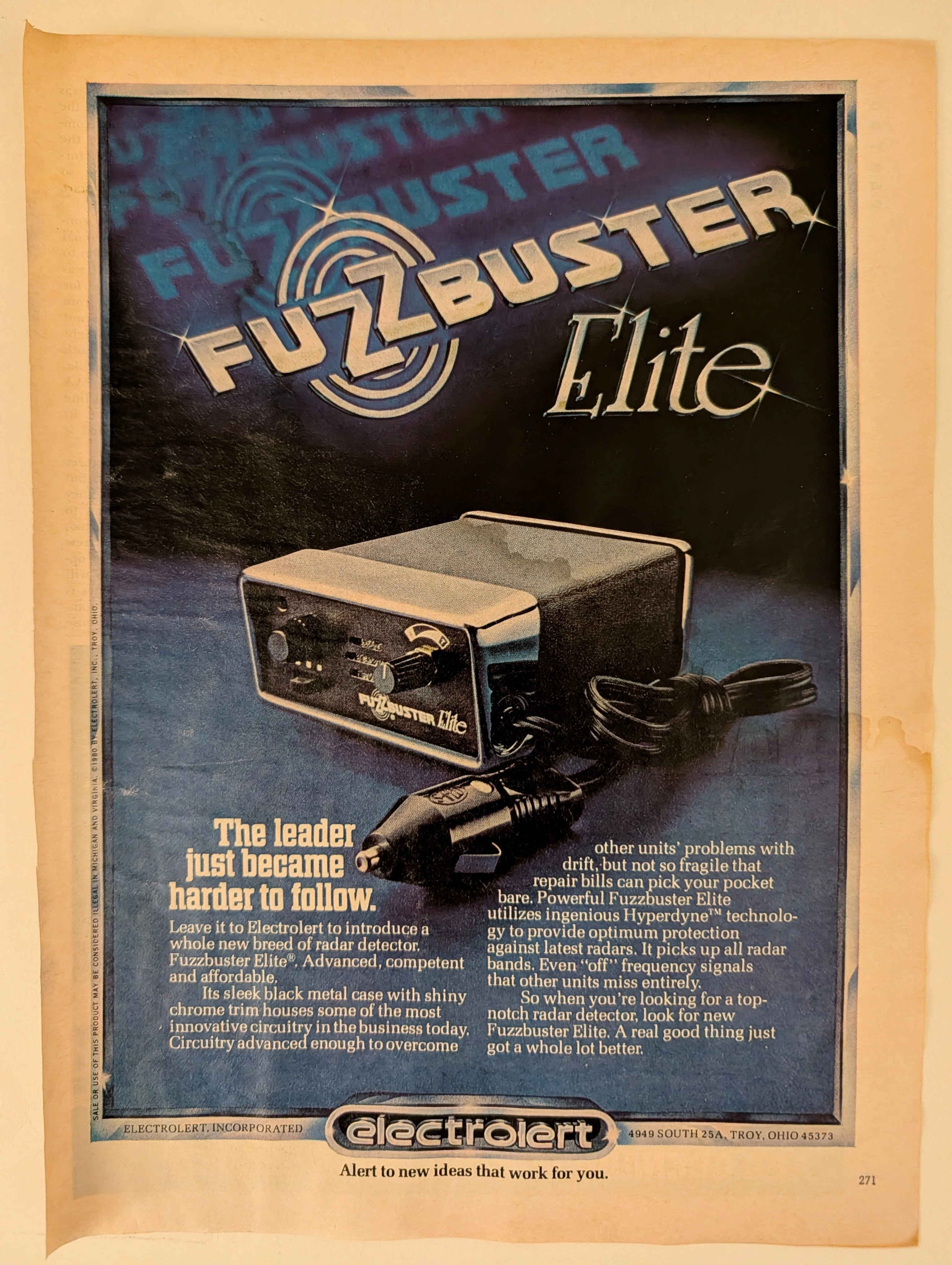
We are observing an artifact of a silent, invisible war. Before this era, the American highway was marketed as a vector of absolute, unbridled freedom. The automobile was the ultimate vessel of personal sovereignty. Here, the paradigm shifts into something darker. The open road has become a zone of constant surveillance. The state has weaponized the electromagnetic spectrum to monitor and penalize the citizen. In response, the citizen weaponized the dashboard. This is the 1980 Fuzzbuster Elite by Electrolert. It is not a car accessory. It is a piece of civilian counter-measures equipment. In an era defined by the deeply unpopular 55 MPH national speed limit and the rise of police microwave radar, this device commodified paranoia. It packaged civil disobedience into a sleek, chrome-trimmed metal box that plugged directly into a cigarette lighter. It represents the exact moment when the act of driving transitioned from a physical experience into an electronic arms race.

Automotive
April 8, 2026Read
The Time Traveller's Dossier : 1964 Studebaker Specialty Lineup - The Desperate Birth of the Niche Vehicle — The Record Institute Journal
47
April 5, 2026

The Time Traveller's Dossier : 1964 Studebaker Specialty Lineup - The Desperate Birth of the Niche Vehicle

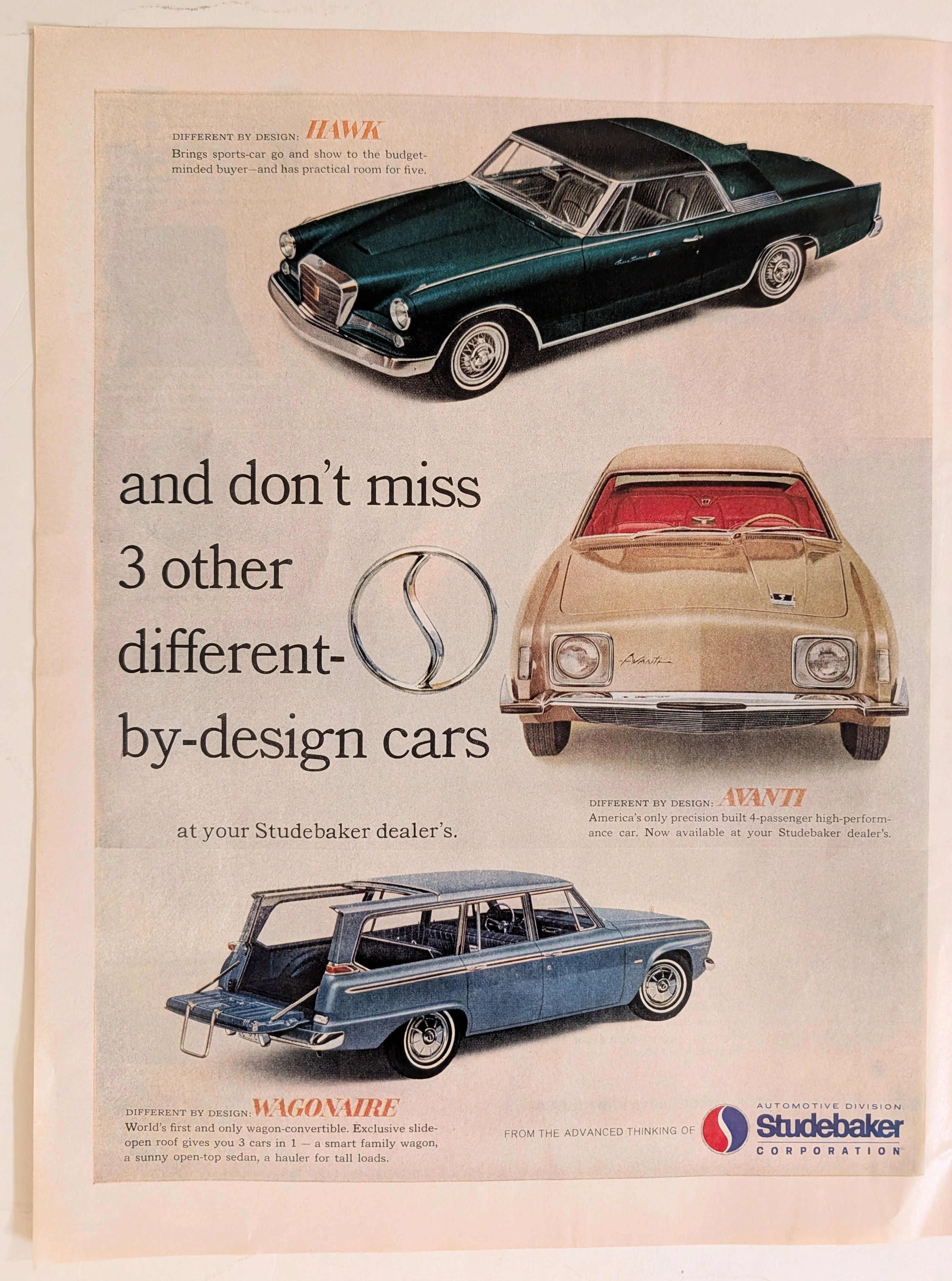
Then, it was a strategy of asymmetrical industrial warfare. A cornered corporation abandoning the center to fight on the fringes. In late 1963, the Studebaker Corporation recognized a fatal truth: they could no longer compete with the monolithic scale of Detroit’s Big Three in the mass market. They could not build a better, cheaper, standard family sedan than Chevrolet or Ford. Therefore, their survival depended on building things that General Motors would never dare to build. This advertisement is the physical manifestation of that strategy. It presents three radically divergent, highly specialized machines. A fiberglass supercar. A budget-conscious European-style grand tourer. A station wagon with a retractable roof. It is a catalog of anomalies. Now, this artifact is a fossil record of an evolutionary dead end in the 1960s, yet it stands as a prophetic blueprint for the modern automotive landscape. The shift here is philosophical and structural. It documents the exact moment a desperate automaker pivoted from the concept of the "universal car" to the "lifestyle vehicle." Studebaker attempted to invent the niche market out of pure financial desperation. They built highly targeted solutions for highly specific consumers, a strategy that would become the absolute standard of the global auto industry half a century later. They were simply forty years too early, and they died for their prescience.

Art & IllustrationAutomotive+1
Read More
The Time Traveller's Dossier : 1964 Studebaker Cruiser - The Euphoric Facade of a Dying Empire — The Record Institute Journal
48
April 5, 2026

The Time Traveller's Dossier : 1964 Studebaker Cruiser - The Euphoric Facade of a Dying Empire

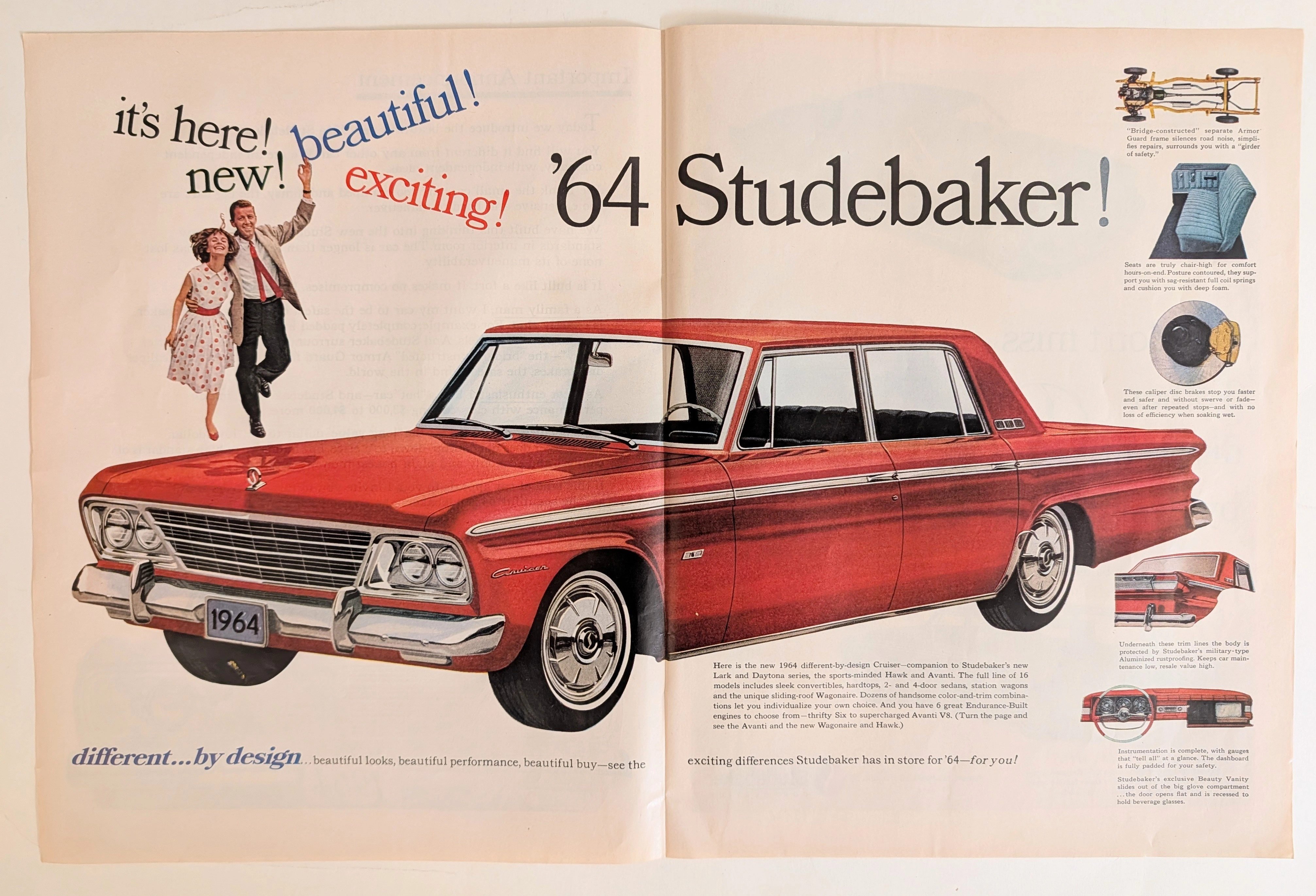
Then, it was a desperate masquerade. A corporate death rattle disguised as a celebration. As this vibrant, two-page centerfold spread graced the glossy pages of American magazines in late 1963, the Studebaker Corporation was quietly bleeding to death. To the casual observer, the advertisement projects an atmosphere of unbridled optimism. A couple leaps into the air with forced, hysterical joy. The typography dances across the page, screaming, "it's here! beautiful! new! exciting!" It is a masterclass in the marketing of artificial momentum. Yet, to the side, anchored in a rigid column of diagrams and technical specifications, lies the stubborn, unyielding truth of a company that still believed superior engineering could save it from financial ruin. Now, this artifact is a profound psychological study of cognitive dissonance in industrial capitalism. It is the physical record of a brand caught in a fatal crossfire: desperately trying to mimic the lifestyle-driven, emotion-heavy advertising of Detroit’s Big Three, while simultaneously clinging to its heritage of hyper-rational, utilitarian engineering. The historical shift here is the final realization that in the modern consumer economy, a superior machine cannot survive if the dream it sells has already expired.

Art & IllustrationAutomotive+1
Read More
The Time Traveller's Dossier : 1964 Studebaker - The Final Defiance of the Independent Automaker — The Record Institute Journal
35
April 5, 2026

The Time Traveller's Dossier : 1964 Studebaker - The Final Defiance of the Independent Automaker

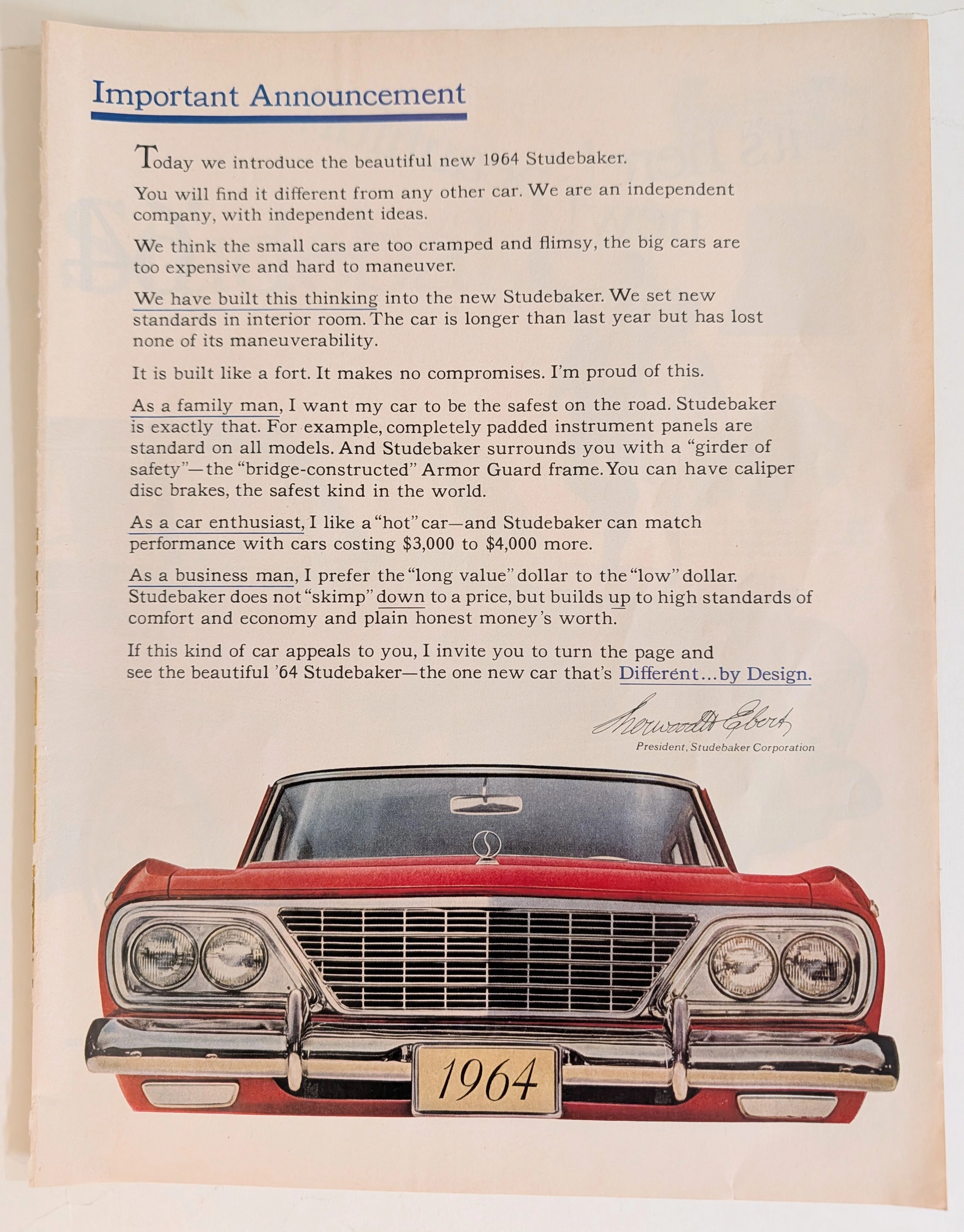
Then, it was a declaration of survival. A corporate manifesto masked as a product introduction. In late 1963, as this advertisement went to press, the American automotive landscape was consolidating into an impenetrable oligopoly. The Big Three—General Motors, Ford, and Chrysler—dictated the market. Studebaker, an independent manufacturer with roots dating back to wagon-building in the 19th century, was bleeding capital. This document represents their final, logical plea to the rational consumer. It highlights safety before safety was mandated. It promises performance, economy, and structural integrity. It carries the personal signature of a dying president, Sherwood H. Egbert. Now, it is an artifact of extinction. A perfectly preserved record of a company attempting to logic its way out of an emotional marketplace. It stands as a testament to the brutal reality of industrial capitalism: superior engineering and honest value cannot always overcome the sheer inertia of massive corporate scale. The shift here is not technological. It is structural. It marks the closing of the era where an independent automaker could survive purely on the merit of being "Different… by Design."

Art & IllustrationAutomotive+1
Read More
The Time Traveller's Dossier : 1970 Dayton Quadra - The Radial Shift — The Record Institute Journal
63
April 4, 2026

The Time Traveller's Dossier : 1970 Dayton Quadra - The Radial Shift

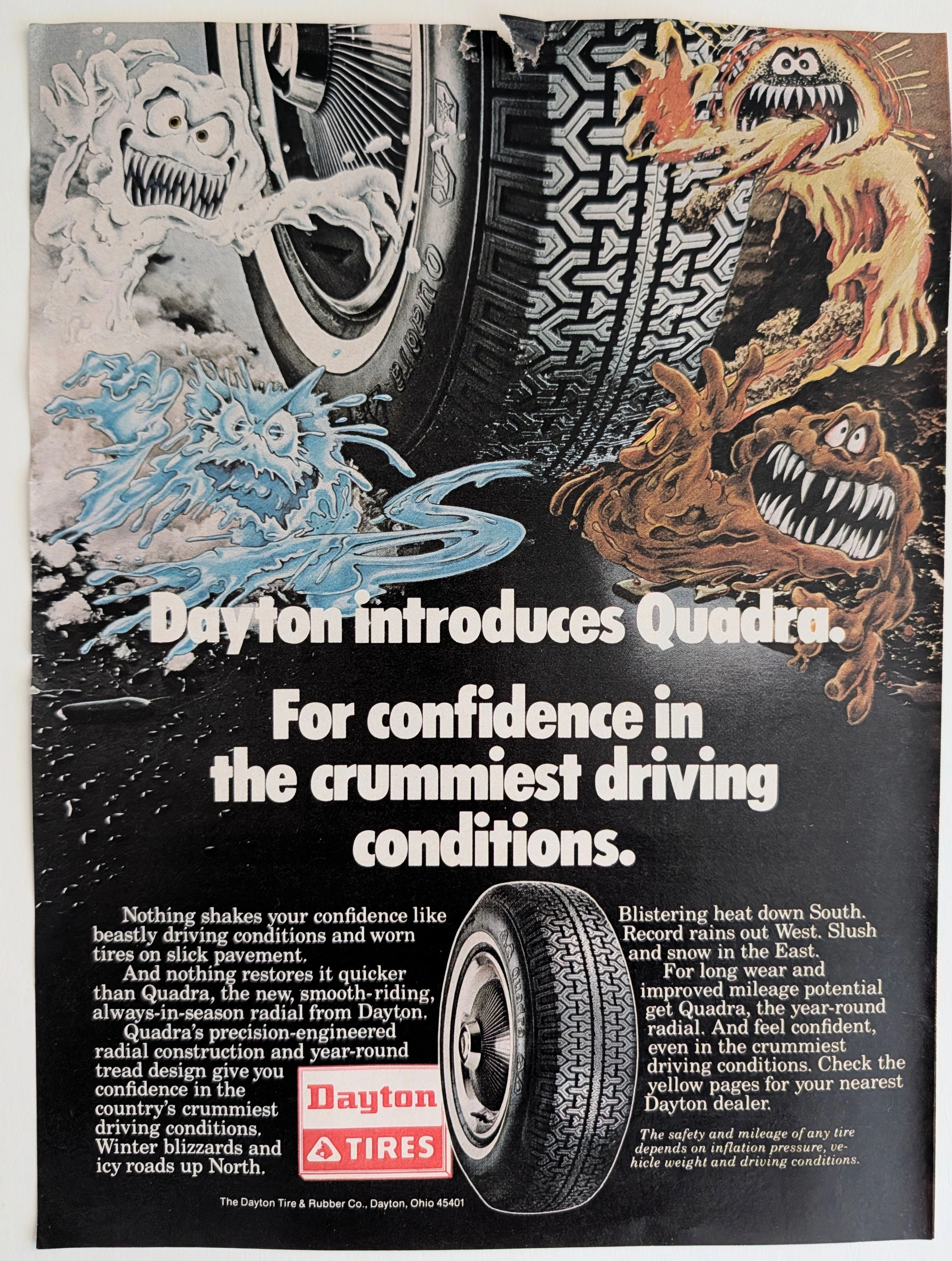
The tire is a philosophical boundary. It is the exact physical location where human intention meets planetary resistance. Before the widespread adoption of the radial tire, this boundary was fraught with anxiety. Drivers were at the mercy of the changing seasons. The transition from dry asphalt to frozen sludge required an operational shift. It demanded a change of equipment. It demanded a change of mindset. Then came the synthesis. The all-season radial. The Dayton Quadra advertisement does not merely sell rubber. It documents a shift in the American psychological landscape. It captures the moment the driver demanded dominion over all four corners of the climate, wrapped in a single, unyielding contact patch. We moved from seasonal adaptation to year-round defiance. This is the record of that transition.

Art & IllustrationAutomotive
Read More
The Time Traveller’s Dossier: 1983 Delco-GM/Bose Music System Vintage Advertisement — The Anthropomorphic Architecture of Sound — The Record Institute Journal
41
April 3, 2026

The Time Traveller’s Dossier: 1983 Delco-GM/Bose Music System Vintage Advertisement — The Anthropomorphic Architecture of Sound

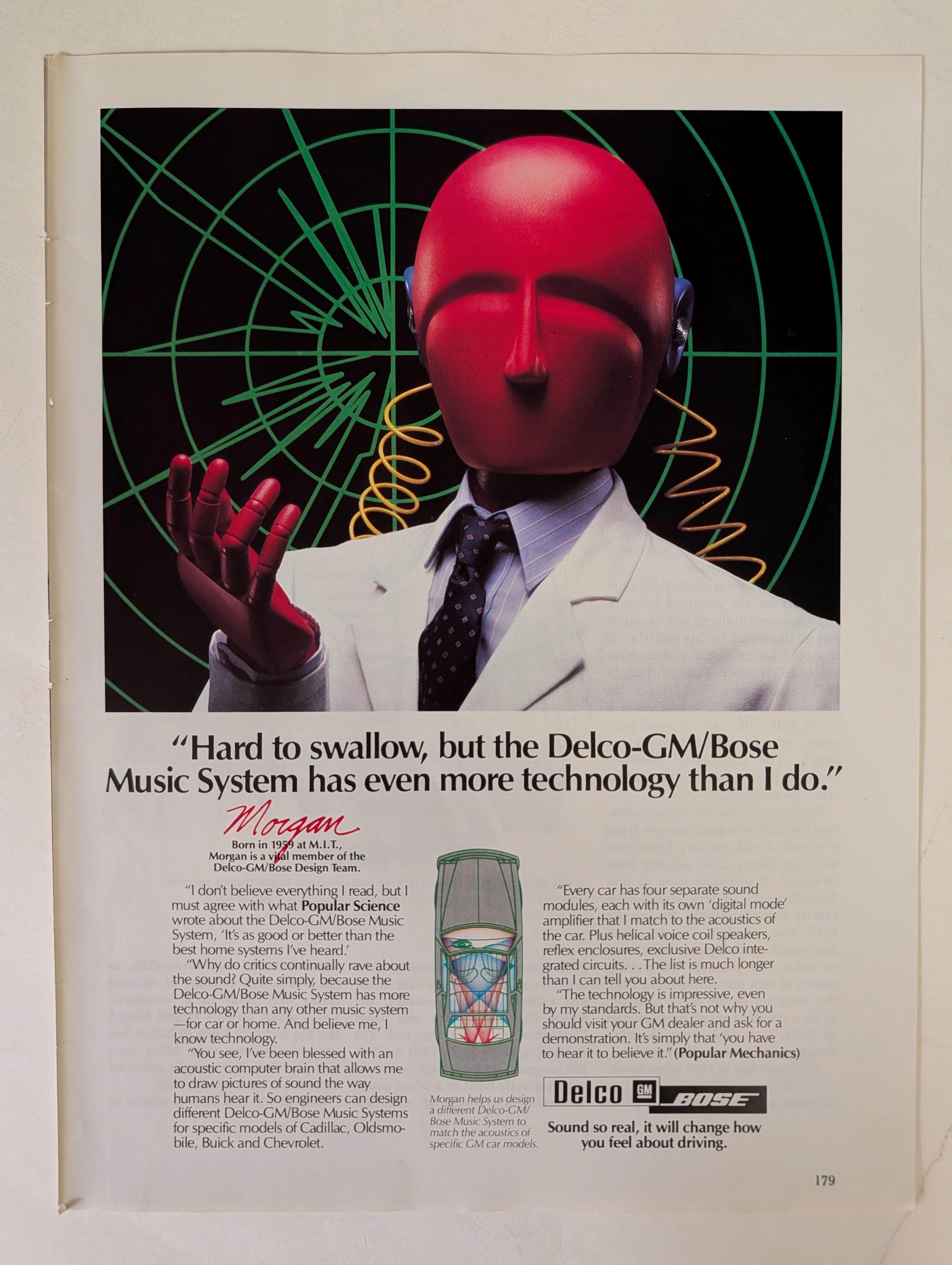
Within the expansive, carefully curated archive of vintage ads, the 1983 Delco-GM/Bose Music System vintage advertisement stands as a profound testament to the intersection of automotive engineering and early psychoacoustics. This executive dossier examines a pivotal moment in consumer technology marketing, highlighted by the enigmatic figure of "Morgan," an acoustic computer brain developed at M.I.T. As a cornerstone among old advertisements, this piece transcends mere commercial promotion; it offers a fascinating, tactile glimpse into algorithmic audio design before the digital era fully matured. Collectors, audiophiles, and historians of classic print ads will recognize the profound cultural shift this campaign represents: the definitive transition from basic, aftermarket car radios to custom-tuned, acoustically mapped vehicular auditoriums. By merging General Motors' formidable industrial might with Bose's avant-garde acoustic science, this document captures a true revolution in high-fidelity sound. Explore the physical preservation, deep historical context, and striking visual rhetoric of an artifact that permanently altered how society perceives the driving experience, turning the automobile interior into a meticulously calculated chamber of sonic perfection.

Automotive
Read More
The Time Traveler’s Dossier: The Silver Arrow in Ink – J. Crandall, the Mercedes-Benz 300 SL, and the Golden Age of Automotive Editorial Illustration — The Record Institute Journal
91
March 31, 2026

The Time Traveler’s Dossier: The Silver Arrow in Ink – J. Crandall, the Mercedes-Benz 300 SL, and the Golden Age of Automotive Editorial Illustration

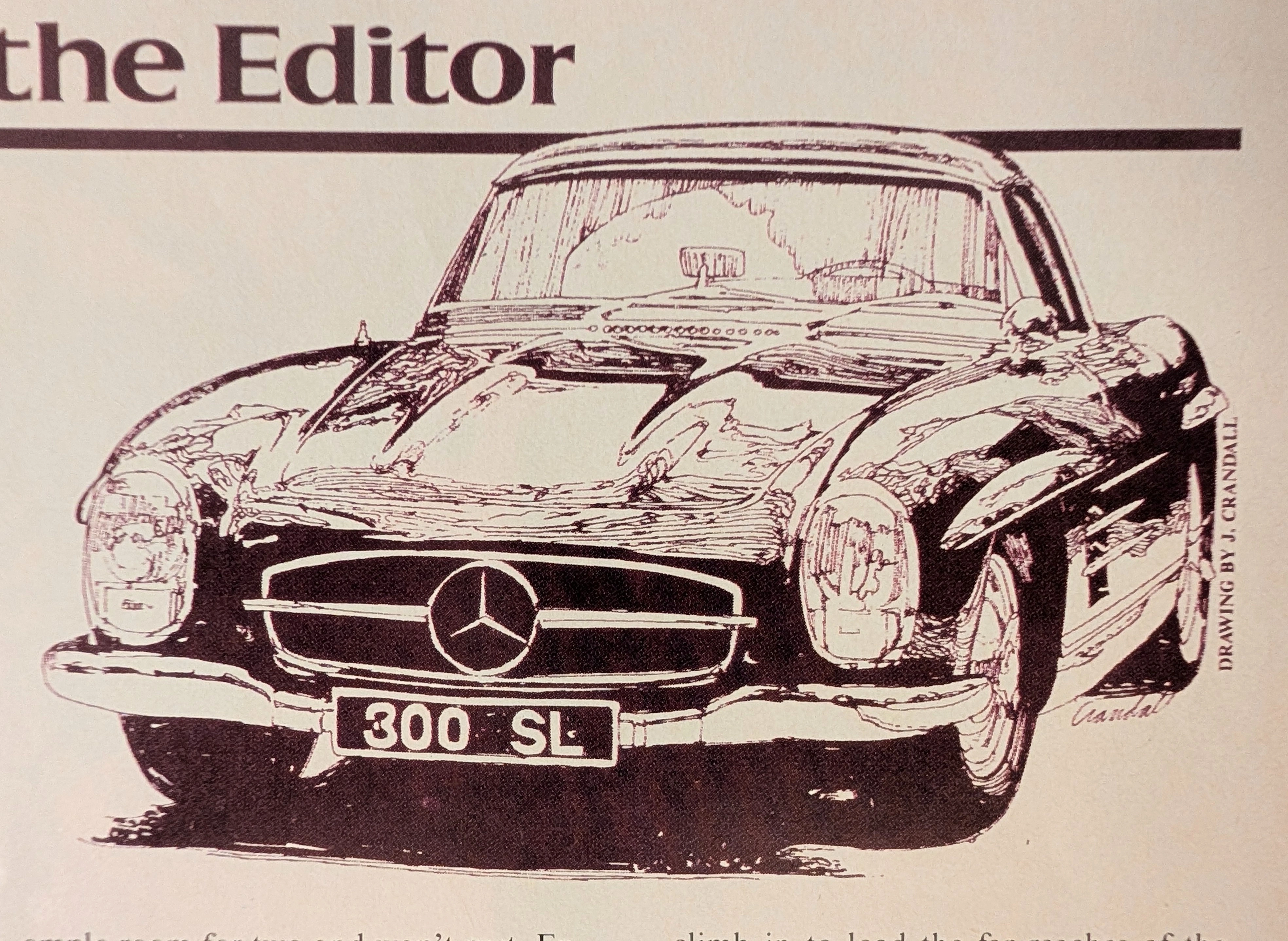
The evolution of global automotive culture in the mid-twentieth century was not solely driven by the manufacturers who built the machines, but equally by the specialized print publications that chronicled, critiqued, and mythologized them. Elegantly and securely positioned upon the analytical table of The Record Institute today is a visually striking, historically dense, and beautifully rendered editorial illustration of a Mercedes-Benz 300 SL. This artifact completely transcends the boundaries of standard commercial advertising; it is a piece of editorial connective tissue, a work of art designed to anchor the impassioned discourse of a magazine's readership. By utilizing a highly evocative, hand-drawn illustration by J. Crandall to visually support the "Letters to the Editor" column, the publication executed a masterclass in editorial pacing and atmosphere. They provided the reader with a moment of visual arrest, a romanticized homage to one of the most technologically advanced and legendary vehicles ever conceived, thereby elevating the surrounding textual debate into the realm of high automotive art. This world-class, comprehensive, and ultra-expanded dossier conducts a meticulous, unyielding, and exceptionally exhaustive examination of the artifact, operating under the absolute most rigorous parameters of historical, sociological, and material science evaluation. Dedicating the overwhelming, massive majority of our analytical focus (80%) to its immense historical gravity, we will decode the profound engineering realities of the Mercedes-Benz W198 (300 SL), trace its lineage from the ashes of post-war Stuttgart to the victorious circuits of Le Mans, analyze the dictatorial influence of importer Max Hoffman, and deconstruct the critical sociological role of automotive print magazines in forging modern car culture. Furthermore, as we venture deeply into the chemical and physical foundations of this analog printed ephemera (10%), we will reveal the precise mechanical fingerprints of the halftone reprographic process captured in the stunning macro imagery of the artist's signature and the deep, sepia-toned ink. Finally, we will assess its archival rarity (10%), exploring how the graceful, natural oxidation of the paper substrate cultivates a serene wabi-sabi aesthetic—a natural, irreversible phenomenon that serves as the primary engine driving up its market value exponentially within the elite global spheres of Vintage Editorial Ephemera and Automotive Heritage Archives.

Art & IllustrationAutomotive+1
Read More
The Time Traveller's Dossier: The Electronic Antidote – The 1975 Datsun 280-Z and the Fuel-Injected Conquest of the American Grand Touring Market — The Record Institute Journal
79
March 28, 2026

The Time Traveller's Dossier: The Electronic Antidote – The 1975 Datsun 280-Z and the Fuel-Injected Conquest of the American Grand Touring Market

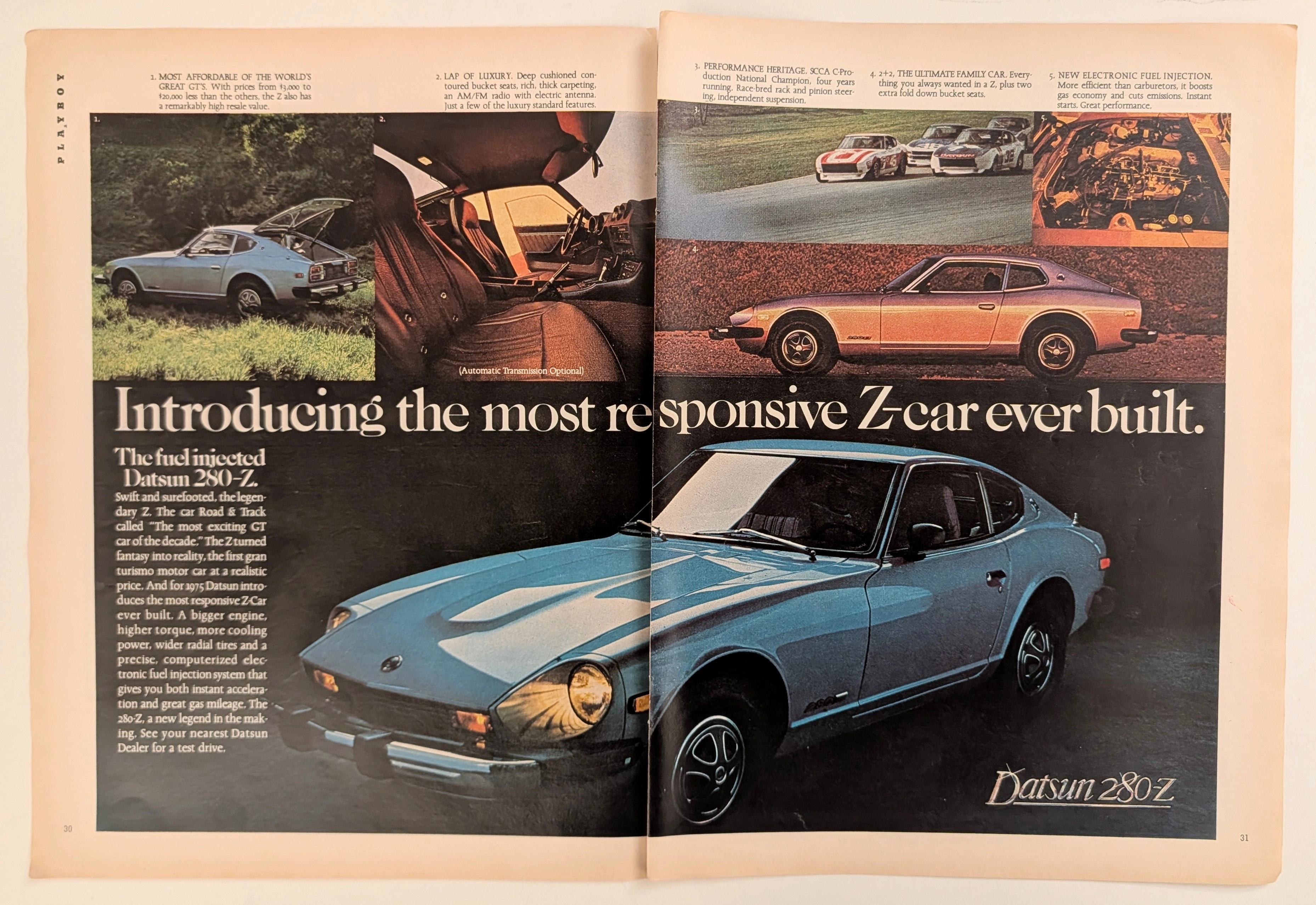
The evolution of the American automotive landscape in the 1970s was a turbulent, often depressing saga characterized by the death of the muscle car, catastrophic oil embargoes, and the sudden implementation of draconian environmental regulations. Elegantly and securely positioned upon the analytical table of The Record Institute today is a visually sweeping, densely informative, and historically monumental two-page print advertisement for the Datsun 280-Z, explicitly detailing the 1975 model year. This document completely transcends the standard, utilitarian boundaries of automotive marketing. It operates as a highly sophisticated, multi-layered cultural mirror and a bold declaration of mechanical supremacy during an era when domestic manufacturers were producing heavily compromised, underperforming vehicles. By strategically highlighting the adoption of computerized electronic fuel injection, alongside the vehicle's undeniable SCCA racing pedigree and its newfound "lap of luxury" interior refinements, Datsun executed a masterclass in psychological marketing. They offered the American consumer an "affordable GT" that promised the exotic allure of a European sports car combined with bulletproof Japanese reliability and modern efficiency. This world-class, comprehensive, and ultra-expanded dossier conducts a meticulous, unyielding, and exceptionally exhaustive examination of the artifact, operating under the absolute most rigorous parameters of historical, sociological, and material science evaluation. Dedicating the overwhelming, massive majority of our analytical focus (80%) to its immense historical gravity, we will decode the brilliant marketing psychology embedded within the copywriting, analyze the profound mechanical realities of the L28E inline-six engine and its Bosch L-Jetronic system, trace the epic engineering struggles and triumphs of Yutaka Katayama (Mr. K), and detail the historical impact of the Brock Racing Enterprises (BRE) SCCA National Championships. Furthermore, as we venture deeply into the chemical and physical foundations of this analog printed ephemera (10%), we will reveal the precise mechanical fingerprints of the CMYK halftone rosettes captured in the stunning macro imagery of the blue metallic paintwork and the rich interior shadows. Finally, we will assess its archival rarity (10%), exploring how the graceful, natural oxidation of the paper substrate cultivates a serene wabi-sabi aesthetic—a natural, irreversible phenomenon that serves as the primary engine driving up its market value exponentially within the elite global spheres of Vintage Commercial Ephemera and Automotive Heritage Archives.

Automotive
Read More
The Time Traveller's Dossier: Rotary Audacity – The Mazda Wankel Engine, the 1970s Oil Crisis, and the Rolls-Royce Provocation — The Record Institute Journal
75
March 28, 2026

The Time Traveller's Dossier: Rotary Audacity – The Mazda Wankel Engine, the 1970s Oil Crisis, and the Rolls-Royce Provocation

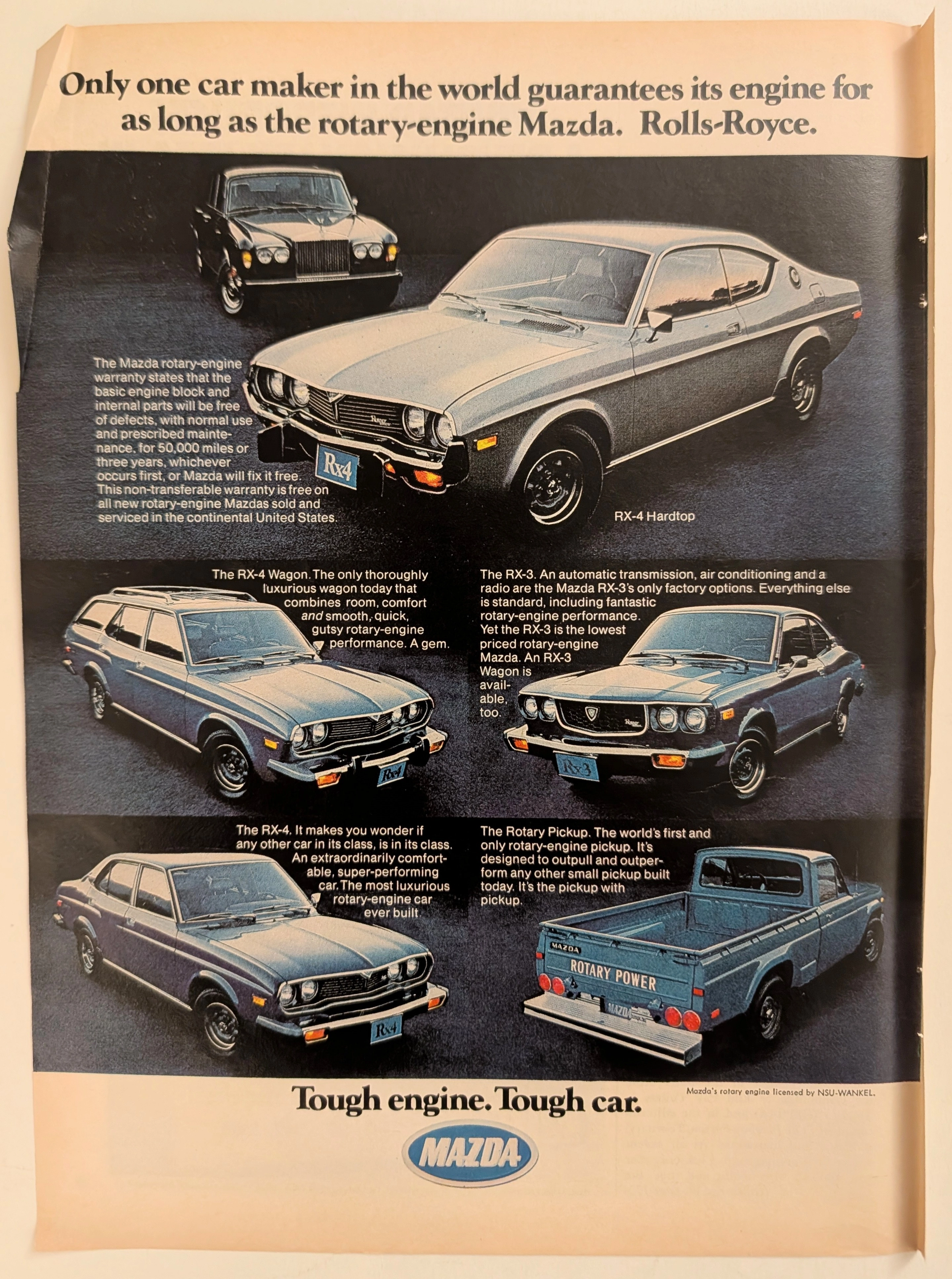
The evolution of the global automotive landscape in the latter half of the twentieth century was violently disrupted during the 1970s, an era defined by stringent new environmental regulations, catastrophic oil embargoes, and a growing consumer disillusionment with traditional engineering paradigms. Elegantly and securely positioned upon the analytical table of The Record Institute today is a visually arresting, densely informative, and highly significant full-page print advertisement for the Mazda Rotary-Engine Lineup. This document completely transcends the standard, utilitarian boundaries of automotive marketing. It operates as a highly sophisticated, multi-layered cultural mirror and a bold declaration of mechanical survival against insurmountable odds. By audaciously juxtaposing their experimental rotary-engine vehicles against the ghostly, monolithic silhouette of a Rolls-Royce Silver Shadow, Mazda executed a masterclass in psychological marketing. They utilized the objective, undeniable metric of a "50,000-mile / 3-year warranty" to shatter the consumer anxiety surrounding the Wankel engine's durability. This world-class, comprehensive dossier conducts a meticulous, unyielding, and exceptionally exhaustive examination of the artifact, operating under the absolute most rigorous parameters of historical, sociological, and material science evaluation. Dedicating the overwhelming, massive majority of our analytical focus (80%) to its immense historical gravity, we will decode the brilliant, confrontational marketing psychology embedded within the copywriting, analyze the profound mechanical realities of the Wankel rotary engine, trace the epic engineering struggles of the "47 Ronin," and detail the historical impact of the legendary RX-3, RX-4, and the mythical Rotary Engine Pickup (REPU). Furthermore, as we venture deeply into the chemical and physical foundations of this analog printed ephemera (10%), we will reveal the precise mechanical fingerprints of the CMYK halftone rosettes captured in the stunning macro imagery of the blue metallic paintwork. Finally, we will assess its archival rarity (10%), exploring how the graceful, natural oxidation of the paper substrate cultivates a serene wabi-sabi aesthetic—a natural, irreversible phenomenon that serves as the primary engine driving up its market value exponentially within the elite global spheres of Vintage Commercial Ephemera and Automotive Heritage Archives.

Automotive
Read More
The Time Traveller's Dossier: Gridline Velocity – Kenwood Car Stereo and the Cybernetic Dawn of Automotive High-Fidelity — The Record Institute Journal
83
March 27, 2026

The Time Traveller's Dossier: Gridline Velocity – Kenwood Car Stereo and the Cybernetic Dawn of Automotive High-Fidelity

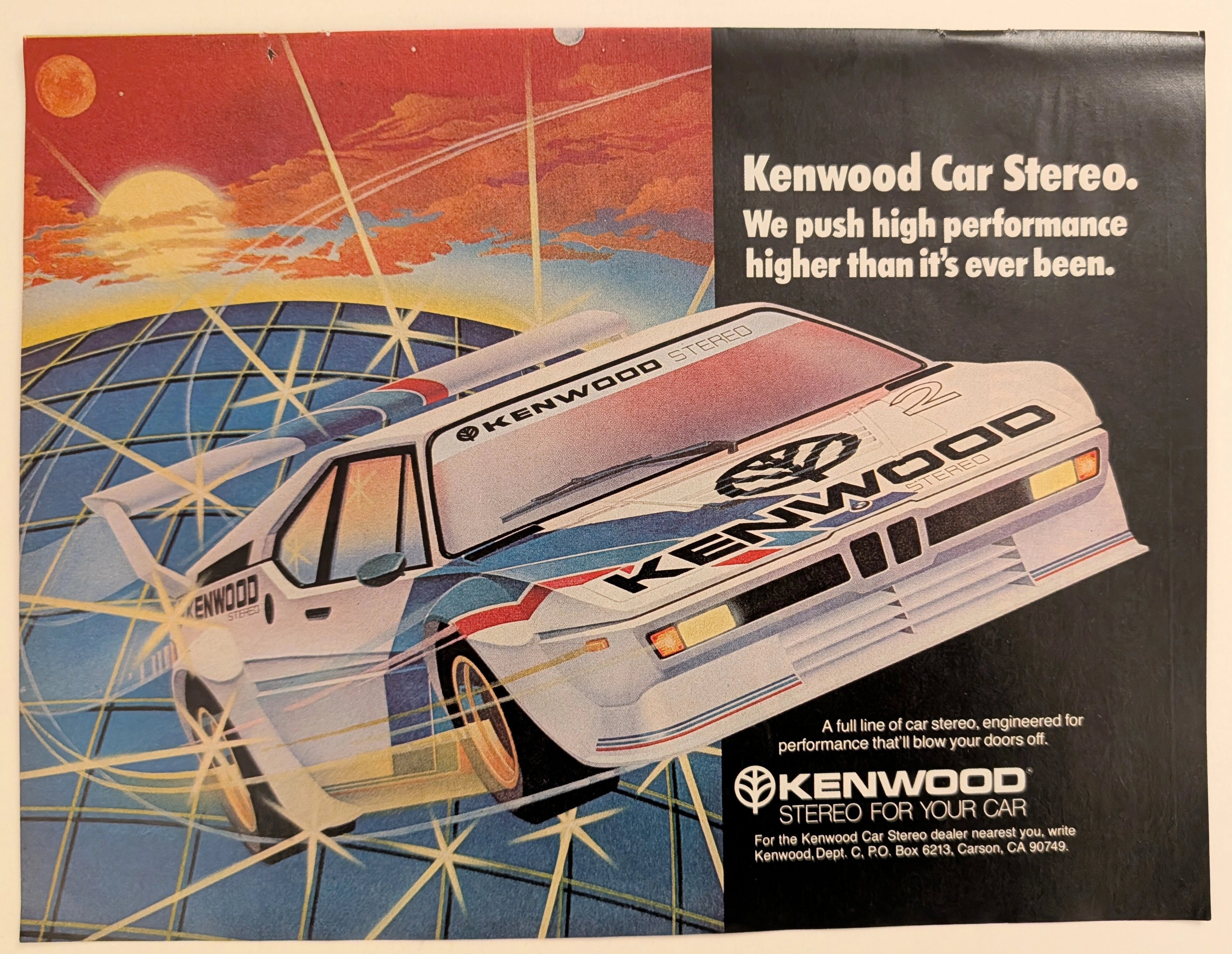
The evolution of 1980s American consumer electronics was fundamentally defined by the aggressive pursuit of portable and automotive high-fidelity sound. Elegantly and securely positioned upon the analytical table of The Record Institute today is a visually arresting, neon-drenched full-page print advertisement for Kenwood Car Stereo. This document completely transcends the standard, utilitarian boundaries of automotive accessory marketing. It operates as a highly sophisticated cultural mirror, reflecting a precise era in consumer psychology where auditory power was directly equated with vehicular performance. By utilizing a breathtaking, airbrushed illustration of a futuristic, aerodynamic race car accelerating over a cybernetic gridscape, Kenwood brilliantly positioned its audio equipment not just as radios, but as extreme, high-octane performance upgrades capable of generating sound that will literally "blow your doors off." This world-class, comprehensive dossier conducts a meticulous, unyielding, and exceptionally exhaustive examination of the artifact, operating under the absolute most rigorous parameters of historical, sociological, and material science evaluation. Dedicating the overwhelming majority of our analytical focus (80%) to its immense historical gravity, we will decode the brilliant marketing psychology embedded within the "neon grid" visual narrative, analyze the profound cultural shift toward aftermarket car audio customization, and dissect the aggressive, performance-based copywriting. Furthermore, as we venture deeply into the chemical and physical foundations of this analog printed ephemera (10%), we will reveal the precise mechanical fingerprints of the CMYK halftone rosettes captured in the stunning macro imagery of the airbrushed car. Finally, we will assess its archival rarity (10%), exploring how the graceful, natural oxidation of the paper substrate cultivates a serene wabi-sabi aesthetic—a natural, irreversible phenomenon that serves as the primary engine driving up its market value exponentially within the elite global spheres of Vintage Commercial Ephemera, Audio History, and Outrun/Synthwave Art Archives.

Art & IllustrationAutomotive+1
Read More
The Time Traveller's Dossier: Aeronautical Architecture on the Asphalt – The SAAB 96 V4 and the Engineering of Adverse Weather Superiority — The Record Institute Journal
72
March 26, 2026

The Time Traveller's Dossier: Aeronautical Architecture on the Asphalt – The SAAB 96 V4 and the Engineering of Adverse Weather Superiority

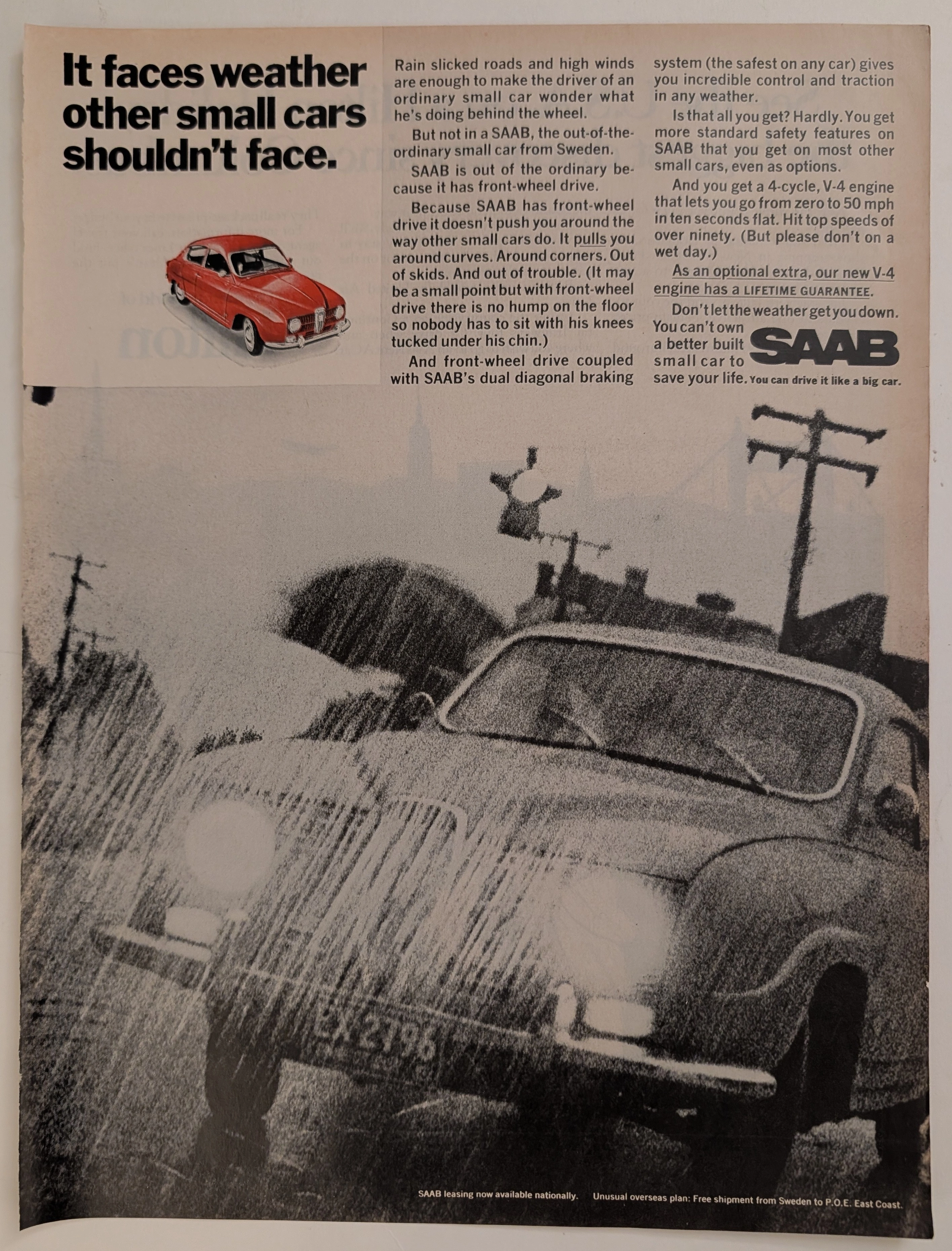
The evolution of the mid-twentieth-century American automotive landscape was heavily disrupted by the influx of European imports, each vying to dismantle the hegemony of the domestic V8, rear-wheel-drive giants. Elegantly and securely positioned upon the analytical table of The Record Institute today is a visually striking, narrative-driven full-page print advertisement for the SAAB Automobile (featuring the new V-4 engine), definitively dating to the late 1960s. This document transcends the standard, utilitarian boundaries of automotive marketing. It operates as a highly sophisticated, multi-layered cultural mirror, reflecting a precise era in consumer psychology where the anxiety of driving in severe weather was aggressively mitigated through the promise of superior, aircraft-inspired engineering. By utilizing a dramatic, heavily grained monochromatic photograph of a SAAB battling torrential rain, juxtaposed with a pristine, spot-color red illustration of the vehicle, the manufacturer successfully positioned itself not merely as a car company, but as a purveyor of meteorological invincibility. This world-class, comprehensive dossier conducts a meticulous, unyielding, and exceptionally exhaustive examination of the artifact, operating under the absolute most rigorous parameters of historical, sociological, and material science evaluation. Dedicating the overwhelming majority of our analytical focus (80%) to its immense historical gravity, we will decode the brilliant marketing psychology embedded within the "front-wheel drive" narrative, analyze the profound engineering pivot of the "new V-4 engine," and dissect the sociopolitical genius of marketing safety before it was federally mandated. Furthermore, as we venture deeply into the chemical and physical foundations of this analog printed ephemera (10%), we will reveal the precise mechanical fingerprints of the spot-color halftones captured in the macro imagery of the red SAAB illustration. Finally, we will assess its archival rarity (10%), exploring how the graceful, natural oxidation of the paper substrate cultives a serene wabi-sabi aesthetic—a natural, irreversible phenomenon that serves as the primary engine driving up its market value exponentially within the elite global spheres of Vintage Commercial Ephemera and Automotive Archives.

Art & IllustrationAutomotive
Read More
The Time Traveller's Dossier: The Competitive Edge – The 1968 Mercury Lineup and the Architecture of American Automotive Prestige — The Record Institute Journal
91
March 24, 2026

The Time Traveller's Dossier: The Competitive Edge – The 1968 Mercury Lineup and the Architecture of American Automotive Prestige

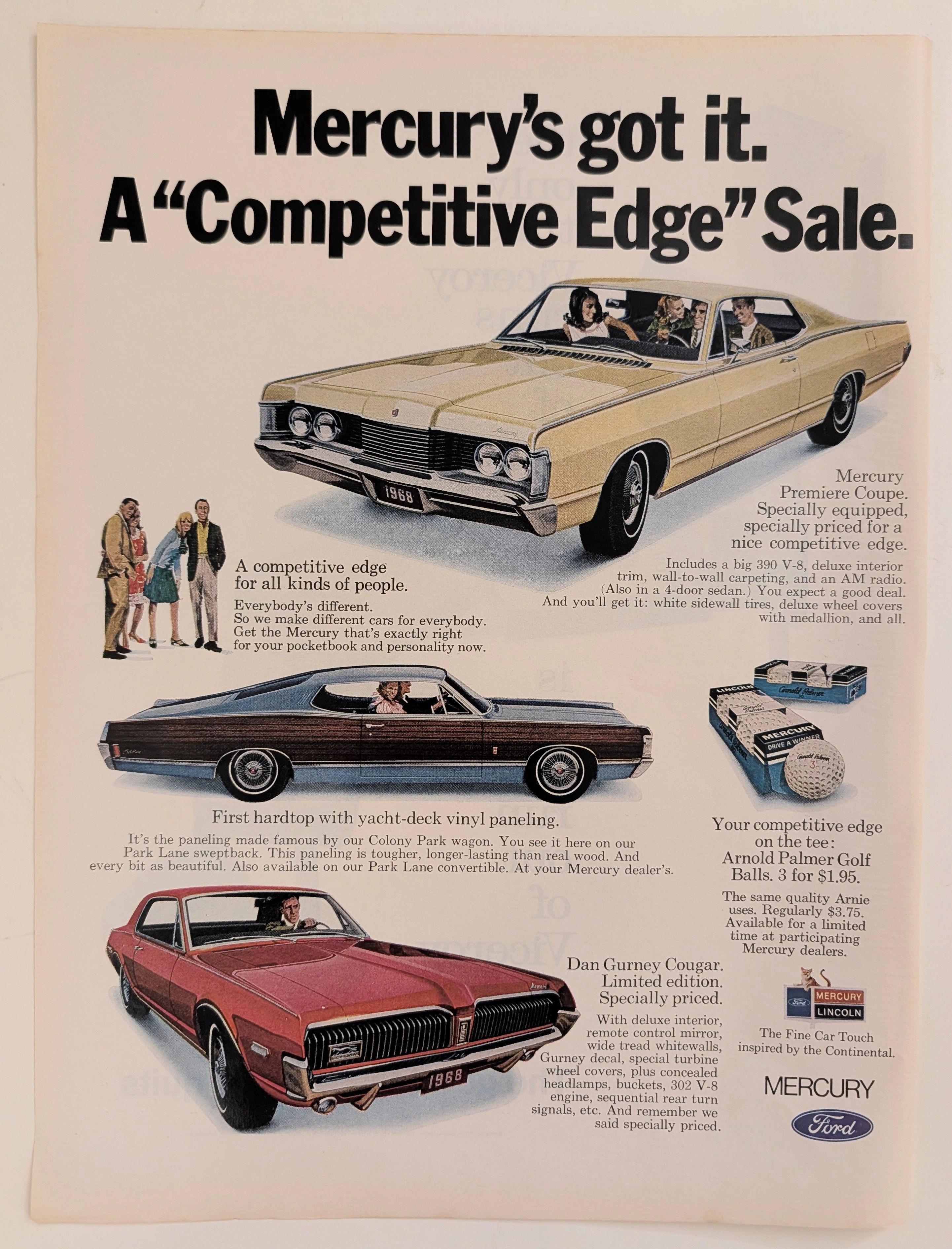
The evolution of the American automotive market in the late 1960s was characterized by a fierce, uncompromising battle for the expanding, affluent middle class. Automakers were no longer simply selling transportation; they were engineering complex lifestyle avatars. The historical artifact elegantly secured upon the analytical table of The Record Institute today is a striking, full-page print advertisement for the 1968 Mercury "Competitive Edge" Sale. This document completely transcends the standard boundaries of automotive marketing. It operates as a highly sophisticated, multi-layered cultural mirror, reflecting the precise era when the Lincoln-Mercury division sought to simultaneously capture the raw, adrenaline-fueled youth market and the established, affluent golfing demographic within a single, unified corporate narrative. This world-class, comprehensive dossier conducts a meticulous, unyielding, and exceptionally exhaustive examination of the artifact, operating under the absolute most rigorous parameters of historical, sociological, and material science evaluation. Dedicating the overwhelming majority of our analytical focus to its immense historical gravity, we will decode the brilliant marketing psychology embedded within the "Competitive Edge" campaign, analyze the profound cultural importance of legendary figures Dan Gurney and Arnold Palmer, and dissect the visual semiotics of the "Sign of the Cat" branding. Furthermore, as we venture deeply into the chemical and physical foundations of this analog printed ephemera, we will reveal the precise mechanical fingerprints of the CMYK halftone rosettes captured in the macro imagery of the vehicles and golf balls. Finally, we will assess its archival rarity, exploring how the graceful, natural oxidation of the paper substrate cultivates a serene wabi-sabi aesthetic—a natural, irreversible phenomenon that serves as the primary engine driving up its market value exponentially within the elite global spheres of Vintage Commercial Ephemera and Automotive Archives.

Art & IllustrationAutomotive
Read More
The Time Traveller's Dossier: The Sanctuary of the Highway – The 1968 Ford LTD and the Democratization of Silence — The Record Institute Journal
58
March 23, 2026

The Time Traveller's Dossier: The Sanctuary of the Highway – The 1968 Ford LTD and the Democratization of Silence

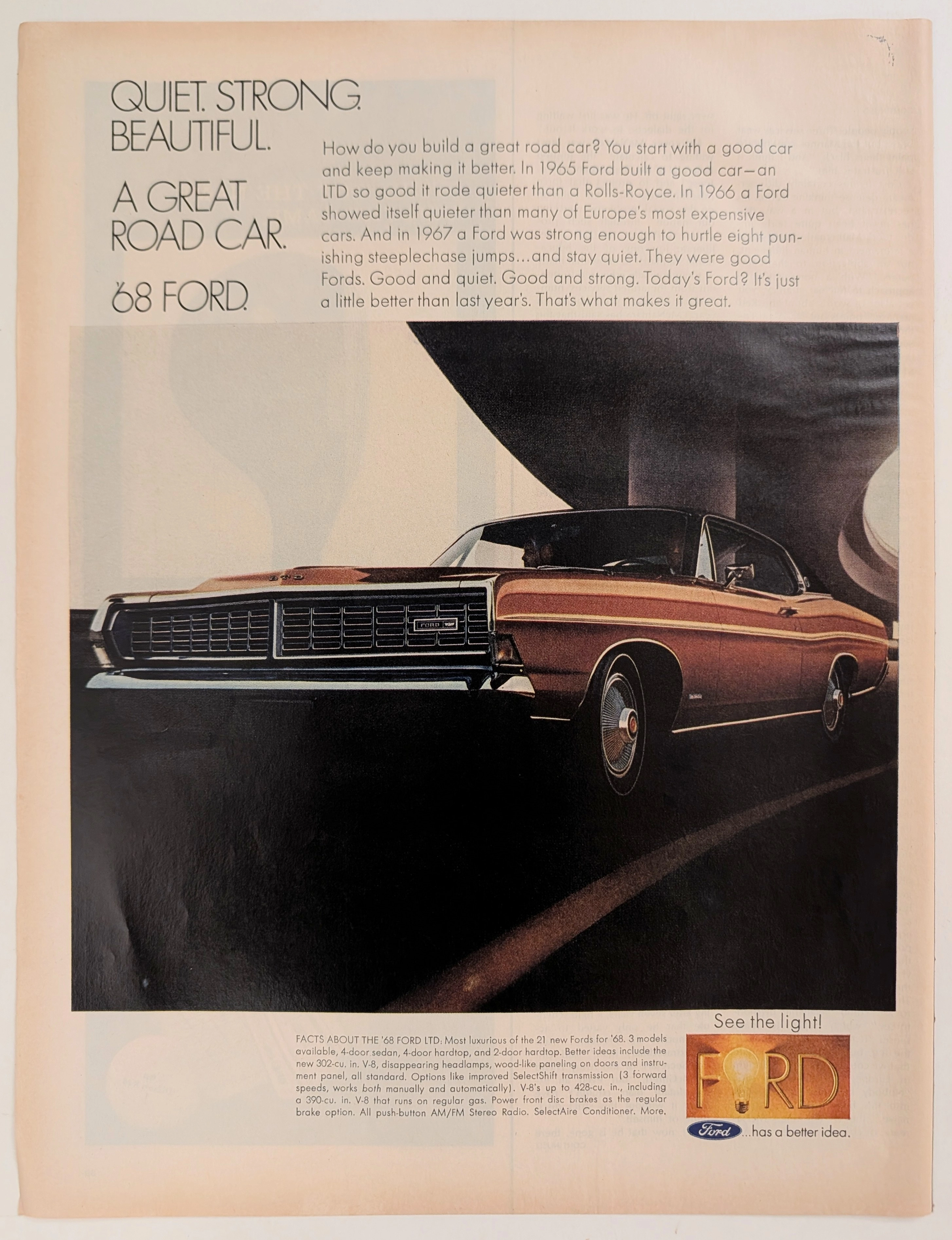
The evolution of the American domestic automobile during the mid-twentieth century was fundamentally propelled by a relentless pursuit of accessible luxury and physical isolation from the rapidly expanding, concrete-laden modern world. The historical artifact elegantly and securely positioned upon the analytical table of The Record Institute today is a striking, full-page print advertisement for the 1968 Ford LTD, originating from a highly volatile and transformative year in American history. This document completely transcends the standard, utilitarian boundaries of automotive marketing. It operates as a highly sophisticated, multi-layered cultural mirror, reflecting the precise era when raw horsepower was momentarily subjugated to the pursuit of absolute silence, and European-grade luxury was explicitly packaged and sold to the American middle-class consumer. This world-class, comprehensive dossier conducts a meticulous, unyielding, and exceptionally exhaustive examination of the artifact, operating under the absolute most rigorous parameters of historical, sociological, and material science evaluation. With the vast majority of our analytical focus dedicated to its immense historical gravity (80%), we will decode the brilliant marketing psychology embedded within Ford's audacious "Quiet" campaign, analyze the brutalist architectural juxtaposition of the concrete overpass against the sleek lines of the vehicle, and dissect the profound corporate semiotics of the iconic "Ford has a better idea" lightbulb logo. Furthermore, as we venture deeply into the chemical and physical foundations of this analog printed ephemera (10%), we will reveal the precise mechanical fingerprints of the CMYK halftone rosettes captured in the macro imagery of the wheel hubcap. Finally, we will assess its archival rarity (10%), exploring how the graceful, natural oxidation of the paper substrate cultivates a serene wabi-sabi aesthetic—a natural, irreversible phenomenon that serves as the primary engine driving up its market value exponentially within the elite global spheres of Vintage Commercial Ephemera and Automotive Archives.

AutomotiveArt & Illustration
Read More
The Time Traveller's Dossier: The Firestone Margin of Safety — The Record Institute Journal
74
March 21, 2026

The Time Traveller's Dossier: The Firestone Margin of Safety

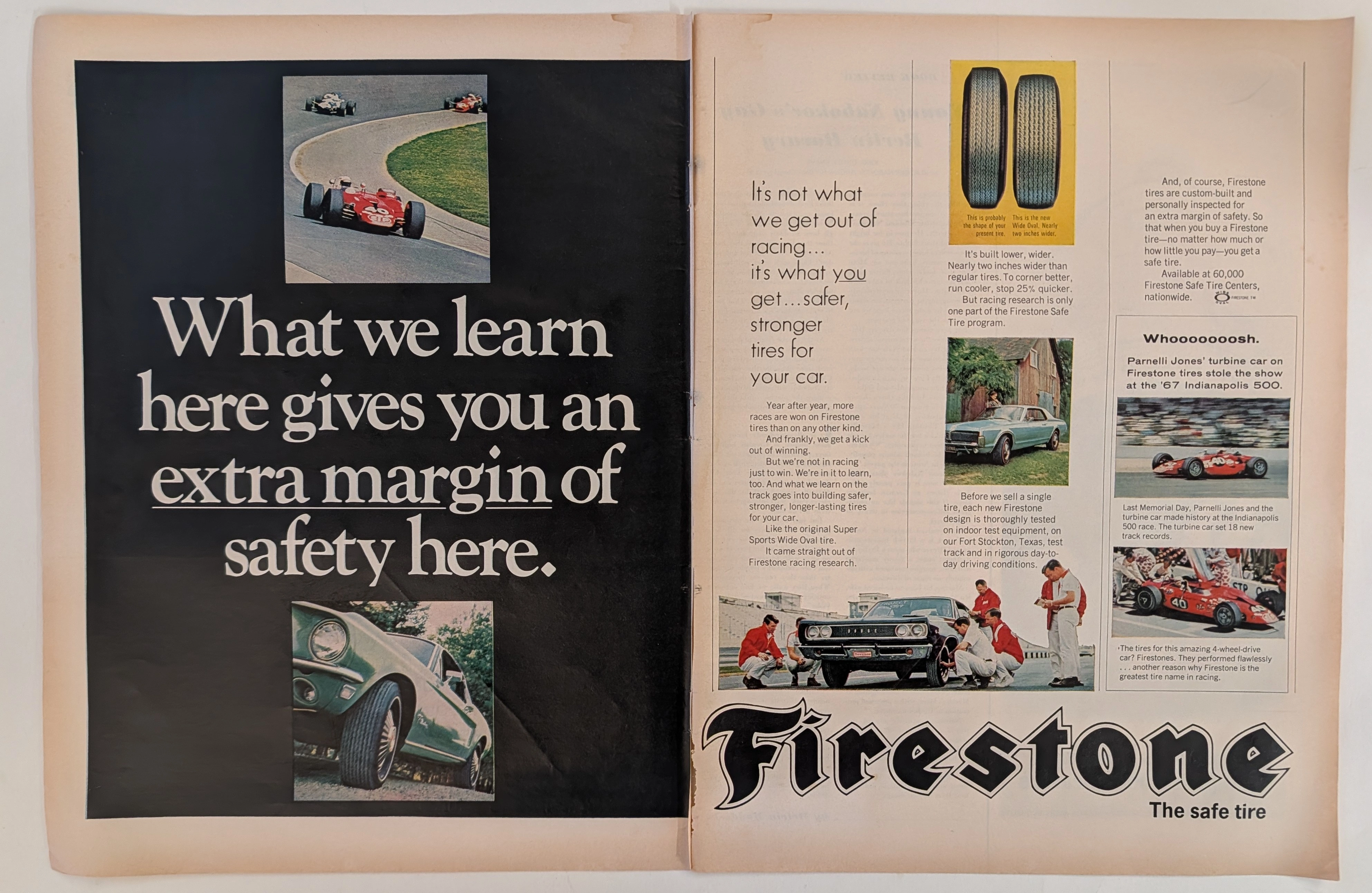
The symbiotic relationship between the extreme, high-stakes crucible of professional motorsport and the evolution of the daily-driven passenger automobile is one of the foundational narratives of twentieth-century industrial design. The historical artifact elegantly and securely positioned upon the analytical table of The Record Institute today is a majestic, large-format, two-page print advertisement for Firestone Tires, originating from the golden era of American automotive performance, circa 1967-1968. This document transcends the traditional boundaries of automotive consumable marketing. It operates as a highly sophisticated, multi-layered historical record, capturing the exact moment when the staggering horsepower outputs of the Detroit muscle car era necessitated a paradigm shift in tire technology. This comprehensive dossier conducts a meticulous, unyielding, and exceptionally deep examination of the artifact, operating under the absolute most rigorous parameters of historical, sociological, and material science evaluation. With an overwhelming eighty percent of our analytical focus dedicated to its historical gravity, we will decode the revolutionary introduction of the Firestone "Wide Oval" tire, analyze the critical importance of the vehicles depicted—including a Ford Mustang and a Dodge Coronet—and provide a profound biographical and mechanical analysis of the legendary racing driver Parnelli Jones and his revolutionary 1967 STP-Paxton Turbocar. Furthermore, as we venture into the chemical and physical foundations of this analog printed ephemera, we will reveal the precise mechanical fingerprints of the CMYK halftone rosettes and the graceful, natural oxidation of the paper substrate. This precise intersection of visual nostalgia, mid-century commercial artistry, and the immutable chemistry of time cultivates a serene wabi-sabi aesthetic—a natural, irreversible phenomenon that serves as the primary engine driving up its market value exponentially within the elite global spheres of Vintage Automotive Ephemera and Motorsport Memorabilia collecting.

Photography & FilmAutomotive
Read More
The Time Traveller's Dossier: The Zenith of General Motors — The Record Institute Journal
68
March 20, 2026

The Time Traveller's Dossier: The Zenith of General Motors

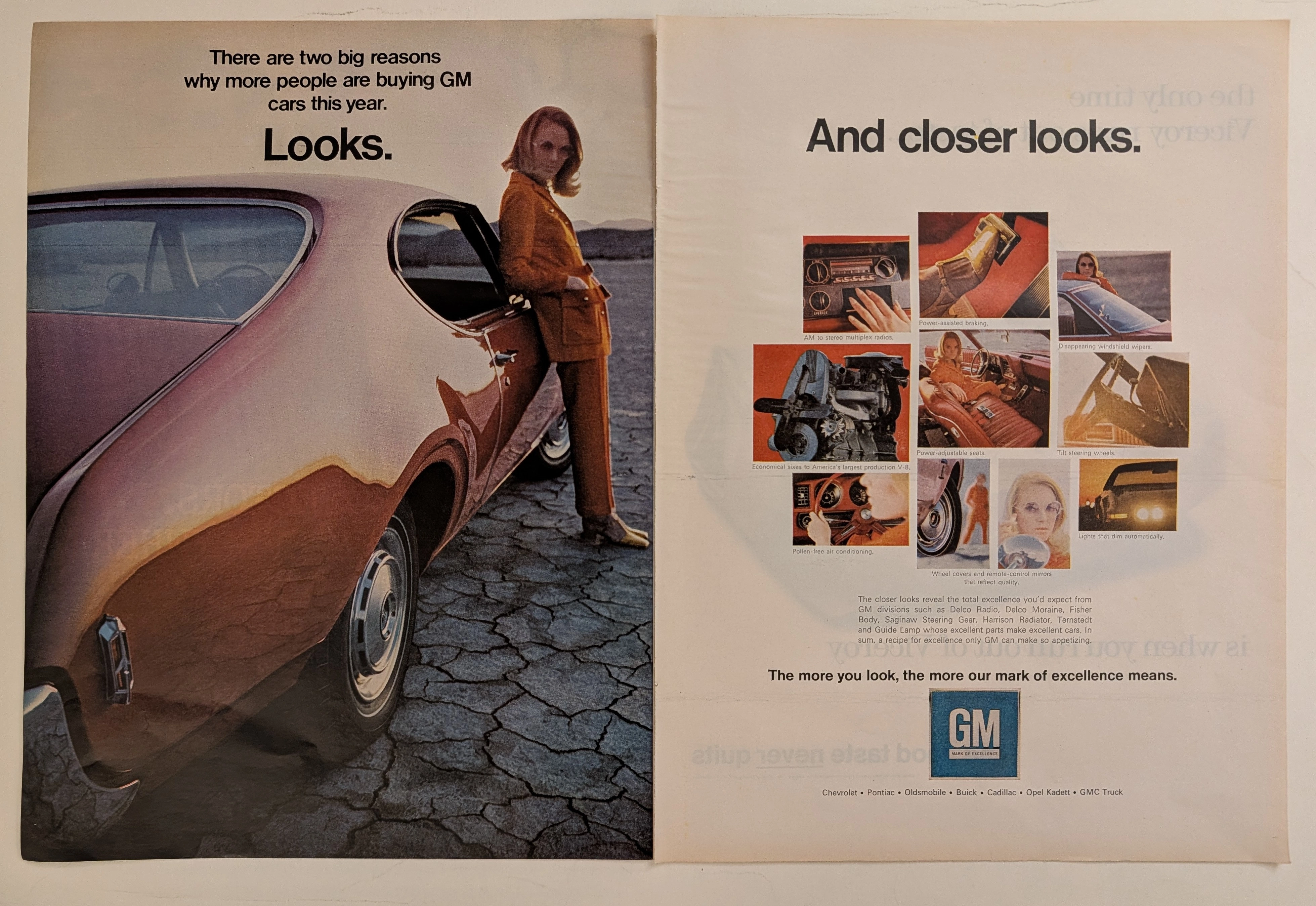
The automobile in mid-twentieth-century America was never merely a mode of transportation; it was a colossal canvas projecting industrial pride, technological advancement, and shifting consumer identities. The historical artifact elegantly and securely positioned upon the analytical table of The Record Institute today is a magnificent, large-format, two-page print advertisement for General Motors (GM), originating from the late 1960s to early 1970s. This document completely transcends the traditional boundaries of automotive catalogs. It operates as a highly sophisticated, dual-narrative cultural mirror: the left page captures the visceral, visual desire of "Looks" intertwined with a radical new era of feminine empowerment, while the right page dissects the mechanical and electronic mastery of "And closer looks," showcasing the vast ecosystem of GM's specialized manufacturing divisions. ​This world-class, comprehensive dossier conducts a meticulous, unyielding, and exceptionally deep examination of the artifact, operating under the absolute most rigorous parameters of historical, sociological, and material science evaluation. We will decode the immense industrial weight of the "Mark of Excellence" campaign, analyze the profound sociological implications of the female model's tailored pantsuit as a symbol of women's liberation, and dissect the anatomy of the nine revolutionary automotive technologies that defined modern driving. Furthermore, as we venture deeply into the chemical and physical foundations of this analog printed ephemera, we will reveal the precise mechanical fingerprints of the CMYK halftone rosettes and the graceful, natural oxidation of the paper substrate. This precise intersection of visual nostalgia, mid-century commercial artistry, and the immutable chemistry of time cultivates a serene wabi-sabi aesthetic—a natural, irreversible phenomenon that serves as the primary engine driving up its market value exponentially within the elite global spheres of Vintage Automotive Ephemera and Industrial Design collecting.

Photography & FilmAutomotive+1
Read More

1–15 of 32