View Archive
S
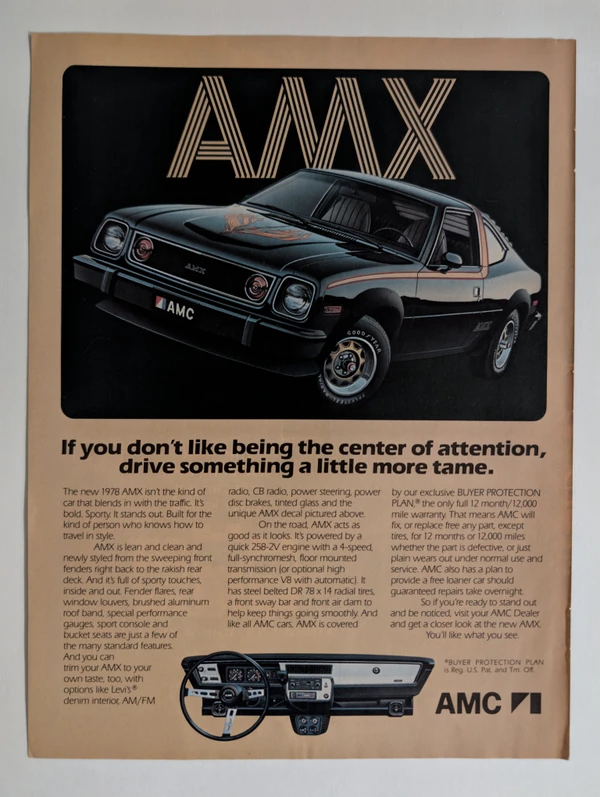
AMC AMX (1978) "Center of Attention"
1978|American
Last updated: 17 Apr 2026
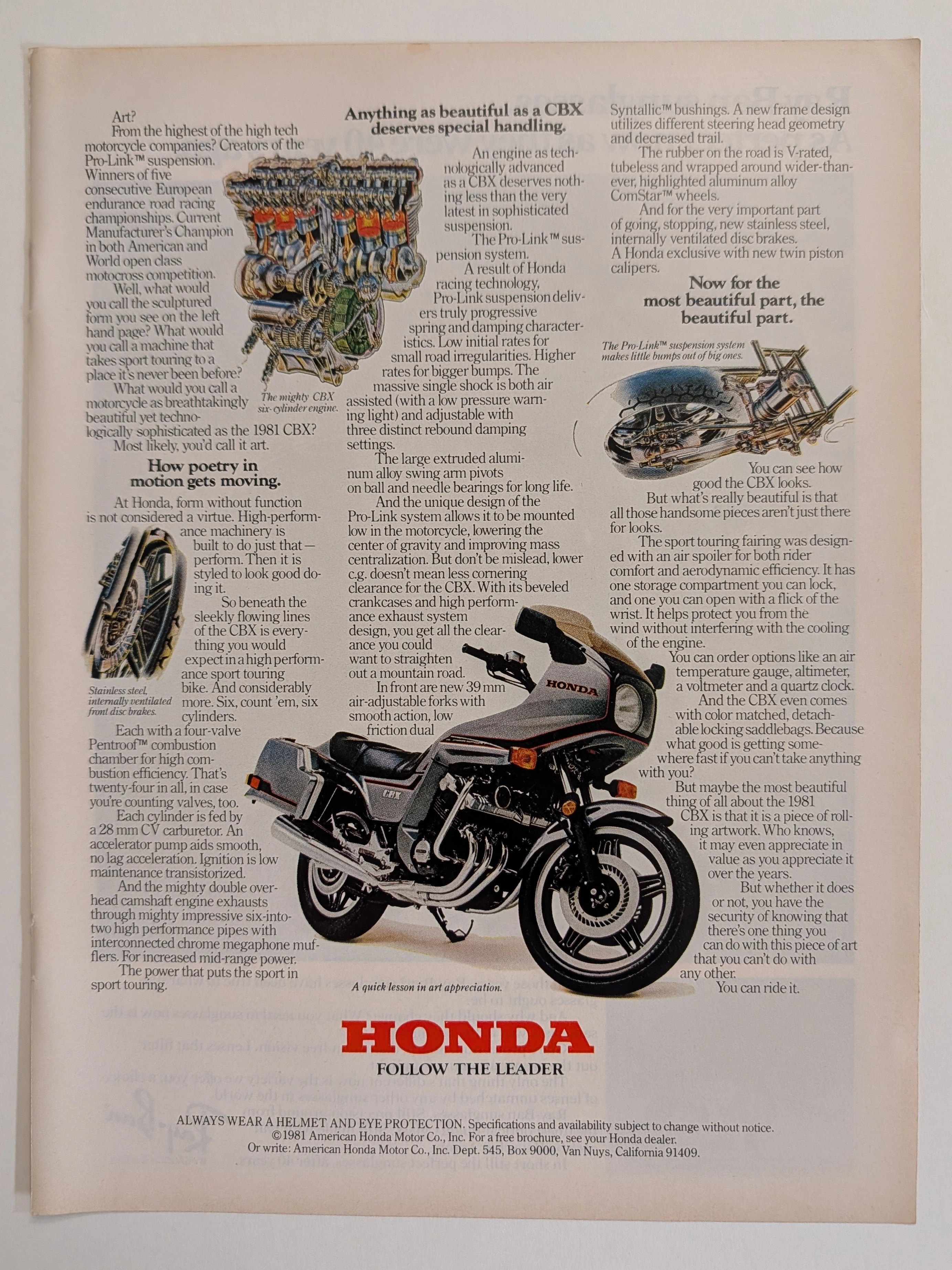
History is not written; it is printed. Before digital algorithms dictated human behavior, societal engineering was executed through the calculated geometry of the four-color offset press. The historical artifact before us is not merely an advertisement; it is a weaponized blueprint of mechanical aspiration and a testament to the golden age of Japanese technological supremacy. This museum-grade archival dossier presents an academic deconstruction of a 1981 print advertisement for the legendary Honda CBX. Operating on a profound binary structure, it documents a calculated paradigm shift within the global motorcycle industry. It illustrates the precise historical fracture where the motorcycle was conceptually transitioned from a stigmatized symbol of counter-culture rebellion into a highly sophisticated, aerodynamic marvel tailored for the affluent connoisseur. Through the lens of late-analog commercial artistry and precise visual forensics, this document serves as a masterclass in psychological marketing, establishing the archetype of the high-tech superbike that unconditionally dominates modern automotive pop culture.
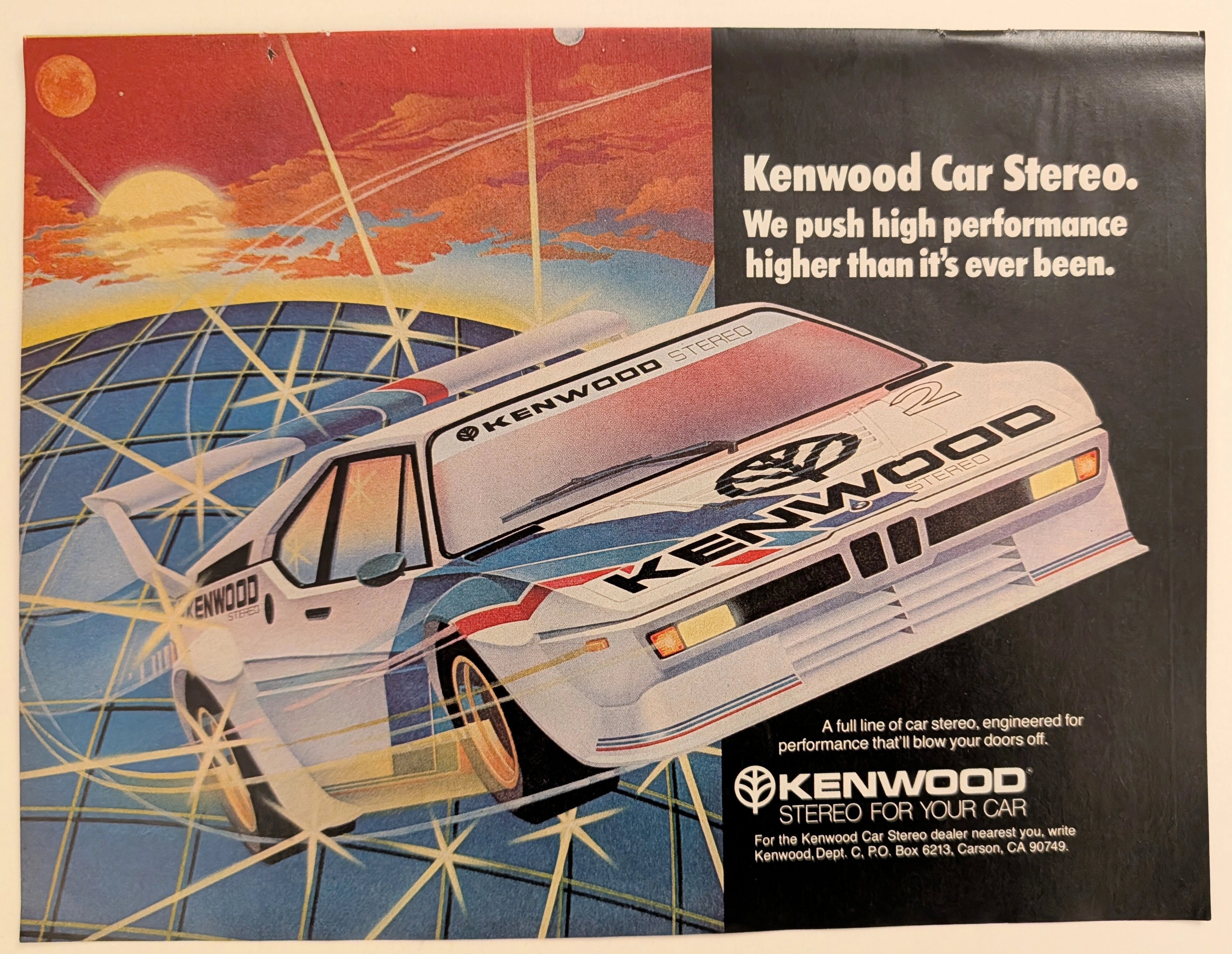
The evolution of 1980s American consumer electronics was fundamentally defined by the aggressive pursuit of portable and automotive high-fidelity sound. Elegantly and securely positioned upon the analytical table of The Record Institute today is a visually arresting, neon-drenched full-page print advertisement for Kenwood Car Stereo. This document completely transcends the standard, utilitarian boundaries of automotive accessory marketing. It operates as a highly sophisticated cultural mirror, reflecting a precise era in consumer psychology where auditory power was directly equated with vehicular performance. By utilizing a breathtaking, airbrushed illustration of a futuristic, aerodynamic race car accelerating over a cybernetic gridscape, Kenwood brilliantly positioned its audio equipment not just as radios, but as extreme, high-octane performance upgrades capable of generating sound that will literally "blow your doors off." This world-class, comprehensive dossier conducts a meticulous, unyielding, and exceptionally exhaustive examination of the artifact, operating under the absolute most rigorous parameters of historical, sociological, and material science evaluation. Dedicating the overwhelming majority of our analytical focus (80%) to its immense historical gravity, we will decode the brilliant marketing psychology embedded within the "neon grid" visual narrative, analyze the profound cultural shift toward aftermarket car audio customization, and dissect the aggressive, performance-based copywriting. Furthermore, as we venture deeply into the chemical and physical foundations of this analog printed ephemera (10%), we will reveal the precise mechanical fingerprints of the CMYK halftone rosettes captured in the stunning macro imagery of the airbrushed car. Finally, we will assess its archival rarity (10%), exploring how the graceful, natural oxidation of the paper substrate cultivates a serene wabi-sabi aesthetic—a natural, irreversible phenomenon that serves as the primary engine driving up its market value exponentially within the elite global spheres of Vintage Commercial Ephemera, Audio History, and Outrun/Synthwave Art Archives.
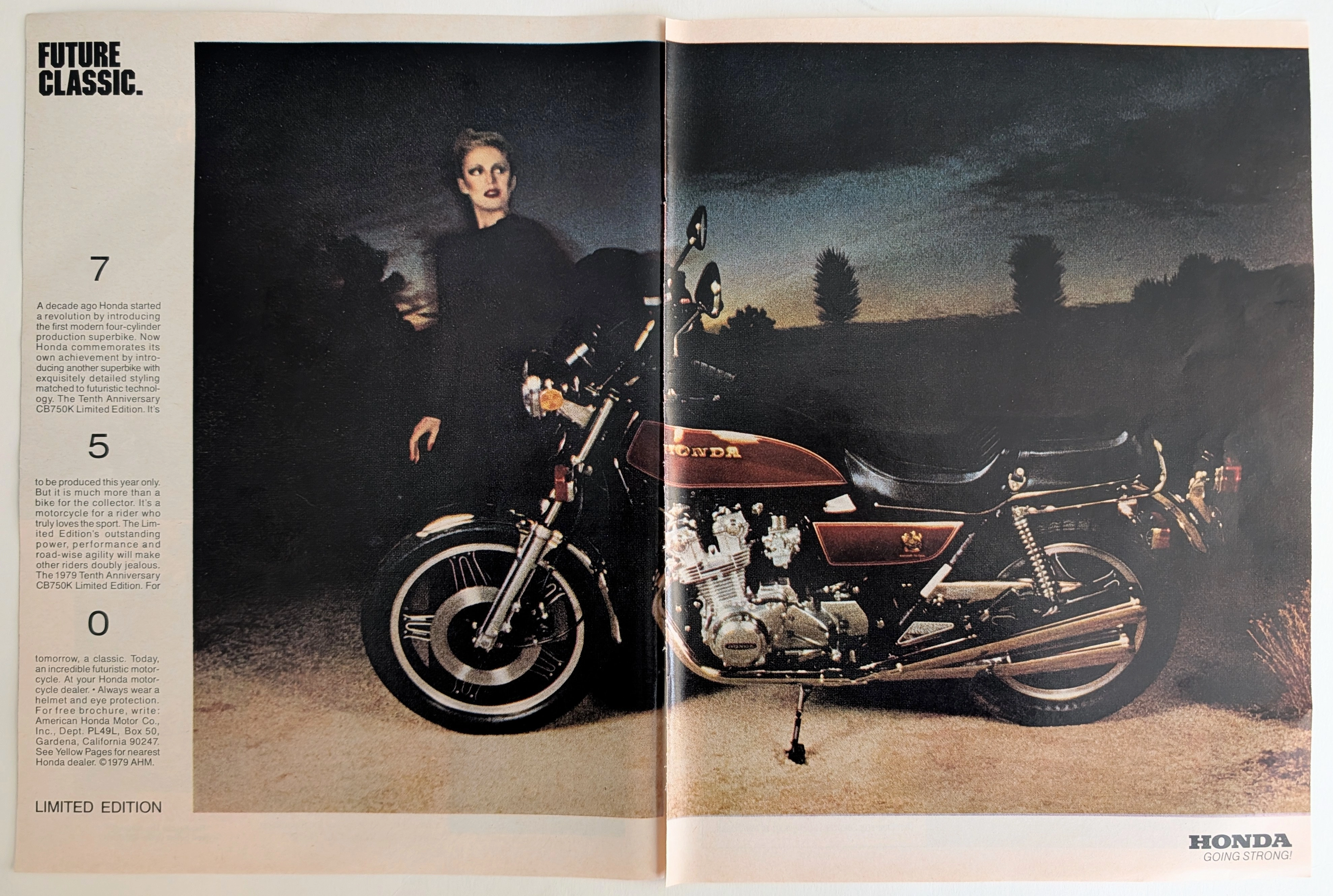
The evolution of the global motorcycle landscape in the 1970s was a saga of absolute disruption, characterized by the death of the leaky, vibrating parallel-twins of Europe and the sudden, overwhelming dominance of multi-cylinder Japanese engineering. Elegantly and securely positioned upon the analytical table of The Record Institute today is a visually sweeping, deeply atmospheric, and historically monumental two-page print advertisement for the 1979 Honda CB750K 10th Anniversary Limited Edition. This document completely transcends the standard boundaries of automotive marketing. It operates as a highly sophisticated cultural mirror and a bold declaration of mechanical supremacy. By strategically placing the motorcycle in a moody, high-fashion twilight setting, accompanied by the audacious headline "FUTURE CLASSIC.", American Honda Motor Co. executed a masterclass in psychological marketing. They were not merely selling a two-wheeled vehicle; they were selling a piece of pre-ordained history, a collectible artifact for the discerning rider who understood the gravity of the CB750 lineage. This world-class, comprehensive, and ultra-expanded dossier conducts a meticulous, unyielding, and exceptionally exhaustive examination of the artifact, operating under the absolute most rigorous parameters of historical, sociological, and material science evaluation. Dedicating the overwhelming, massive majority of our analytical focus (80%) to its immense historical gravity, we will decode the profound mechanical revolution sparked by the original 1969 CB750, trace the evolution of the inline-four engine, analyze the specific aesthetic upgrades of this 1979 Limited Edition (including the revolutionary Comstar wheels), and detail the intense corporate warfare of the 1970s superbike boom. Furthermore, as we venture deeply into the chemical and physical foundations of this analog printed ephemera (10%), we will reveal the precise mechanical fingerprints of the CMYK halftone rosettes captured in the stunning macro imagery of the golden side-cover crest and the gleaming exhaust pipes. Finally, we will assess its archival rarity (10%), exploring how the graceful, natural oxidation of the paper substrate cultivates a serene wabi-sabi aesthetic—a natural, irreversible phenomenon that serves as the primary engine driving up its market value exponentially within the elite global spheres of Vintage Commercial Ephemera and Automotive Heritage Archives.
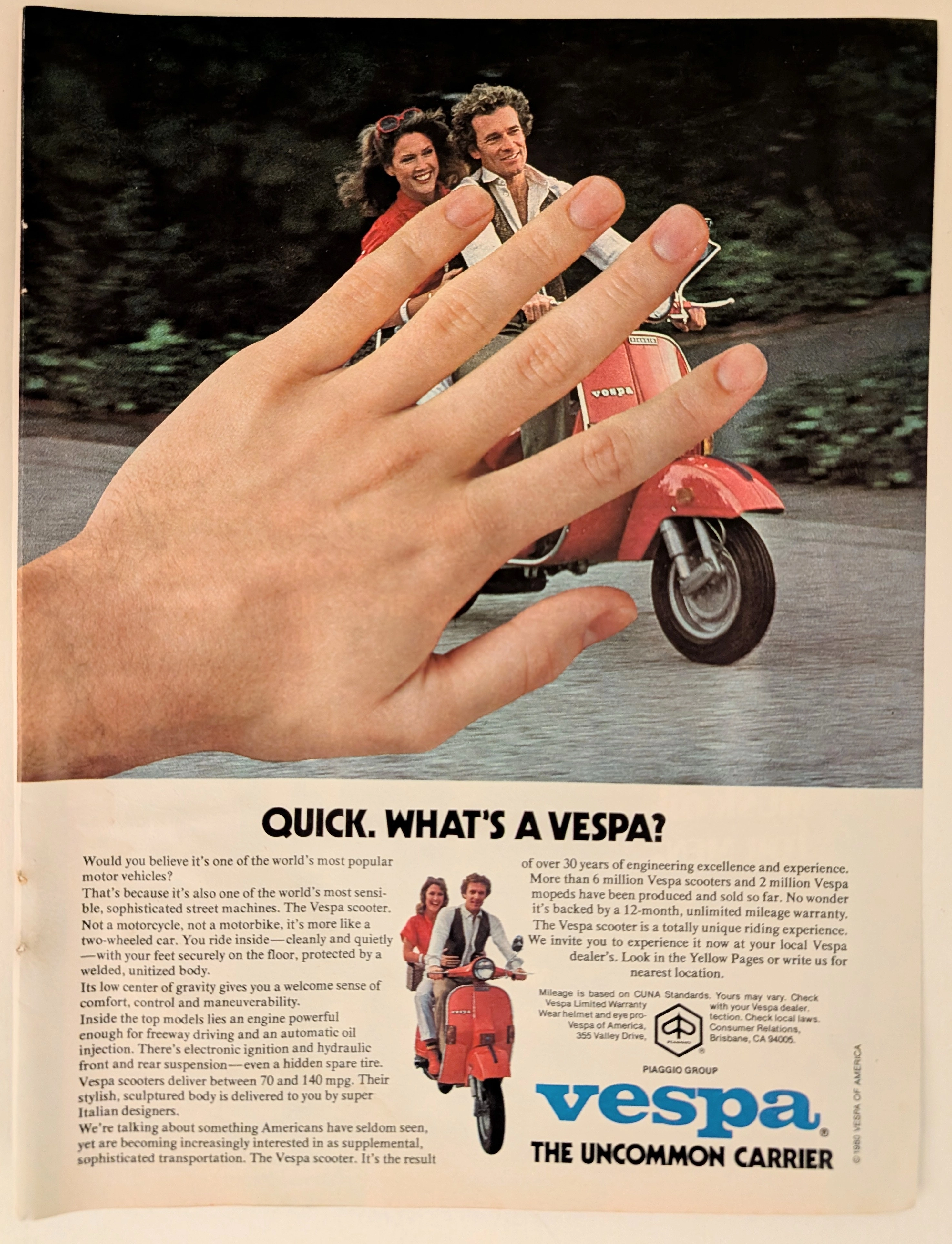
Then, it was a battle against American perception. A calculated interruption of the automotive status quo. In 1980, the United States was reeling from the aftershocks of the 1979 energy crisis. Fuel lines were long. Economic anxiety was high. The era of the careless, chrome-laden V8 engine was facing a harsh, geopolitical reckoning. Yet, the American commuter remained fundamentally tethered to the concept of the automobile. Motorcycles, conversely, were culturally relegated to the domains of outlaws, rebels, or recreational thrill-seekers. This document represents Piaggio’s aggressive, intellectual attempt to force a third option into the American consciousness. It explicitly denies its own mechanical taxonomy. "Not a motorcycle, not a motorbike, it's more like a two-wheeled car." Now, it is an artifact of an alternative urban timeline. A perfectly preserved record of a European utility vehicle attempting to rebrand itself as a sophisticated, lifestyle-driven solution for a sprawling, infrastructure-hostile continent. It stands as a testament to the difficulty of importing not just a machine, but an entirely foreign philosophy of urban mobility. The shift here is cultural and infrastructural. It marks the moment a machine born out of post-war European poverty attempted to pivot into an emblem of American suburban sophistication.