THE TIME TRAVELER'S DOSSIER: THE ARCHITECTURE OF POWER AND THE BIRTH OF THE DIGITAL WORLD IN THE 50S — The Record Institute JournalTHE TIME TRAVELER'S DOSSIER: THE ARCHITECTURE OF POWER AND THE BIRTH OF THE DIGITAL WORLD IN THE 50S — The Record Institute JournalTHE TIME TRAVELER'S DOSSIER: THE ARCHITECTURE OF POWER AND THE BIRTH OF THE DIGITAL WORLD IN THE 50S — The Record Institute JournalTHE TIME TRAVELER'S DOSSIER: THE ARCHITECTURE OF POWER AND THE BIRTH OF THE DIGITAL WORLD IN THE 50S — The Record Institute JournalTHE TIME TRAVELER'S DOSSIER: THE ARCHITECTURE OF POWER AND THE BIRTH OF THE DIGITAL WORLD IN THE 50S — The Record Institute Journal
1 / 5

✦ 5 Photos — Click any image to view in high resolution

March 8, 2026

THE TIME TRAVELER'S DOSSIER: THE ARCHITECTURE OF POWER AND THE BIRTH OF THE DIGITAL WORLD IN THE 50S

Archive Views: 28
Heritage AdvertisementsTravel & Tourism

The History

( THE HISTORY: The Sheraton Empire, the Reservatron Innovation, and the Diners' Club Revolution )

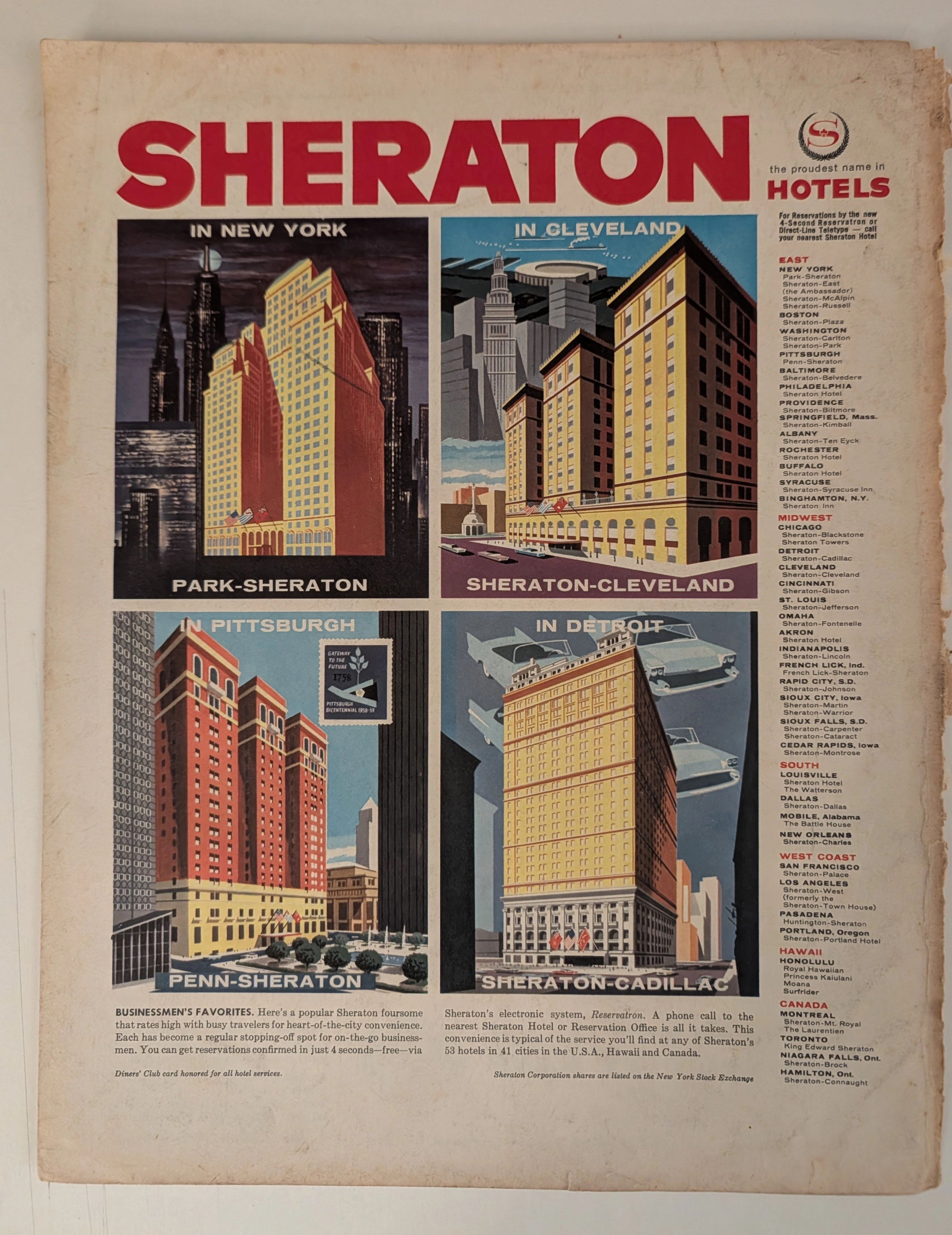
​As the Chief Curator of The Record, the guardian of analog history, I welcome you to the absolute, breathtaking zenith of post-war American capitalist ambition. The impeccably preserved Historical Relic that lies before you is not merely a piece of disposable hotel advertising. It is a forensic "Sociological Blueprint of Corporate Travel," meticulously engineered during an era of unprecedented American supremacy. This Primary Art Document represents the sheer might of Sheraton Hotels, a conglomerate that boldly declared itself "the proudest name in HOTELS".

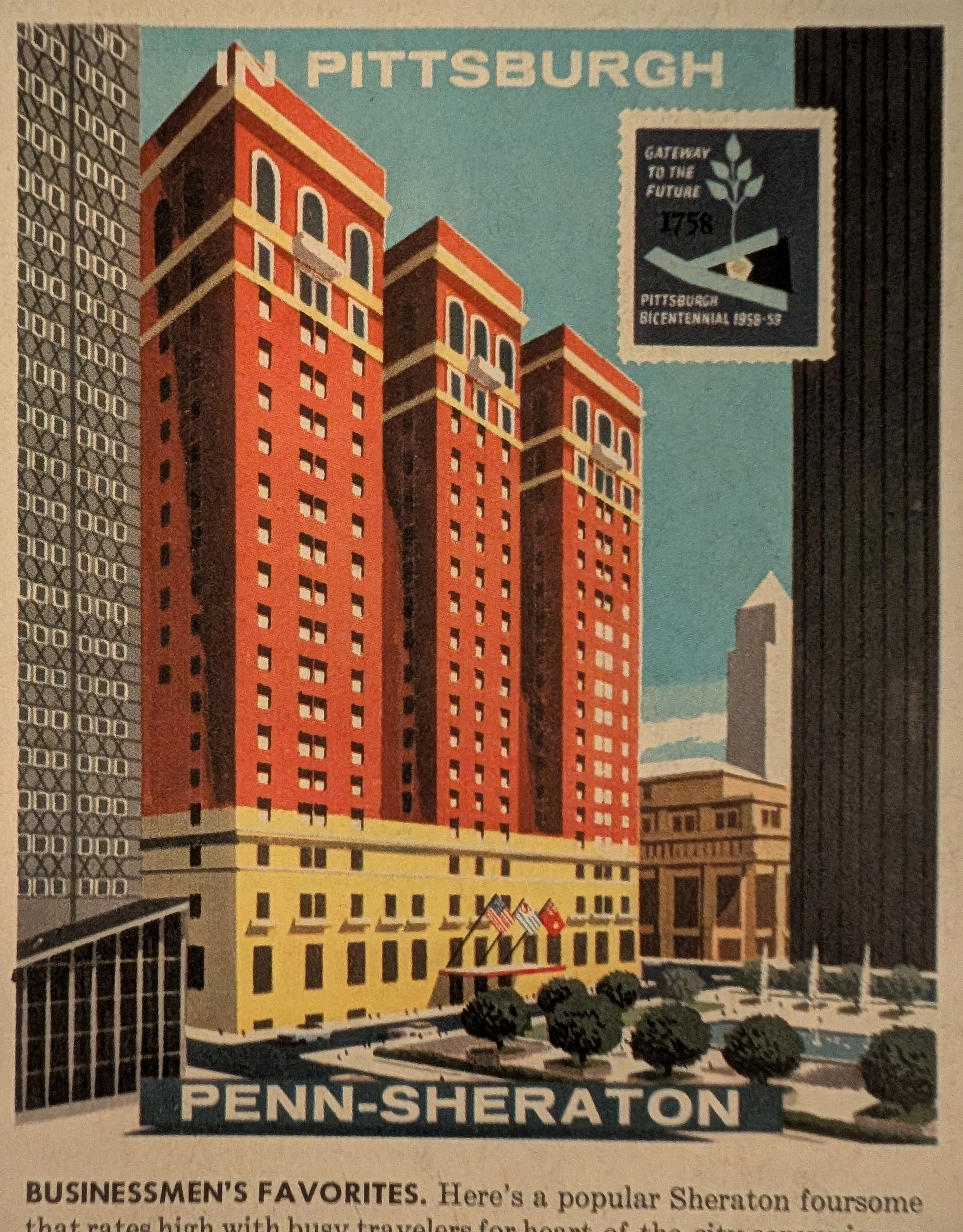
​The initial, staggering revelation of this artifact is its forensic dating precision. If you direct your analytical focus to the illustration of the Penn-Sheraton building in Pittsburgh, you will discover a meticulously rendered postage stamp bearing the text: "GATEWAY TO THE FUTURE 1758 PITTSBURGH BICENTENNIAL 1958-59". This microscopic detail serves as an undeniable historical hallmark, confirming that this masterpiece was published exactly between 1958 and 1959—the heart of the Cold War and the dawn of the Space Age.

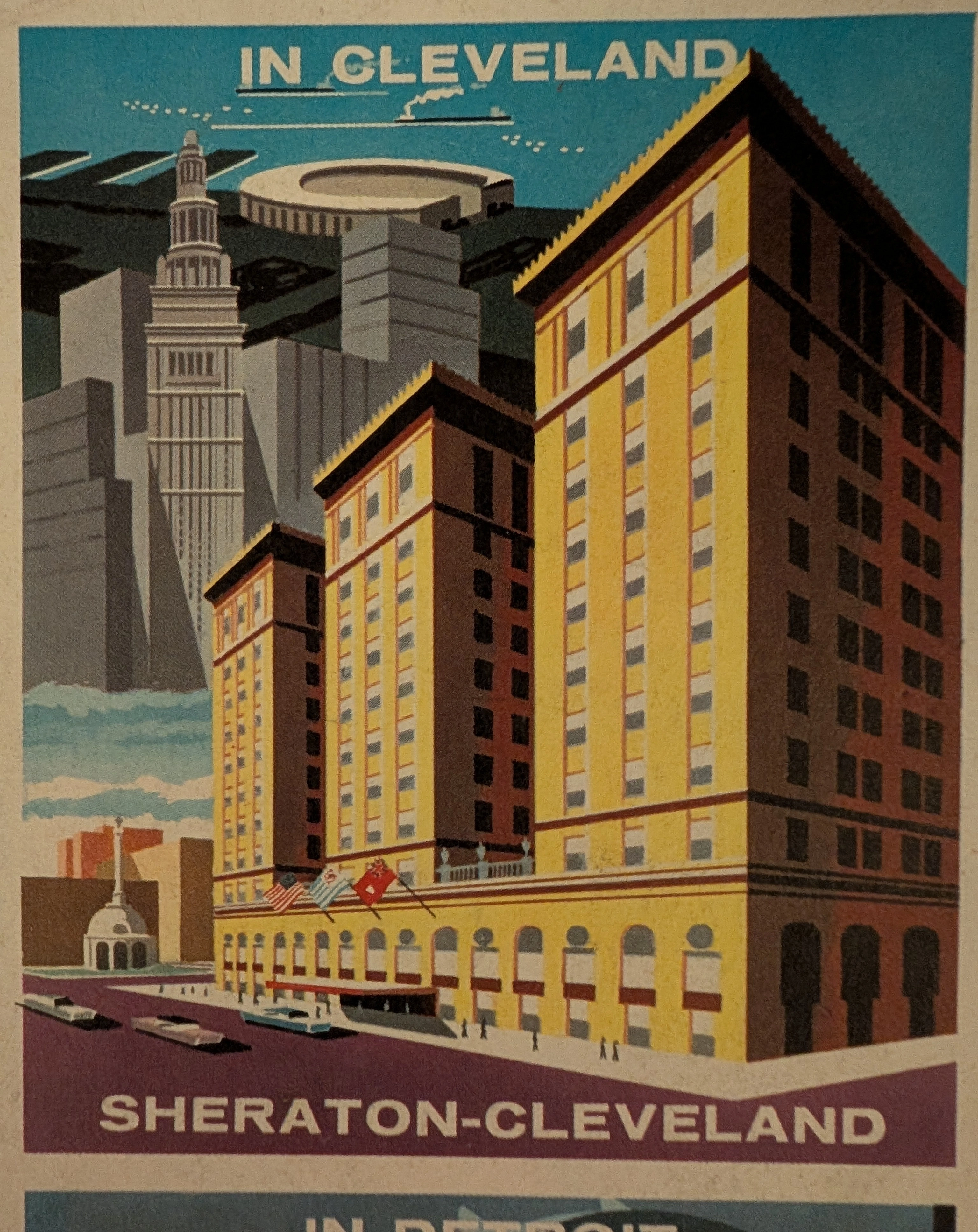
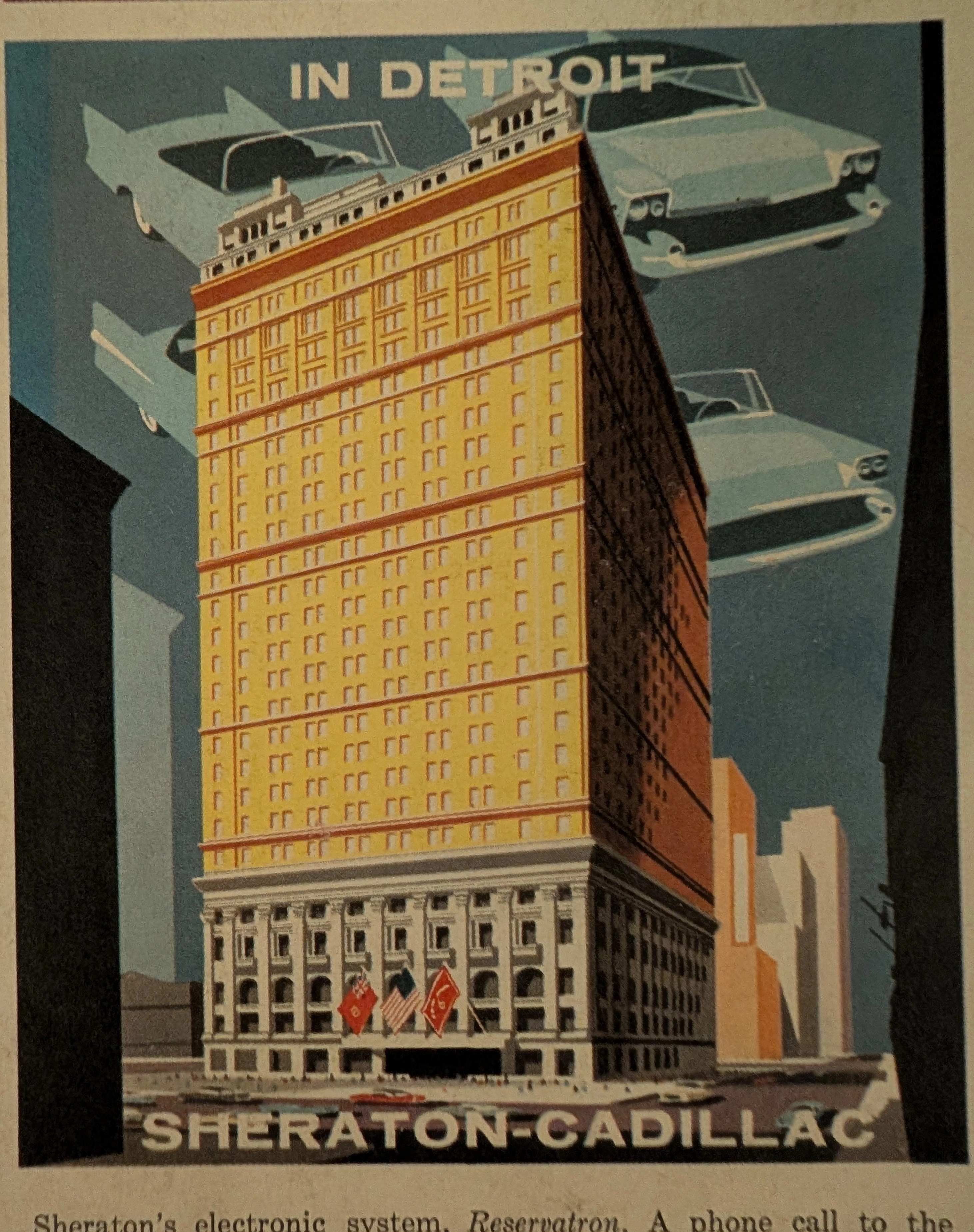
​The Visual Architecture of this document is a monumental four-panel layout, aggressively showcasing four hyper-stylized architectural titans:
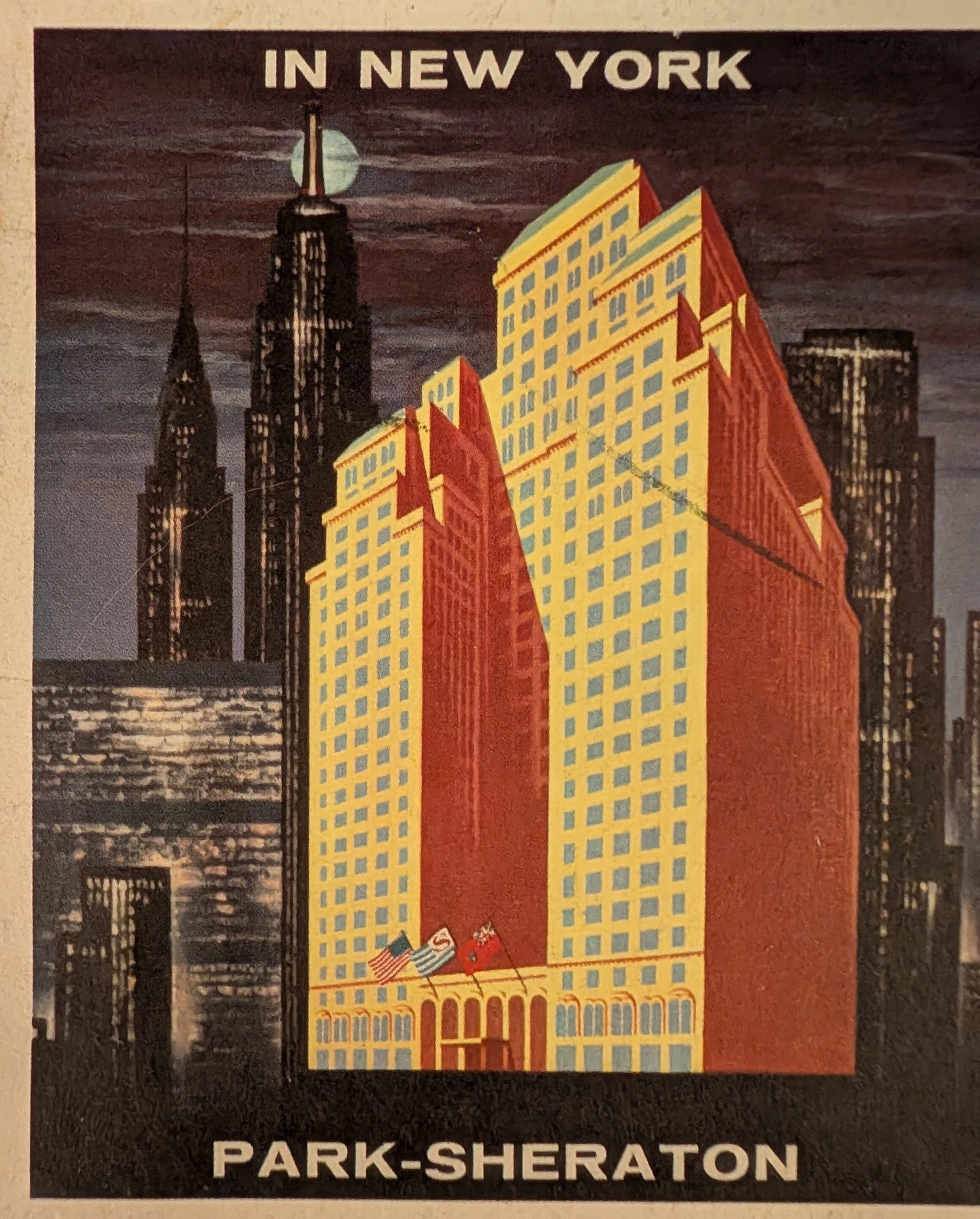
​Park-Sheraton (New York): Depicted as a towering monolith against a dramatic night sky, with a glowing moon and the iconic Chrysler Building lurking in the background, symbolizing the absolute center of global wealth.

​Sheraton-Cleveland: Showcasing a booming industrial metropolis with the majestic Terminal Tower standing guard behind the glowing hotel facade.

​Penn-Sheraton (Pittsburgh): The Steel City immortalized alongside its Bicentennial stamp.
​Sheraton-Cadillac (Detroit): The most visually arresting, surreal panel. The grand hotel is surrounded by ethereal, translucent mid-century automobiles—complete with massive, aggressive tail-fins—floating in the sky like alien spacecraft. This is a masterful, artistic homage to the "Motor City" at the height of its global automotive dominance.

​Yet, the true, earth-shattering historical gravity of this document lies hidden in the typography at the bottom. Sheraton is actively promoting two world-altering innovations.

First: "Sheraton's electronic system, Reservatron.". This is a vital piece of computing history. The Reservatron was one of the earliest commercial electronic reservation systems ever deployed in the hospitality industry, promising confirmed reservations in just 4 seconds. This advertisement captures the exact moment the world began transitioning into the digital age.

Second: "Diners' Club card honored for all hotel services.". In the 1950s, consumer credit was financial sorcery. The Diners' Club pioneered the plastic credit card, liberating the elite "Businessmen" from carrying massive amounts of cash. By accepting this card, Sheraton defined the new standard of high-end corporate travel. They seal this aura of immense corporate power with a final flex: "Sheraton Corporation shares are listed on the New York Stock Exchange". This is not selling a room; it is selling absolute financial authority.

( THE PAPER: The Aesthetics of Decay (Wabi-Sabi) — The Chemical Scars of Capitalism Burning Alive )
​At The Record, our ultimate, uncompromising reverence is reserved for the inevitable, tragic, and spectacular beauty of analog destruction. This standalone Primary Art Document was surgically rescued, liberated, and meticulously preserved. Mass-market business magazines in the 1950s were printed on highly acidic wood-pulp paper. They were explicitly designed by their publishers for mass, disposable consumption, harboring a fatal chemical death sentence within their very fibers from the millisecond they rolled off the printing press.

​Direct your curatorial gaze to the physical borders of this artifact. The right margin exhibits a violently jagged, rough tear. This is not careless damage; it is the forensic, physical evidence of a rescued relic, surgically liberated from the glued binding of a decaying magazine destined for the incinerator. Over the course of nearly 70 years, ambient oxygen and ultraviolet light have waged a relentless, unstoppable chemical war against the paper's inherent lignin. This irreversible oxidation process has birthed the magnificent, undeniable "patina" you see creeping inward from the edges. The once-stark margins have gracefully degraded into a warm, creamy ivory and a deep, burning amber. The authentic analog halftone dots of the lithography ink have settled permanently into the brittle, degrading, and fragile fibers. This is the profound Japanese aesthetic of wabi-sabi—the spiritual realization of finding absolute perfection in impermanence and decay. This paper is quietly, literally burning itself alive at a molecular level. Its slow, majestic, and irreversible death is precisely what transfigures it into an immortal piece of Primary Art.

( THE RARITY: Class A — A Miraculous Survivor of Corporate Expansion )
​To understand the immense valuation of this artifact, you must comprehend the brutal survival odds of corporate travel ephemera from the 1950s. These publications were exclusively designed to be read in waiting rooms or airplanes and then immediately discarded. The statistical probability of a magazine page containing such complex, multi-paneled, hyper-detailed illustrations surviving nearly seven decades in such crisp, visually immaculate condition—with vibrant ink and no devastating moisture rot—is staggeringly, miraculously low.
​When you fuse this extreme physical scarcity with the monumental historical significance of the "Reservatron" and the dawn of the "Diners' Club", alongside the surreal automotive art of the Detroit panel, this artifact unequivocally commands the highly prestigious Rarity Class A designation. It has evolved far, far beyond a disposable piece of vintage advertising. It is a highly coveted Historical Relic, demanding to be framed and fiercely protected by an alpha curator or collector who truly understands the heavy, beautiful, and irreplaceable weight of American corporate history.

Share This Archive

The Archive Continues

Continue the Exploration
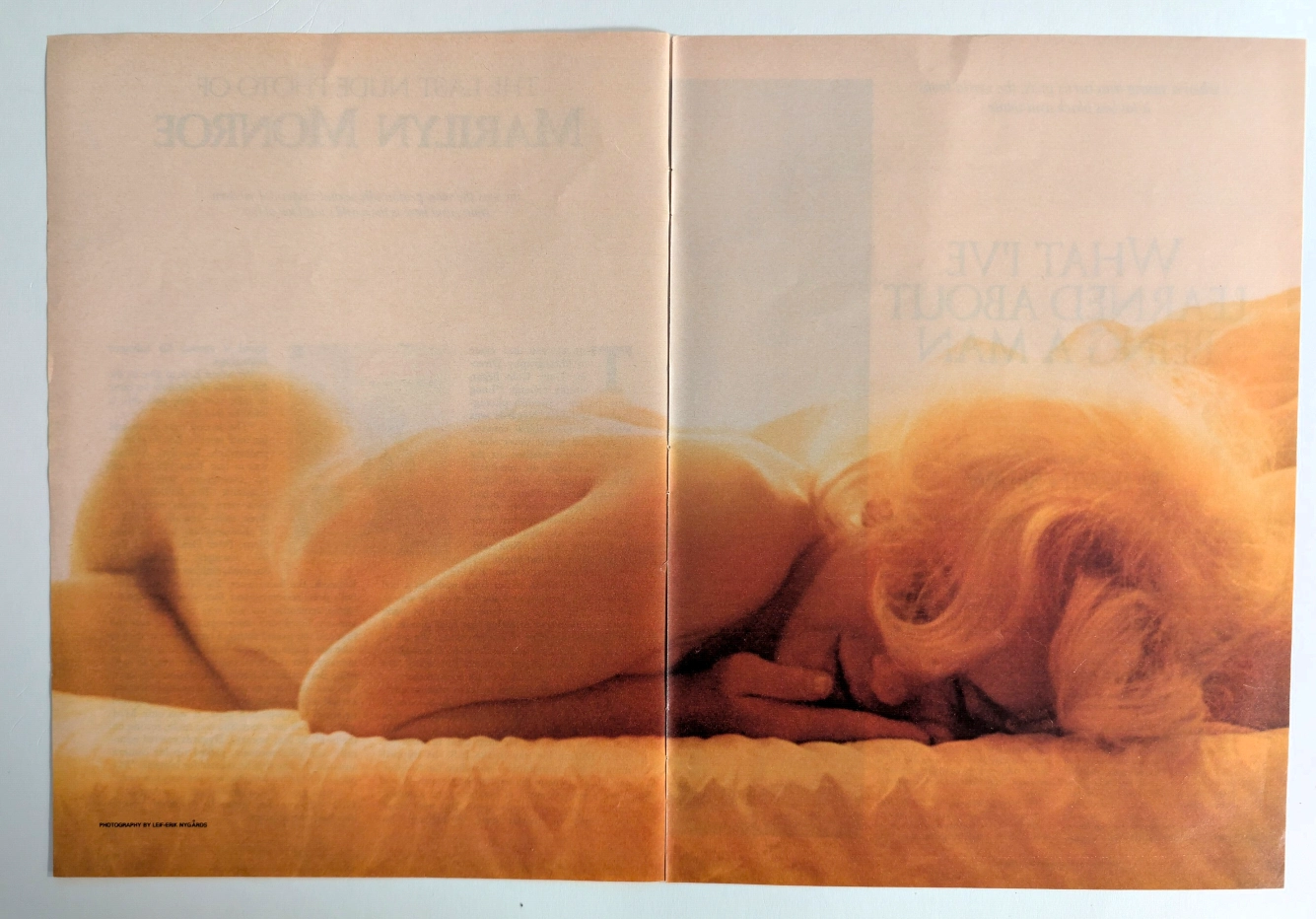
The Final Glimpse of a Legend: The History Behind Marilyn Monroe's Last Nude

The Final Glimpse of a Legend: The History Behind Marilyn Monroe's Last Nude

Uncover the profound historical significance of the ultimate photograph of the 20th century's greatest pop culture icon, captured by Leif-Erik Nygårds just weeks before her tragic death.
THE TIME TRAVELER'S DOSSIER: ARROGANCE AND INNOVATION IN THE ABYSS OF THE DEPRESSION

THE TIME TRAVELER'S DOSSIER: ARROGANCE AND INNOVATION IN THE ABYSS OF THE DEPRESSION

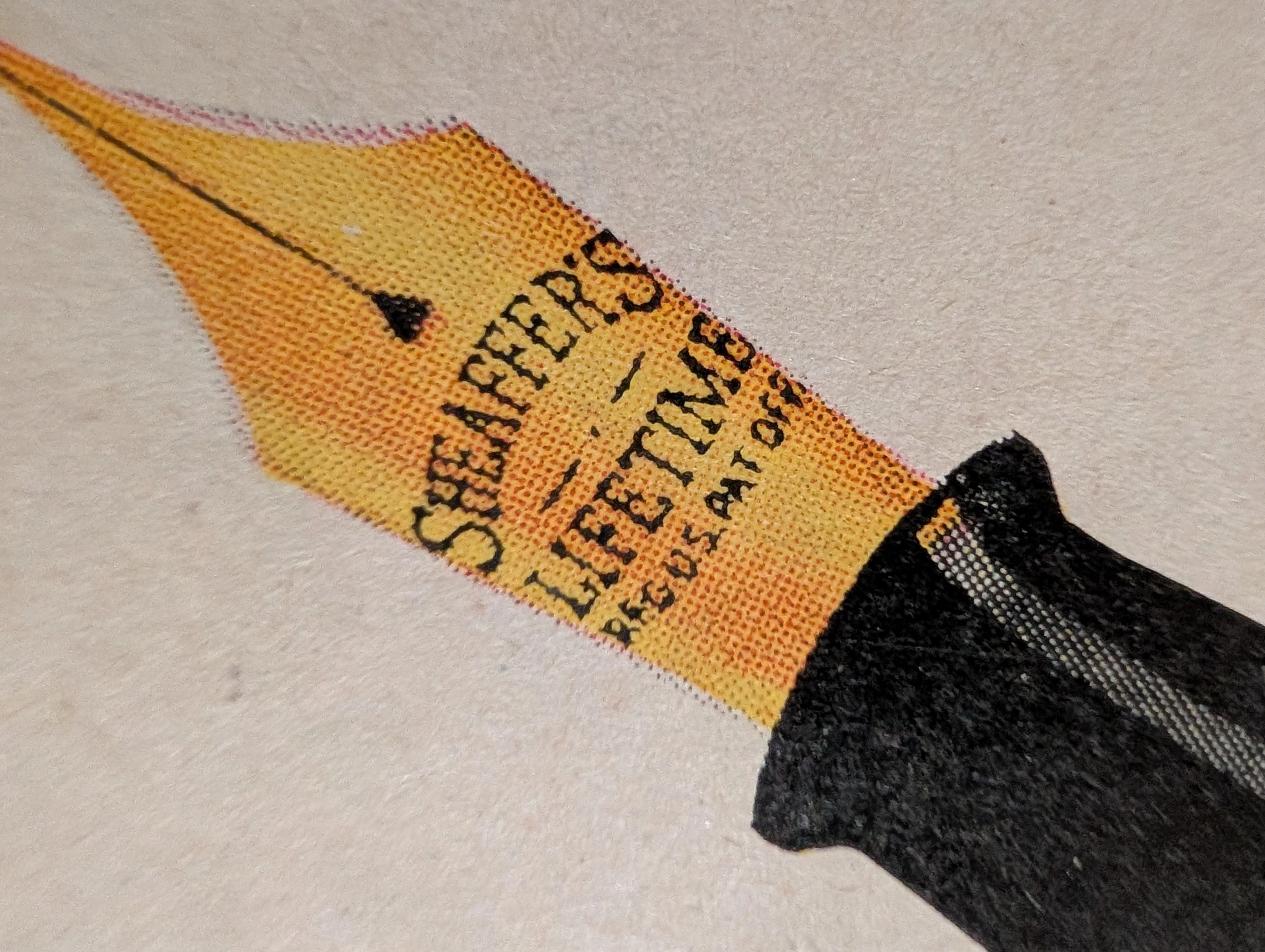
The artifact under rigorous, museum-grade analysis is an exceptionally preserved Historical Relic originating from the darkest economic abyss of the 20th century: the American Great Depression. Sourced from a 1931 issue of The Saturday Evening Post, this Primary Art Document features a sweeping, full-page advertisement for the Sheaffer's "Balance" Lifetime Pen. This piece is a profound sociological and industrial marker. In 1931, as the global economy collapsed, W.A. Sheaffer defiantly marketed a revolutionary, streamlined luxury writing instrument priced at an astronomical $15. The ad explicitly highlights the "White Dot" lifetime guarantee and the 14-karat solid gold "Autograph" band engraved with the owner's signature ("John Adams"). It is a masterclass in aspirational marketing during an era of mass destitution. Physically, this nearly century-old wood-pulp document is a breathtaking testament to the Japanese aesthetic of wabi-sabi. It exhibits severe, dramatic edge trauma, profound edge loss, deep amber oxidation, and prominent moisture staining along the left margin. This extreme analog decay transforms the mass-produced commercial print into an irreplaceable, highly coveted Primary Art Document that physically embodies the scars of its 90-year journey through history.
The Time Traveller’s Dossier: 1985 Visa Premier Vintage Advertisement — The Passport to Borderless Wealth

VISA · Travel

The Time Traveller’s Dossier: 1985 Visa Premier Vintage Advertisement — The Passport to Borderless Wealth

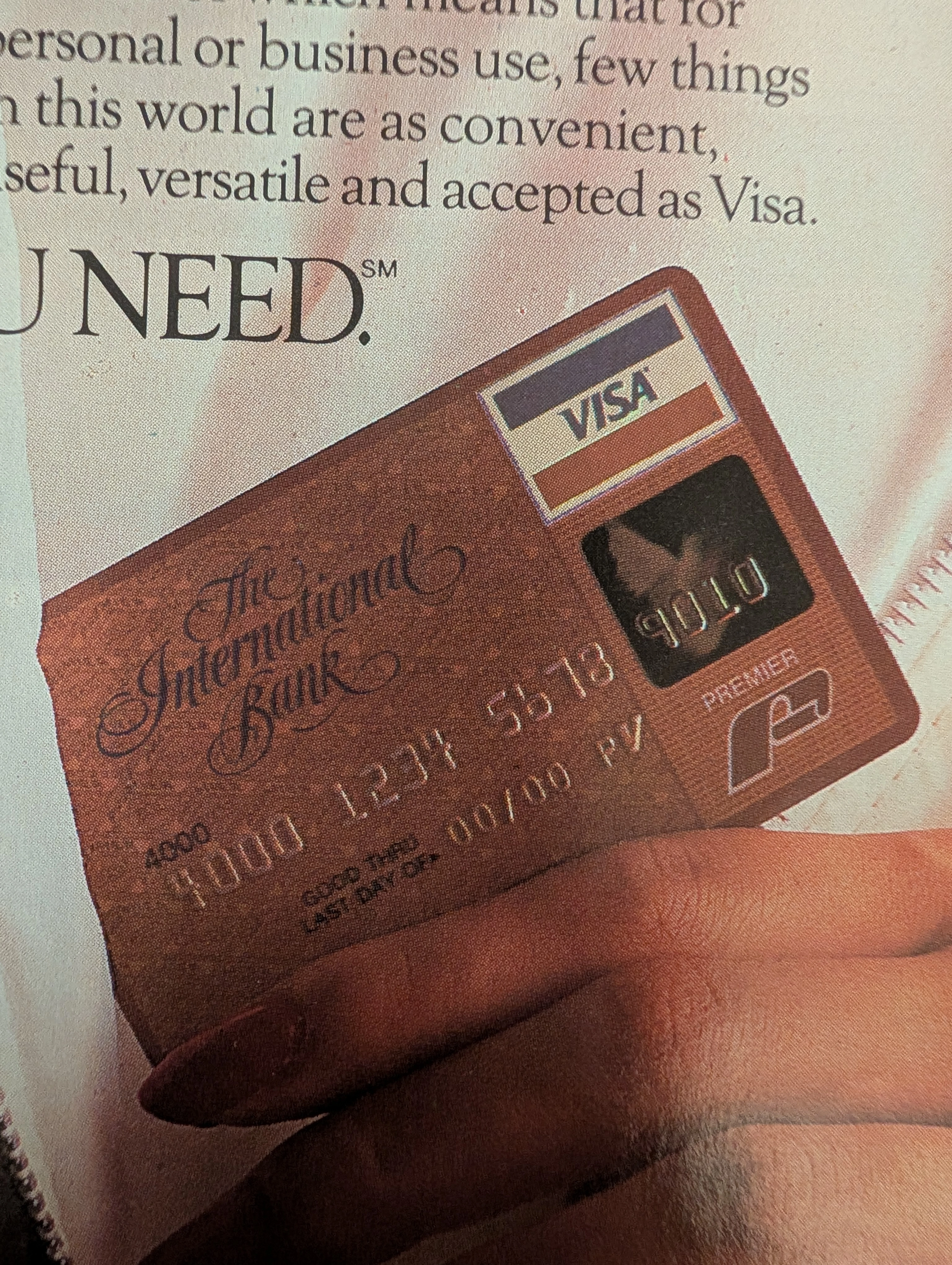
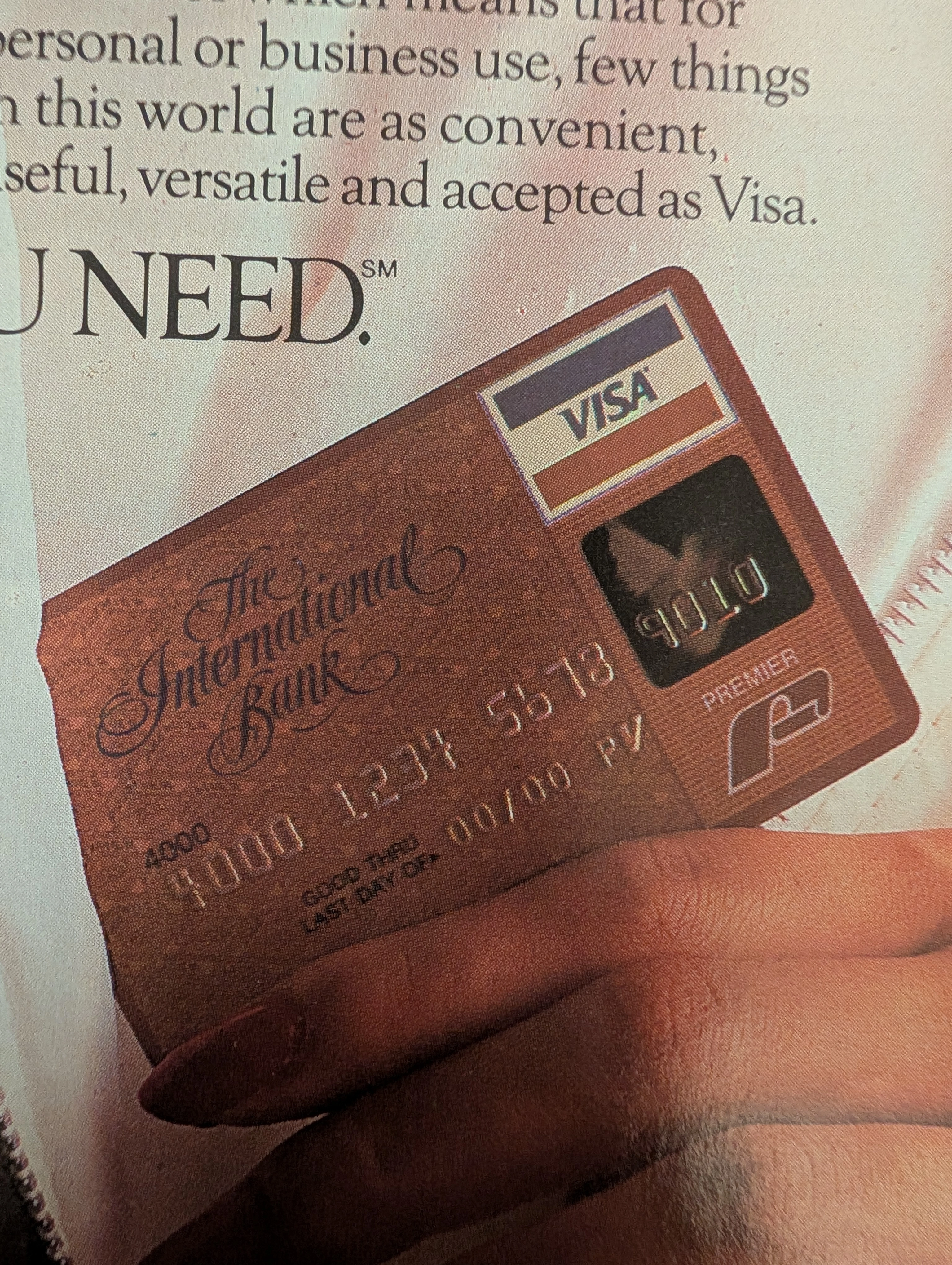
Delve into the archives to explore this definitive 1985 Visa Premier vintage advertisement, a piece that serves as far more than mere financial promotion. It is a historical milestone capturing the evolution of global consumerism and the financial services industry. Published during the mid-1980s, an era when international travel became the ultimate status symbol, this artifact stands as a powerful representation of the premium credit card wars for collectors of vintage ads and old advertisements. The "All You Need" campaign fundamentally transformed Visa's image from an everyday convenience into a "financial passport," universally accepted from the exclusive ski slopes of California to the majestic peaks of Switzerland. Unlike classic print ads of previous decades that focused on tangible consumer goods, this piece sells the intangible allure of freedom, security, and elite access. This document remains a profound testament to the dawn of financial globalization and a masterpiece of fintech archival history.

Published by

The Record Institute

Taxonomy Match

Related Articles

THE TIME TRAVELER'S DOSSIER:THE ENGINEERING OF ELEGANCE, THE GUCCI TRUNK, AND THE ARCHITECTURE OF REASON — related article
Read Article

THE TIME TRAVELER'S DOSSIER:THE ENGINEERING OF ELEGANCE, THE GUCCI TRUNK, AND THE ARCHITECTURE OF REASON

The artifact under exhaustive, uncompromising, and unprecedented museum-grade analysis is a remarkably preserved Historical Relic originating from the absolute zenith of West German automotive engineering. This Primary Art Document is a densely informative, multi-column magazine advertisement for the Mercedes-Benz 280SE Sedan (W116 chassis). ​This document is a "Forensic Blueprint of Engineered Elegance and Status Commodification." It aggressively markets the 280SE as the "Heir to a Classic," positioning it as a vehicle that inherits the legendary proportions of the 450 Series but is powered by a highly advanced, fuel-injected 6-cylinder engine. The copywriting reads like an arrogant technical dossier, boasting of the "Continuous Injection System" (CIS) and a fully independent "Suspense-free suspension" derived from the legendary C-111 high-speed research vehicle. ​However, the absolute psychological masterstroke lies in the lower-left illustration. To visually prove the cavernous "18.2 cubic feet of usable space," the artist meticulously illustrated the trunk effortlessly swallowing a bicycle, golf clubs, and a set of Gucci luggage. The unmistakable beige geometric monogram and the iconic red-and-green Web stripe on the suitcases serve as a deliberate, powerful socio-economic signal. It explicitly communicates that the Mercedes-Benz trunk is designed exclusively for the "Jet-Set" elite who travel with Italian haute couture. ​Rescued from a mass-market periodical, this pre-2000s analog artifact exhibits a beautifully authentic warm ivory oxidation across its surface. This majestic chemical aging transforms a mass-produced piece of technical propaganda into an irreplaceable Primary Art Document of automotive and sociological history.

THE TIME TRAVELER'S DOSSIER: BLOOD CAPITALISM AND THE WEAPONIZATION OF WHISKEY — related article
Read Article

THE TIME TRAVELER'S DOSSIER: BLOOD CAPITALISM AND THE WEAPONIZATION OF WHISKEY

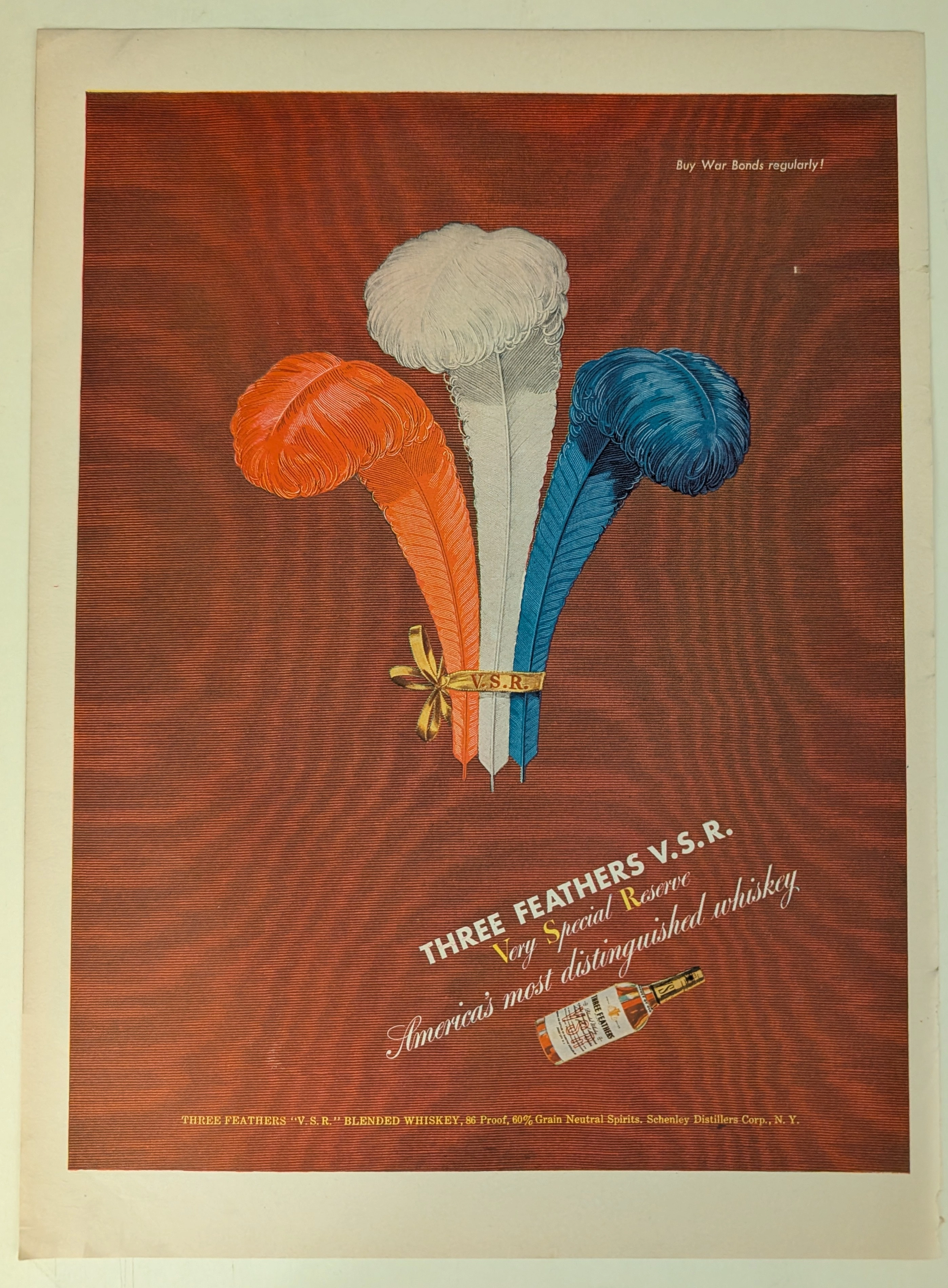
This impeccably preserved Historical Relic is a Primary Art Document from the brutal crucible of World War II, featuring a sweeping advertisement for THREE FEATHERS V.S.R. Blended Whiskey. It chronicles the ultimate mid-century psychological strategy of "Patriotic Capitalism." The artifact is forensically and definitively dated to the WWII era by the explicit, government-aligned directive in the upper right corner: "Buy War Bonds regularly!". Visually, the brand masterfully hijacked American nationalism by rendering its iconic three feathers in a vibrant Red, White, and Blue patriotic color scheme. Surviving the aggressive scrap paper drives of the 1940s, the acidic analog paper exhibits a profound integration of the deep crimson ink into its degrading fibers, perfectly encapsulating the analog aesthetic of wabi-sabi. This slow chemical death elevates this rescued wartime artifact to an irreplaceable Primary Art Document of Rarity Class A.

THE TIME TRAVELER'S DOSSIER: HOLLYWOOD PROPAGANDA AND THE DAWN OF MULTIMEDIA SYNERGY — related article
Read Article

THE TIME TRAVELER'S DOSSIER: HOLLYWOOD PROPAGANDA AND THE DAWN OF MULTIMEDIA SYNERGY

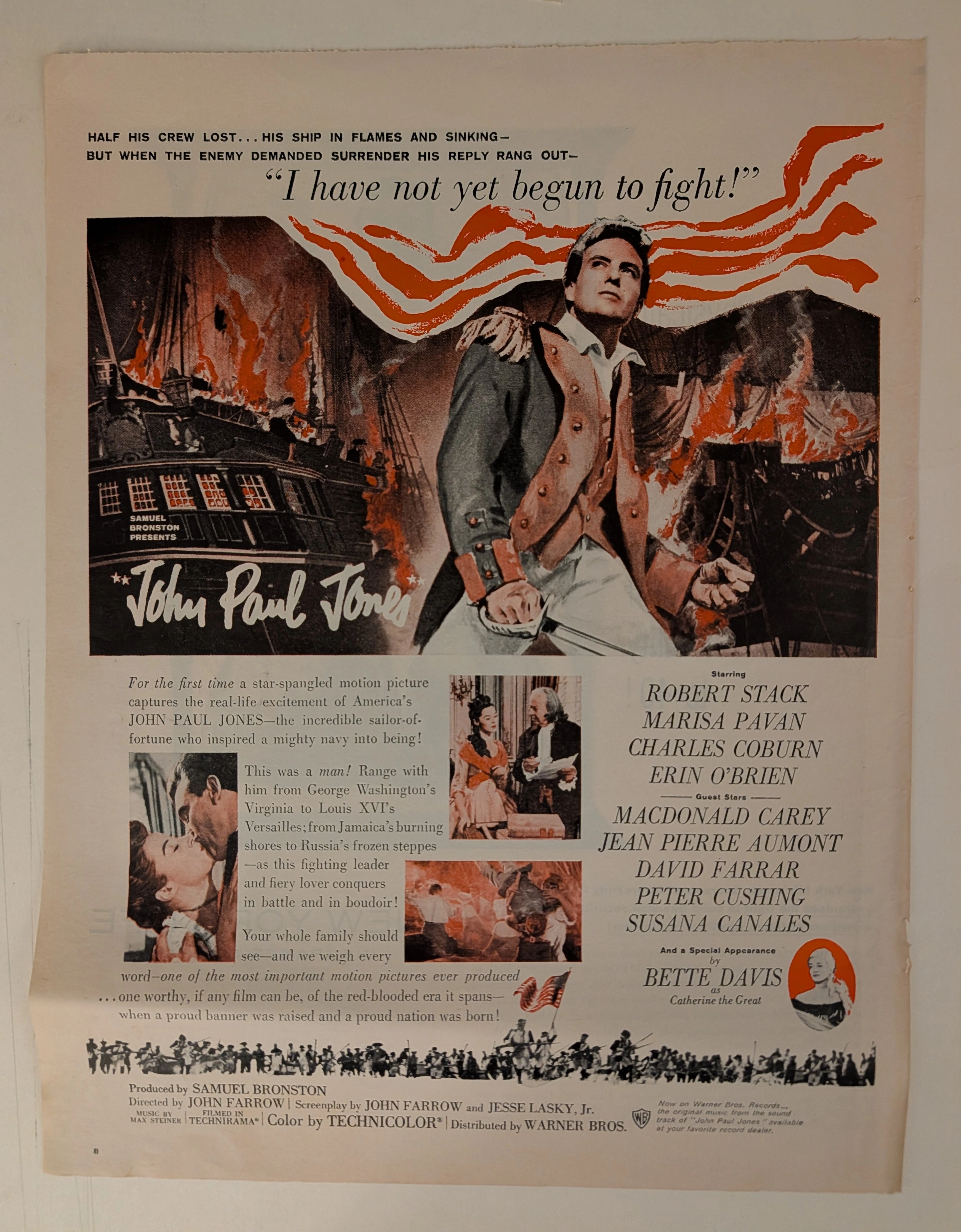
The artifact under exhaustive, uncompromising, and unprecedented museum-grade analysis is a remarkably preserved Historical Relic originating from the zenith of Hollywood's post-war epic era. This Primary Art Document is a monumental, full-page theatrical advertisement for the 1959 biographical epic "John Paul Jones", produced by the legendary independent film mogul Samuel Bronston and distributed by Warner Bros.. ​This is not merely a movie poster; it is a "Forensic Blueprint of Cold War American Nationalism and Multimedia Synergy." Released in 1959, at the height of the Cold War, the advertisement aggressively weaponizes the foundational mythos of the United States Navy. The commanding, blood-red headline, "I have not yet begun to fight!", serves as a psychological anchor, projecting unyielding American defiance to both domestic audiences and global adversaries. Visually dominated by the rugged, heroic portrait of Robert Stack, the ad expertly balances masculine wartime aggression with romantic subplots and diplomatic intrigue featuring Charles Coburn as Benjamin Franklin. Furthermore, it showcases elite Hollywood casting power by explicitly highlighting a "Special Appearance by Bette Davis as Catherine the Great" in a striking red cameo vignette. ​Crucially, this artifact documents an early, masterful execution of cross-platform corporate synergy. The bottom corner explicitly markets the original Max Steiner soundtrack on Warner Bros. Records, proving that the commercialization of the "Original Motion Picture Soundtrack" was already highly codified. ​Rescued from the inevitable oblivion of disposable entertainment media, this pre-2000s analog artifact is a breathtaking embodiment of the Japanese aesthetic of wabi-sabi. Printed on inherently acidic mid-century wood-pulp paper, it exhibits beautifully authentic edge wear and a profound, warm amber oxidation across its surface. This unstoppable molecular death transforms a mass-produced piece of Hollywood propaganda into an irreplaceable, ready-to-frame Primary Art Document of cinematic and sociological history.

The Time Traveller's Dossier: The Stroke of Seduction – 1970s Christian Dior "Dioressence" Advertisement — related article
Read Article

The Time Traveller's Dossier: The Stroke of Seduction – 1970s Christian Dior "Dioressence" Advertisement

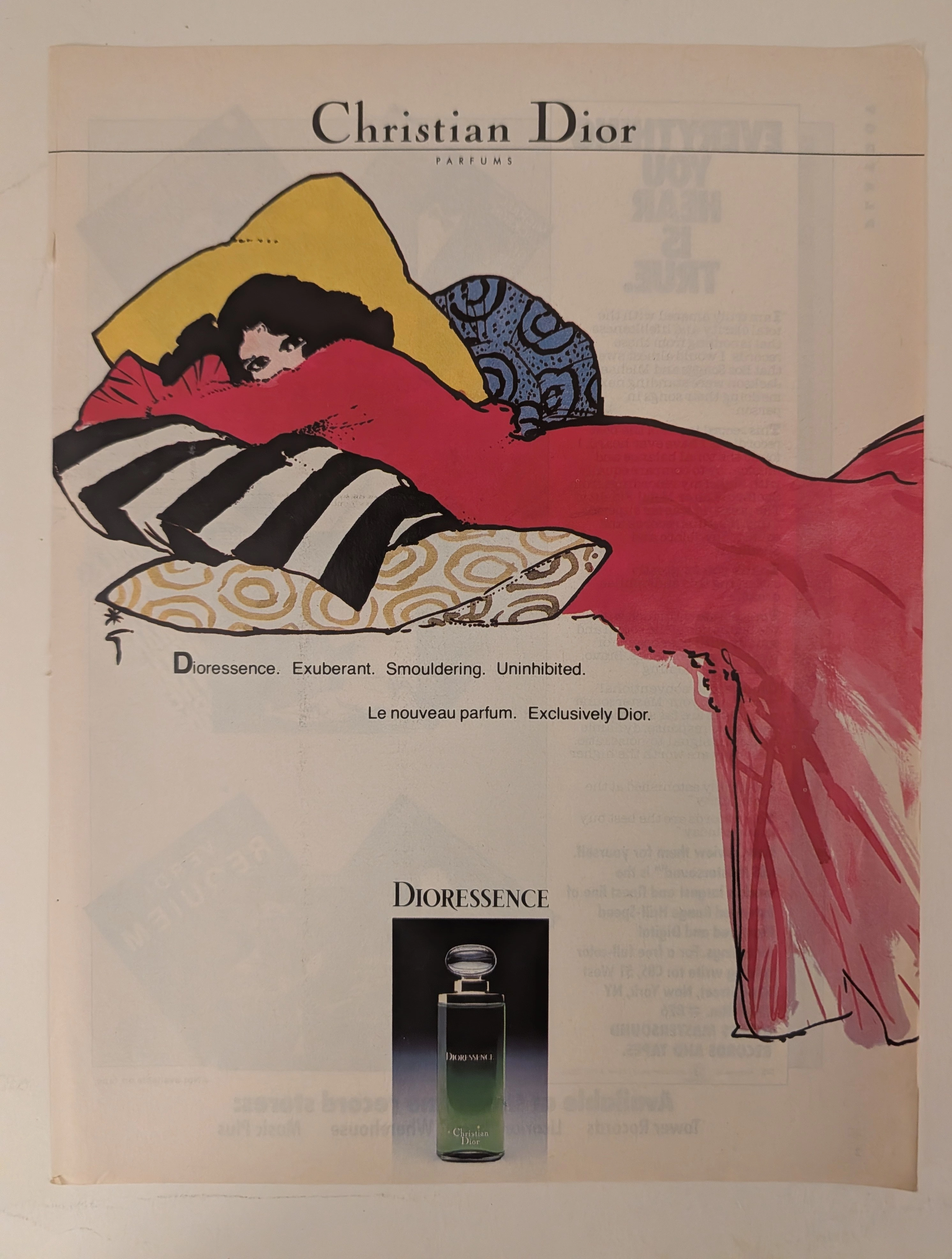
History is not written; it is printed. Before digital algorithms dictated consumer desires, societal engineering was executed through the calculated geometry of the four-color offset press and the masterful stroke of an illustrator's brush. The historical artifact before us is not merely a fragrance advertisement; it is a weaponized blueprint of unapologetic female sensuality and a testament to the absolute zenith of French haute couture marketing. This museum-grade archival dossier presents an academic deconstruction of a vintage 1970s print advertisement for Christian Dior's "Dioressence" perfume. Operating on a profound binary structure, it documents a calculated paradigm shift within the global luxury fragrance industry. It illustrates the precise historical fracture where the polite, restrained elegance of post-war fashion transitioned into the bold, liberated, and sexually assertive era of the 1970s. Through the lens of late-analog commercial artistry—specifically the genius of René Gruau—and precise visual forensics, this document serves as a masterclass in psychological semiotics, establishing the visual tropes of the empowered, enigmatic woman that unconditionally dominate modern luxury branding.

The Time Traveller's Dossier: The Architecture of Eternity – De Beers "Glory of Bells" Advertisement (Circa early 1940s) — related article
Read Article

The Time Traveller's Dossier: The Architecture of Eternity – De Beers "Glory of Bells" Advertisement (Circa early 1940s)

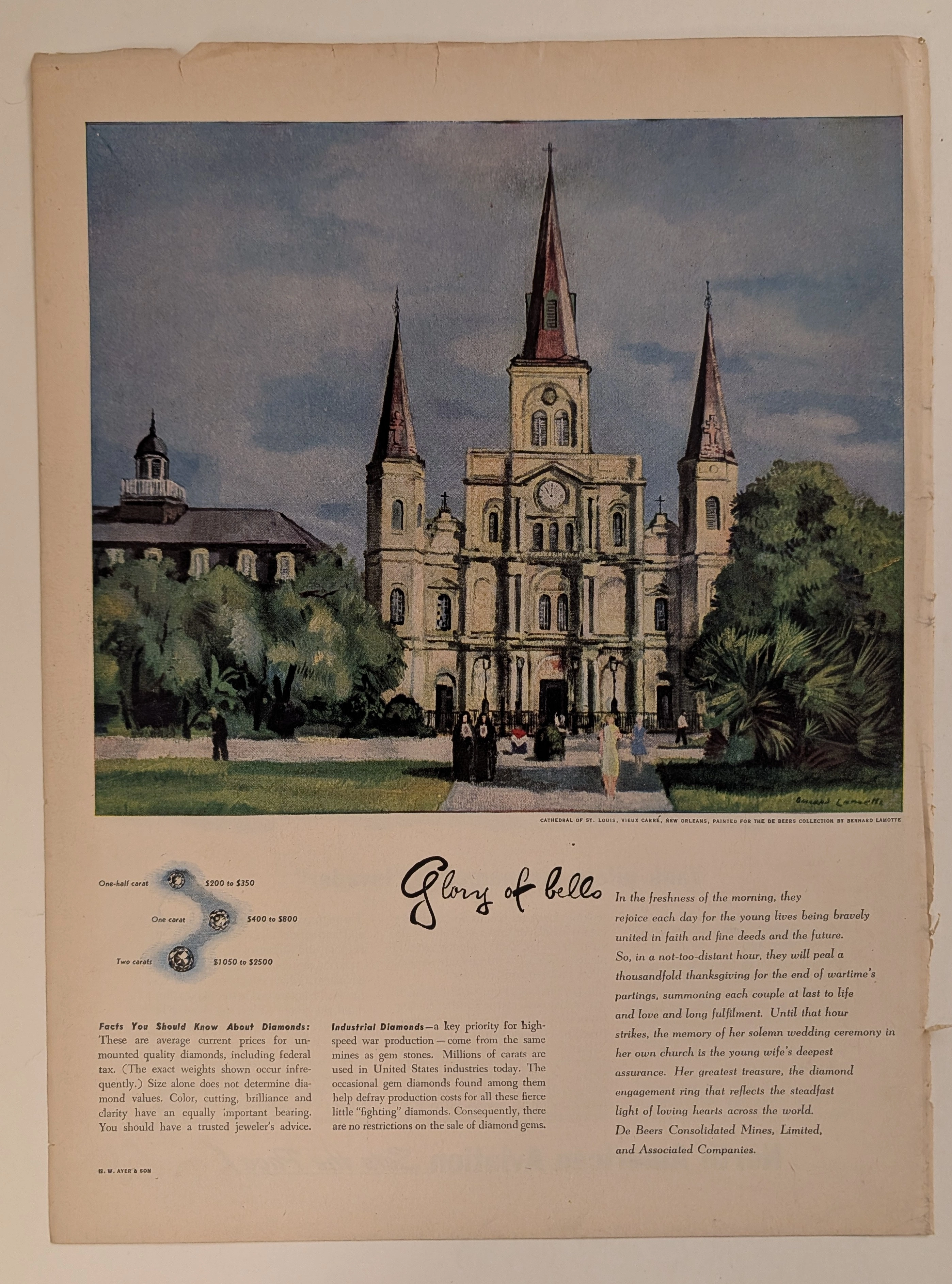
History is not shaped by chance; it is engineered by those who control the narrative and own the resources. Long before the digital age fragmented human attention, the ultimate manifestations of social engineering and psychological manipulation were executed through the calculated precision of the four-color offset printing press and the masterful strokes of commercial fine art. The historical artifact presented before us is not merely a page from a vintage magazine. It is a perfectly weaponized blueprint of corporate capitalism, a masterpiece of emotional extortion, and a foundational document in the creation of one of the most successful, universally accepted illusions in the history of human commerce: the diamond engagement ring. This museum-grade, academic archival dossier presents an exhaustive, microscopic deconstruction of a World War II-era print advertisement for De Beers Consolidated Mines, Limited, executed by the legendary advertising agency N.W. Ayer & Son. Operating on a profound and ruthless binary structure, this document records a calculated paradigm shift within the global luxury and gemstone industry. It captures the precise historical fracture where a monopolized carbon allotrope was conceptually transmuted from a rare gemstone into an absolute, non-negotiable sacrament of love, faith, and matrimony. Through the highly specialized lens of late-analog commercial artistry and stringent visual forensics, this document serves as a masterclass in psychological marketing. It established the foundational archetype for linking extreme financial expenditure with spiritual and emotional devotion—an archetype that unconditionally dictates the visual and strategic totems of the modern diamond industry today.

The Time Traveller's Dossier: The Architect of the Great Society – Lyndon B. Johnson — related article
Read Article

The Time Traveller's Dossier: The Architect of the Great Society – Lyndon B. Johnson

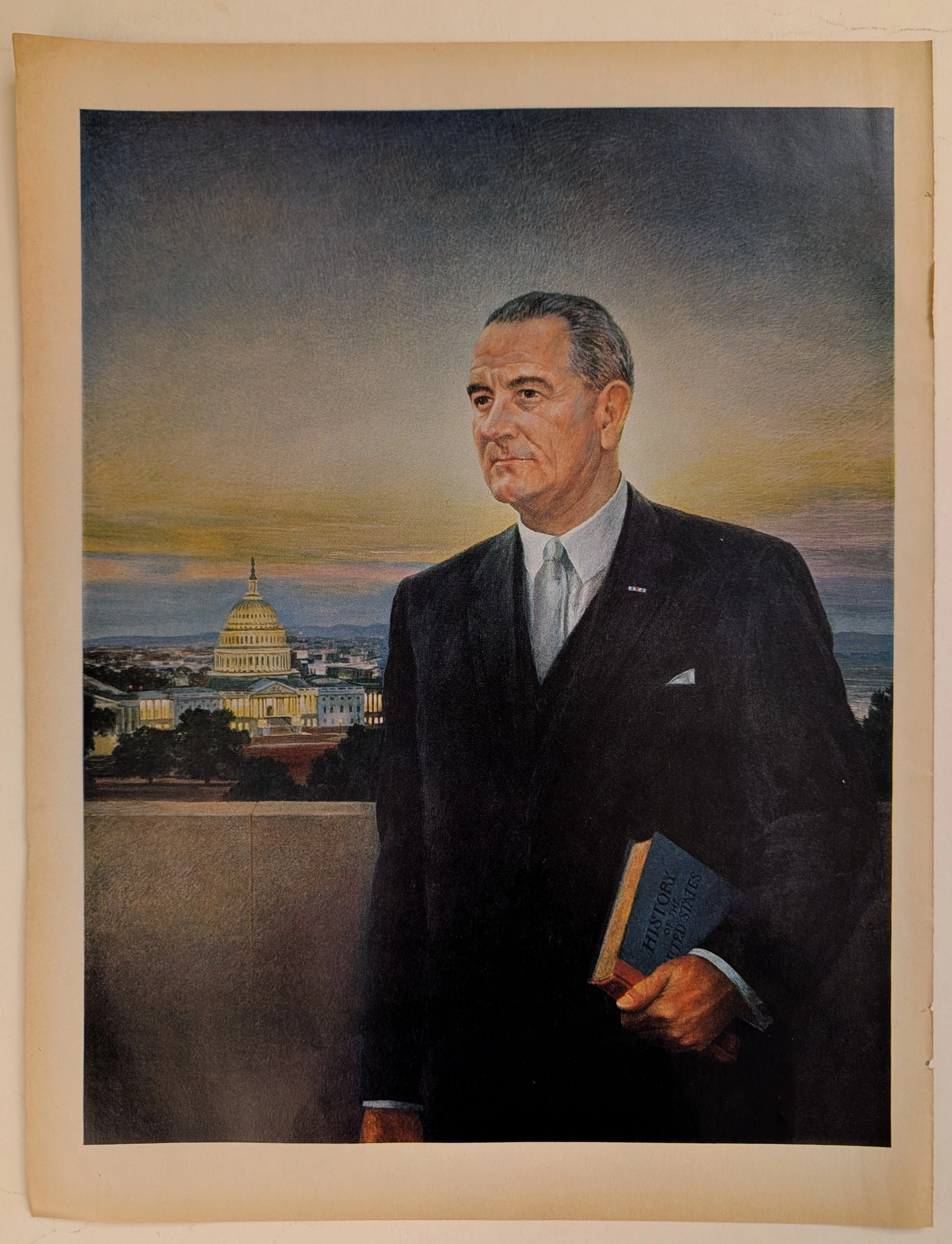
The presidency of the United States during the mid-twentieth century was an office defined by epochal challenges, sweeping domestic transformations, and the profound weight of global leadership. The historical artifact elegantly and securely positioned upon the analytical table of The Record Institute today is a majestic, large-format political lithograph portraying Lyndon Baines Johnson, the 36th President of the United States. Originating from the transformative core of the 1960s, this document completely transcends the traditional boundaries of political memorabilia. It operates as a highly sophisticated, multi-layered cultural and historical mirror, reflecting the exact moment when unparalleled legislative ambition intersected with the intricate realities of the geopolitical landscape on a single printed page. This world-class, comprehensive dossier conducts a meticulous, profound, and historically objective examination of the artifact, operating under the absolute most rigorous parameters of sociological and material science evaluation. We will decode the brilliant iconographic strategy embedded within this portrait, analyze the legendary political machinery of a statesman who mastered the United States Senate, and dissect the rich, aspirational semiotics surrounding the Great Society initiatives alongside the challenging context of the Cold War era. Furthermore, as we venture deeply into the chemical and physical foundations of this analog printed ephemera, we will reveal the precise mechanical fingerprints of the CMYK halftone rosettes and the graceful, natural oxidation of the paper substrate. This precise intersection of visual nostalgia, mid-century commercial artistry, and the immutable chemistry of time cultivates a serene wabi-sabi aesthetic—a natural, irreversible phenomenon that serves as the primary engine driving up its market value exponentially within the elite global spheres of Vintage Political Ephemera and Presidential Archives collecting.